Hidden History: The Hanging of Henry Joy McCracken
Dr Eamon Phoenix explores the history of Belfast from its beginnings to the uprising of the United Irishmen. For any queries, please contact the Series Producer, Laura Spence - laura.spence@bbc.co.uk
The United Irishmen hoped to achieve sweeping reforms by peaceful persuasion. But they had reckoned without the inflexibility of the Ascendancy who dominated the Irish Parliament in Dublin. By 1795 the United Irishmen had been driven underground and were now a revolutionary conspiracy committed to an Irish Republic with the aid of French military assistance.
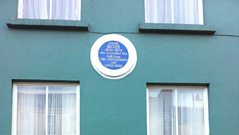
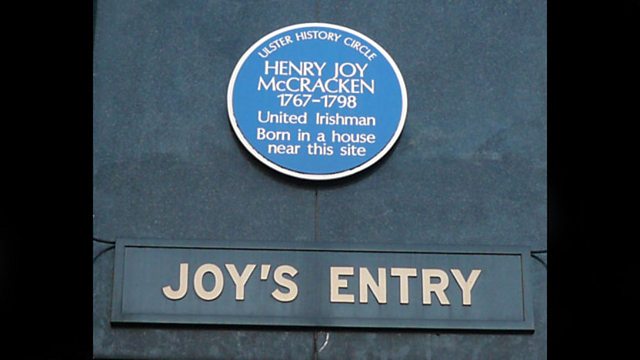
Among the leaders was Henry Joy McCracken whose name is commemorated on a blue plaque at the arched entrance to Joy’s Entry.
McCracken was the archetypal revolutionary hero and became in death the symbol of the 1798 Rebellion in Ulster. He was born in 1767 near this spot into one of the most respected Presbyterian families in Belfast. His father, Captain John McCracken was a ship-owner and sail-maker who had married Ann Joy, a member of a leading Huguenot family. Her grandfather had founded Ireland’s oldest newspaper, the Belfast Newsletter in 1737 and her brother was the Henry Joy who built the Poor House in 1774.
Henry Joy McCracken, who had been apprenticed to the growing linen trade, was a charismatic, handsome man whose sympathies lay with the movement for reform and Catholic rights. A close friend of Thomas Russell, librarian of the Linen Hall Library, he was admitted to the United Irishmen in 1792 and he began travelling throughout Ireland forging links between the Presbyterian radicals and the Catholic Defenders.
In October 1796 he was arrested by the authorities and imprisoned in Kilmainham Jail along with his brother, William and his minister, the Reverend Sinclair Kelburne.
Duration:
Featured in...
![]()
Ulster-Scots
Ulster-Scots culture - including music, history, literature, poetry, places and speakers.

More clips from Belfast - from the Golden Age to the Hanging of Henry Joy McCracken
![]()
Hidden History: Rosemary Street Presbyterian Church
Duration: 03:19
More clips from Hidden History
![]()
Crom Castle - Plantation Home of the Creightons
Duration: 05:31
![]()
Lisnaskea Workshouse and the Famine in Fermanagh
Duration: 01:49
![]()
Limavady's link to The Londonderry Air
Duration: 02:18
![]()
A Visit to Ballykelly
Duration: 02:40