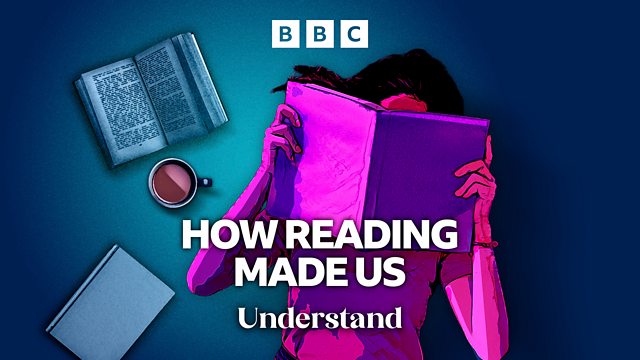
2. How Reading Made Our Feelings
Did reading make us lonely, set us free, and even end torture? James Marriott investigates how reading changed us as humans - and asks what happens if we stop.
Reading seems an unremarkable skill. When we say something is as “easy as ABC”, we mean it is very easy indeed. In fact, learning to read has dramatic and irreversible consequences for people and for societies. Learning to read permanently alters your brain. It changes the emotions you experience and the way you relate to others. When a society learns to read the consequences are dramatic: wars break out, revolutions erupt and new political systems spring into being. Reading made us who we are. With time spent reading - and even reading ability - starting to nosedive, Times writer James Marriott explores how reading changed humanity, and what might happen if we stop.
In this programme, James asks whether the spread of novel reading in the 18th century caused a moral revolution, whether a book played a role in the abolition of slavery, and whether the rise of reading, a solitary and slightly lonely activity, was one of the factors setting us on the path to our atomized and isolated modern society.
Contributions from:
- Jung Chang, author
- Steven Pinker, professor of psychology at Harvard University
- Sarah Maxwell, founder of Saucy Books
- Robert Darnton, historian
- Naomi Alderman, writer and presenter
- Joseph Henrich, professor of anthropology at Harvard University
- Maryanne Wolf, professor and Director of the Center for Dyslexia, Diverse Learners, and Social Justice at UCLA
Producer - Beth Sagar-Fenton
Editor - Chris Ledgard
Last on

Featured
.
Broadcast
- Mon 16 Mar 202611:00BBC Radio 4
Podcast
![]()
Understand
The story of how reading made us and what might happen if we stop - with James Marriott.
Related Content
