A Deadly Neighbour
A fight between neighbours leaves one man dead and the other claiming self-defence. Pathology separates fact from fiction, revealing the truth of fatal events behind closed doors.
When Andrew Hamilton was killed in the north Wales village of Bagillt, police immediately knew who had taken his life. The man who dialled 999 – Andrew’s neighbour – confessed on the call. The question police now urgently needed to answer: was this self-defence or a cold-blooded murder?
Iestyn Davies was detective superintendent in charge of North Wales Police’s major incident team on July 18, 2018. He recalls that night. A man called Christian Williams called in reporting there had been a 'melee' in a flat; a fight involving another man in which he had been attacked. In the struggle, he said he'd inadvertently killed the other man.
Officers despatched faced a devastating scene: Christian Williams at the door, covered in blood and a body in the hallway. Williams was arrested for suspected murder. His one injury was a cut to the hand. In police interviews, Williams would stick firmly to his account of self-defence.
Andrew’s mum Margaret and sister Nicola recall police knocking on their door that night and the subsequent chain of events and devastation wreaked on their family.
With only Williams' version of events, it was vital police try all avenues to verify what happened in the flat. Self-defence could lead to an acquittal; murder a prison sentence. Pathology first had to establish the severity of the fight and extent of Andrew’s injuries. The post-mortem revealed 95 injuries sustained during a brutal and sustained fight.
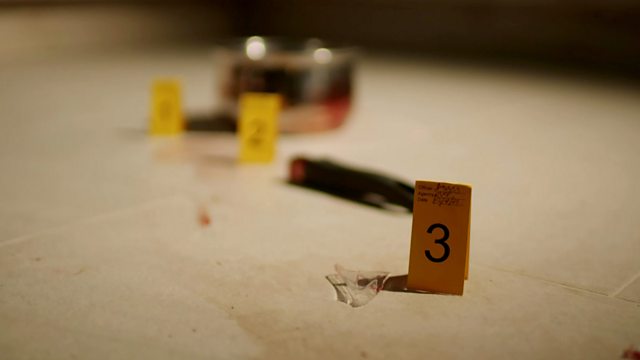
When potential weapons were recovered from the scene – including a broken bottle and saucepan – the post-mortem would establish if and how they correlated with Andrew’s injuries.
Police looked into the men’s backgrounds. Andrew Hamilton had long struggled with addiction and taken drugs on the night of his death. Enquiries into Williams built a picture of a quiet, mild-mannered former mature student. No motive or history of animosity between the men emerged. Iestyn Davies reflects on the stigma that can exist around addiction and how that can’t be a factor in how you think during an investigation to get to the truth. Andrew’s family speak movingly about the person they knew: a devoted father, loved son and brother.
Underpinned by pathology and evidence from forensic experts who analysed blood spatter patterns at the scene, detectives believed they had a strong case but had no guarantee of the outcome. Journalist Jez Hemming, who reported on the case throughout, clearly recalls Williams’ demeanour in the dock and shocking footage from Williams’ past that he was anonymously sent shortly after the eight-day trial.
Last on

More episodes
Broadcast
- Tue 3 Mar 202622:45BBC One Wales & Wales HD only
