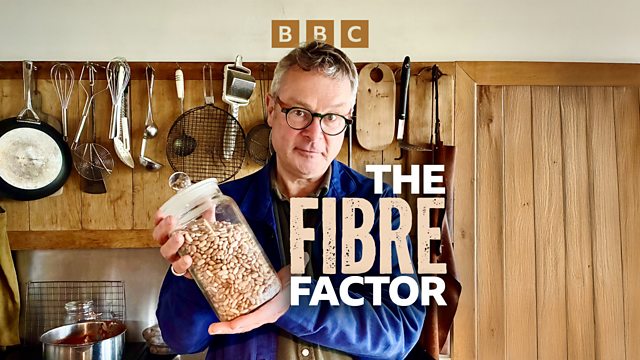
Munching Plants to Manufacturing
Hugh Fearnley-Whittingstall explores how our intake of fibre has changed over human history. Does it matter that we no longer eat much of it?
Hugh Fearnley-Whittingstall learns all about fibre, and why we need to eat more of it.
In this first episode, he goes back to the very beginning, to explore how our intake of fibre has changed over human history. From the fibre-rich diets of our plant-gathering ancestors to the low-fibre processed foods we eat today.
Featuring:
Dr Brenna Hassett, biological anthropologist and archaeologist from the University of Lancashire
Dr Polly Russell, food historian and curator at the British Library
Presenter: Hugh Fearnley-Whittingstall
Producer: Sarah Goodman
Exec Producer: Becky Ripley
Last on

More episodes
Previous
You are at the first episode
Next
Rooty fruity salad
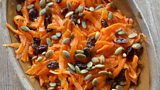
This simple crunchy salad is such an easy win and can easily be varied according totaste and what you have handy. The nuts or seeds are optional, but they’ re anothergreat fibre boost and I always add them.
Serves 2
Peel and coarsely grate two medium carrots into a bowl.
Add a handful of raisins and, if you like, another of pumpkin seeds or chopped walnuts.
Squeeze in the juice of one orange.
Add a trickle of olive oil if you like, or a dash of vinaigrette dressing , season to taste, and toss well. Serve immediately or leave for up to half an hour in a cool place for the flavours to mingle, then toss again before serving.
Variations:you can add a handful of finely shredded red or white cabbage for a more coleslaw type version; add chopped apple instead or as well as the raisins; or you canuse firm young parsnips instead of carrots.
Chia choccy pudding
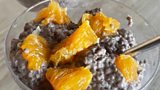
Put 2 tbsp of chia seeds and a tsp of cocoa powder in a small bowl or large cupAdd 60ml boiling water from the kettle.
Stir for about 30 seconds until the chia seeds start to gel up. Leave for a couple ofminutes to swell some more, then stir in a teaspoon or two of honey or maple syrup.
Mix in 1 tbsp of Greek yoghurt
Try adding a squeeze of satsuma, easy peeler or orange juice and serve the segments (or any other fruit e.g. fresh or frozen berries) on top of the pud.
Brown mac and cheese and peas
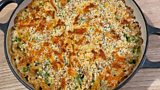
This recipe gives the trad mac ‘n’ cheese a high fibre, full-of-goodness makeover.
Serves 4–5
500ml whole milk
1 bay leaf (optional)
1⁄2 small onion or some onion trimmings (optional)
30g butter
30g fine plain wholemeal flour
125g mature Cheddar or other strong-flavoured hard cheese, coarsely grated
1 tsp English mustard
250g wholewheat (brown) macaroni, penne or another small pasta shape
150-200g frozen peas
A handful of breadcrumbs (optional)
Sea salt and black pepper
Pour the milk into a pan and add the bay leaf and onion if using, and a twist of pepper. Bring almost to the boil, turn off the heat, then leave to infuse for 10 minutes or so.
Melt the butter in a large saucepan over a medium heat. Add the flour and stir to make a smooth, thick paste (i.e. a roux). Cook, stirring, for 2–3 minutes (it’s fine if it browns a little). Take the pan off the heat. Remove the bay and onion from the hot infused milk and tip about a quarter of it onto the roux. Stir vigorously to form a thick paste. Add the rest of the milk in 3 or 4 lots, stirring each in to get the mixture smooth before you add the next.
Return the pan to a low heat and stir the sauce until starting to bubble. Cook for a couple of minutes, stirring often, until thickened. Set aside 2 tbsp of the grated cheese and add the rest to the hot sauce, stirring it in until melted. Take the pan off the heat and stir in the mustard. Season with salt and pepper to taste. Set aside.
Preheat the oven to 190°C/170°C Fan/Gas 5. Add the pasta to a big pan of boiling salted water and cook for a couple of minutes less than suggested on the pack. Then add the frozen peas and bring back to a simmer. Drain the pasta and peas and stir through the sauce.
Tip the mixture into a lightly oiled oven dish (2-litre capacity) and spread out. Scatter over the reserved cheese, mixed with the breadcrumbs if using.
Put the dish into the oven for about 20-25 minutes until it’s bubbling and golden on top.
Variation: try using spinach instead or as well as the peas – 150-200g frozen spinach, defrosted and chopped.
Saucy beans and greens
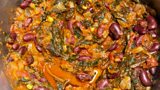
A simple store cupboard throw-together that all comes together in a single pan, this is a lovely fibrous side dish for sausages and mash, or it makes a great vegan sauce for pasta or a baked spud. You can certainly use a ready-made tomato sauce from a jar.
Serves 3-4
One large onion, chopped
2 cloves of garlic, finely chopped
A little veg oil or olive oil
2 tins tomatoes, chopped
250g of frozen spinach
1 or 2 tins of beans, such as cannellini, butter beans or kidney beans, drained
Make a simple tomato sauce by sweating the onion and garlic in the oil over a medium heat in a medium pan, until soft and golden. Then add two tins of chopped tomatoes and stir together well. Simmer until rich and saucy, stirring occasionally.
Add the frozen spinach and cook through, stirring occasionally, to defrost the spinach.
When the spinach is fully defrosted and well mixed with the sauce, stir in the beans and bring back to a simmer. Simmer gently for 3-4 mins, stirring regularly. Take to the table and serve.
Broadcast
- Mon 26 Jan 202613:45BBC Radio 4
