Politics Always Wins
Mir’s reign in space comes to an end with the arrival of the International Space Station. A new dawn of co-operation awaits, offering hope for a divided world.
Ginger Kerrick had dreamed of becoming a Nasa astronaut for as long as she could remember, so she’s over the moon when she’s selected for an interview. But her hopes came crashing down when a routine medical exam reveals a kidney stone - an automatic, lifelong disqualification from the astronaut corps. At just 26, her dreams are shattered. But Ginger is determined not to give up on her passion for spaceflight. When she is offered a new path as an astronaut trainer, she seizes the opportunity. Though she will never go to space herself, she can help others get there.
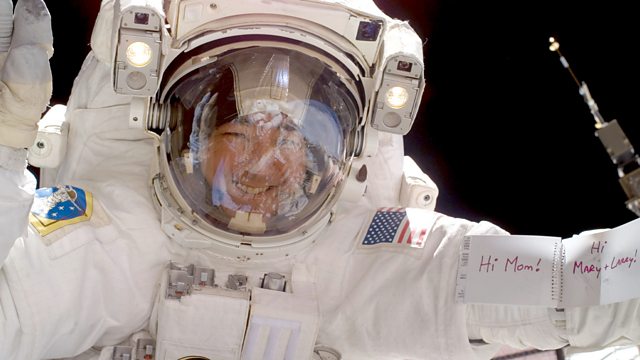
Her very first assignment is a historic one: preparing the crew of Expedition 1, the first team to live aboard the new International Space Station. In 1996, Nasa unveils its largest-ever class of astronauts: 44 individuals tasked with the colossal undertaking of building the International Space Station, piece by piece, in orbit. Among them is Japanese-American engineer Dan Tani, who applied on a whim and openly admits he didn’t really care about space growing up. This news is a tough pill to swallow for his friend Carlos, who’s had a lifelong obsession with space. Carlos, a charismatic and larger-than-life figure, has applied to Nasa three times, only to be rejected at each attempt.
While the ISS is a symbol of global unity, its financial demands are straining Russia's already struggling economy. Russia's own beloved Mir space station is paying the price. Facing the high cost of maintenance, Mir's days are numbered - unless money can be found to save it. That's where Walt Anderson, a maverick millionaire and 'New Space' enthusiast, comes in. Along with his friend Carlos, he launches an audacious venture: MirCorp. They strike a deal to lease the station from the Russians for $20 million. As pioneers of the New Space movement - a push for cheaper, more innovative spaceflight independent of government programs - their vision is to transform Mir into a commercial hub for research, film production, and even tourism.
One of MirCorp's first priorities is to assess the ageing station's condition, a task given to former fighter pilot Sergei Zalyotin. A patriotic cosmonaut who has trained for nearly a decade for his first flight, he feels the bitter irony: the fate of the Mir now rests on American investors. After two and a half months aboard, Zalyotin and his crewmate declare the station fully operational. MirCorp's dream is within reach. But Nasa want Russia's focus and resources for the ISS, not for a competing venture. Under intense pressure from the US, Moscow orders Mir to be de-orbited, sending it to a watery grave in the Pacific on the 23rd March 2001.
Russia's symbol of national pride - and MirCorp's bold experiment - is gone forever. Just months earlier, the ISS had reached a major milestone: in 2000, the Expedition 1 crew take up residence, marking the beginning of a continuous human presence in space. For Ginger, it’s a moment of both personal and professional triumph, as she witnesses the culmination of her work.
At the dawn of the new millennium, the ISS shines as a beacon above Earth. The journey has been long, costly and fractious, but for now, the future looks hopeful, and cooperation has triumphed over nationalism and war.
Last on

More episodes
Credits
| Role | Contributor |
|---|---|
| Director | James Bluemel |
| Producer | Charlotte Bairsto |
| Producer | Rebecca Pike |
| Producer | Svetlana Palmer |
| Editor | Simon Sykes |
| Editor | Bjorn Johnson |
| Series Producer | Vicky Mitchell |
| Executive Producer | Will Anderson |
| Executive Producer | Andrew Palmer |
| Production Company | KEO Films Ltd |
Explore The Open University’s interactive flipbook
Discover extraordinary insights into the human exploration of space.
