Centre of the Universe
Donald Macleod explores the incredible impact of the Congress of Vienna on the city’s fortunes. Meanwhile, Schubert is falling in love.
Donald Macleod explores the incredible impact of the Congress of Vienna on the city’s fortunes. Meanwhile, Schubert is falling in love.
Of all Europe’s major cities, perhaps Vienna is the one with the reputation as the most comfortable, the most sophisticated, and the most musical. In fact, has any other city been home to so many great composers as Vienna? Mozart, Beethoven, Haydn, and Salieri all spent their best years working there. Yet none of those starry names was born in the city, none were true Viennese. Over the course of this week, Donald Macleod explores Vienna through the lens of arguably the greatest home grown composer the city has ever produced – Franz Schubert – a man whose short life spanned a crucial period in Austrian history, a time of crisis and much change. In his company we’ll explore Vienna’s churches and theatres, its parks, coffee houses and taverns, and also glimpse the darker side of the city too – the excesses of Europe’s aristocracy and the all seeing eyes of Vienna’s secret police.
In Tuesday’s programme, as Austria started to recover from the impact of Napoleonic wars, Donald explores the incredible Congress of Vienna which reignited the city’s fortunes. Hundreds of dignitaries and aristocracy from across the continent descended upon Vienna. For Schubert it must have felt like he was in the centre of the Universe, even if he wasn’t involved in the accompanying music making. However, there were other important matters for the budding composer at this point – he was falling in love.
6 Moment Musicaux, Op 94, D780 (No 3 in F min)
David Fray, piano
Mass No 1 in F Major, D105 (Gloria)
Orchestra of the Age of Enlightenment
Wiener Sängerknaben,
Chorus Viennensis
Bruno Weil, conductor
Grande Marche Funebre, D859
Christoph Eschenbach, Justus Frantz, piano
Symphony No 2 in B flat Major, D125 (4th mvt,Presto)
B’Rock Orchestra
René Jacobs, conductor
Rosamunde, D797 (No 5 ,Entracte No 3 in B flat Major: Andantino)
Chamber Orchestra of Europe
Claudio Abbado, conductor
Licht und Liebe, D352
Janet Baker, Mezzo Soprano
Dietrich Fischer-Dieskau, baritone
Gerald Moore, piano
Produced by Sam Phillips ford BBC Audio Wales and West
To listen on most smart speakers just say “ask BBC Sounds to play Composer of the Week"
Last on

Music Played
![]()
Franz Schubert
6 Moment Musicaux, Op 94, D780 (No 3 in F min)
Performer: David Fray.- VIRGIN CLASSICS : Virgin-694489 0.
- VIRGIN CLASSICS.
- 3.
![]()
Franz Schubert
Mass No 1 in F Major, D105 (Gloria)
Choir: Vienna Boys' Choir. Orchestra: Orchestra of the Age of Enlightenment. Conductor: Bruno Weil.- SK68247.
- Sony.
- 2.
![]()
Franz Schubert
Grande Marche Funebre, D859
Performer: Christoph Eschenbach. Performer: Justus Frantz.- EMI CLASSICS : 3-65321.
- EMI CLASSICS.
- 1.
![]()
Franz Schubert
Symphony No 2 in B flat Major, D125 (4th mvt, Presto)
Ensemble: B’Rock Orchestra. Conductor: René Jacobs.- PENTATONE : PTC 5186-759.
- PENTATONE.
- 4.
![]()
Franz Schubert
Rosamunde, D797 (No 5, Entracte No 3 in B flat Major, Andantino)
Orchestra: Chamber Orchestra of Europe. Conductor: Claudio Abbado.- DEUTSCHE GRAMMOPHON : 431-655-2.
- DEUTSCHE GRAMMOPHON.
- 7.
![]()
Franz Schubert
Licht und Liebe, D352
Performer: Gerald Moore. Singer: Janet Baker. Singer: Dietrich Fischer‐Dieskau.- DEUTSCHE GRAMMOPHON : 4863728.
- DEUTSCHE GRAMMOPHON.
- 6.

Broadcast
- Tue 31 Dec 202416:00BBC Radio 3
Beethoven Unleashed – the box set
The complete set of Radio 3 Beethoven Unleashed podcasts, with Donald Macleod.
What was really wrong with Beethoven?

Georgia Mann and neurosurgeon Henry Marsh examine the composer's numerous health problems
Composers A to Z

Visit the extensive audio archive of Radio 3 programmes about Composers and their works.
Who knew? Five eye-opening stories from Composer of the Week

The production team reflects on 5 of Donald Macleod’s best stories from the last 20 years
Five reasons why we love Parry's Jerusalem
What is the strange power of Jerusalem which makes strong men weep?
A man out of time – why Parry's music and ideas were at odds with his image...
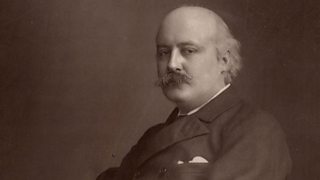
The composer of Jerusalem was very far from the conservative figure his image suggests.
Composer Help Page

Find resources and contacts for composers from within the classical music industry.
