The Wanderer
Donald Macleod unravels Gluck’s multifarious travels in Europe in the mid 18th century - including a trip to London and a meeting with the great George Frideric Handel.
Donald Macleod unravels Gluck’s multifarious travels in Europe in the mid 18th century - including a trip to London and a meeting with the great George Frideric Handel.
Christoph Willibald Gluck (1714-1787) arguably did more to transform opera than any composer of his generation: thinking deeply about how text and music should work together, and trying to strip away fripperies to ensure it was urgent, powerful and arresting. His radical approaches made him one of the most influential composers in history - and yet today, he’s known in the concert hall almost exclusively for one work: his masterpiece “Orpheus and Eurydice”. This week, Donald Macleod puts that right: showcasing Gluck’s dazzling and enchanting music from across his life - whilst also showing off his most famous work across the week in its many fascinating versions.
Gluck led a highly itinerant life in the 1740s, writing operas wherever he went and trying to curry favour with courts across Europe: from Vienna, to Milan, to Paris…to London. He chose a difficult moment to visit England - a Jacobite rebellion was raging in the North - but had a series of memorable encounters with both the royal family and the most famous composer in the land, Handel (who later snarkily commented that Gluck “knew no more about counterpoint than his cook did”).
The Velvet Underground: Venus In Furs (excerpt)
Qual ira intempestiva … Oggi per me non sudi; Oggi per me sudi (La Contesa de'numi, Wq 14)
Daniel Behle, tenor
Armonia Atenea, conductor George Petrou
Trio Sonata no I in C Major (1st mvt)
Musica Antiqua Köln, director Reinhard Goebel
Ciascun siegua il suo stile...Maggior follia non v'e (La Semiramide riconosciuta, Wq 13)
Cecilia Bartoli, soprano (Ircano)
Akademie für Alte Musik Berlin, conductor Bernhard Forck
Orfeo ed Euridice, Wq. (1774 Naples version) (end of scene 1; scenes 2-3)
Philippe Jaroussky, countertenor (Orfeo)
Amanda Forsythe, soprano (Euridice)
Emőke Baráth, soprano (Amore)
I Barocchisti, Coro della Radiotelevisione Svizzera, conductor Diego Fasolis
Misera, dove son…; Ah! non son io (Ezio, Wq 15)
Joyce DiDonato, soprano (Fulvia)
Il Pomo d’Oro, condutor Maxim Emelyanychev
Produced by Steven Rajam for BBC Audio Wales & West
Last on

Music Played
![]()
The Velvet Underground
Venus in Furs
Performer: Nico. Ensemble: The Velvet Underground.- POLYDOR.
![]()
Christoph Willibald Gluck
La Contesa de' numi (Qual ira intempestiva...Oggi per me non sudi)
Singer: Daniel Behle. Orchestra: Armonia Atenea. Conductor: George Petrou.- DECCA : 478 7435.
- DECCA.
- 6.
![]()
Christoph Willibald Gluck
Trio Sonata No 1 in C major (1st mvt)
Performer: Reinhard Goebel. Ensemble: Musica Antiqua Köln.- CHALLENGE CLASSICS : CC-72122.
- CHALLENGE CLASSICS.
- 1.
![]()
Christoph Willibald Gluck
La Semiramide Riconosciuta (Ciascun siegua il suo stile...)
Singer: Cecilia Bartoli. Ensemble: Berlin Academy of Ancient Music. Conductor: Bernhard Forck.- DECCA : 485-3416.
- DECCA.
- 4.
![]()
Christoph Willibald Gluck
Orfeo ed Euridice (Act 1, Sc 1 excerpt)
Singer: Philippe Jaroussky. Singer: Amanda Forsythe. Singer: Emőke Baráth. Ensemble: I Barocchisti. Choir: Coro della Radiotelevisione Svizzera.- ERATO : 9029570794.
- ERATO.
- 7.
![]()
Christoph Willibald Gluck
Ezio (Act 3, excerpt)
Singer: Joyce DiDonato. Orchestra: Il Pomo d’Oro. Conductor: Maxim Emelyanychev.- ERATO : 9029646515.
- ERATO.
- 10.

Broadcast
- Tue 24 Sep 202416:00BBC Radio 3
Beethoven Unleashed – the box set

The complete set of Radio 3 Beethoven Unleashed podcasts, with Donald Macleod.
What was really wrong with Beethoven?

Georgia Mann and neurosurgeon Henry Marsh examine the composer's numerous health problems
Composers A to Z

Visit the extensive audio archive of Radio 3 programmes about Composers and their works.
Who knew? Five eye-opening stories from Composer of the Week

The production team reflects on 5 of Donald Macleod’s best stories from the last 20 years
Five reasons why we love Parry's Jerusalem

What is the strange power of Jerusalem which makes strong men weep?
A man out of time – why Parry's music and ideas were at odds with his image...
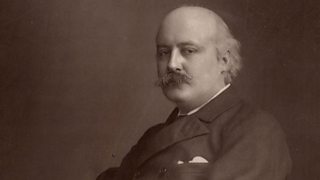
The composer of Jerusalem was very far from the conservative figure his image suggests.
Composer Help Page

Find resources and contacts for composers from within the classical music industry.
