AbilityNet Tech Conference; Love on the Run
AbilityNet organised a conference last week that brought together some of the biggest names in the tech industry and we catch a couple who fell in love whilst running the miles.
AbilityNet TechShare Pro was a technology conference that happened last week, hosted by HSBC and organised by the charity AbilityNet. AbilityNet's ambition is to get more disabled people involved with technology. The conference brought together some of the biggest names within the tech industry to discuss recent developments and what can be expected in the future, including artificial intelligence and legislation.
Kelly Barton and Mike Leatherbarrow were once strangers but they met and fell in love whilst running. Kelly is visually impaired and Mike is Kelly's sighted guide runner. They recently got married and they tell us how their love blossomed over the miles.
Presenter: Peter White
Producer: Beth Hemmings
Production Coordinator: Liz Poole
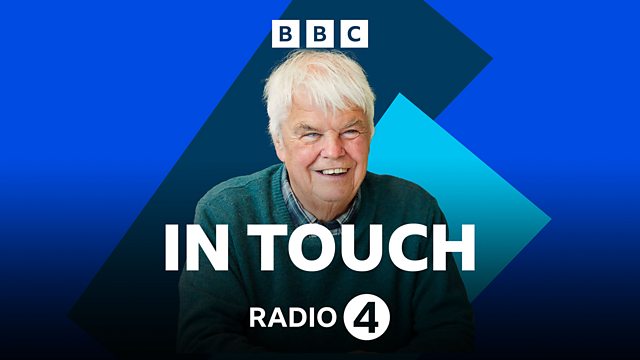
Website image description: Peter White sits smiling in the centre of the image, wearing a dark green jumper. Above Peter's head is the BBC logo (three individual white squares house each of the three letters). Bottom centre and overlaying the image are the words "In Touch" and the Radio 4 logo (the word Radio in a bold white font, with the number 4 inside a white circle). The background is a bright mid-blue with two rectangles angled diagonally to the right. Both are behind Peter, one of a darker blue and the other is a lighter blue.
Last on

In Touch Transcript 21/11/2023
Downloaded from www.bbc.co.uk/radio4
THE ATTACHED TRANSCRIPT WAS TYPED FROM A RECORDING AND NOT COPIED FROM AN ORIGINAL SCRIPT. BECAUSE OF THE RISK OF MISHEARING AND THE DIFFICULTY IN SOME CASES OF IDENTIFYING INDIVIDUAL SPEAKERS, THE BBC CANNOT VOUCH FOR ITS COMPLETE ACCURACY.
IN TOUCH – AbilityNet Tech Conference; Love on the Run
TX: 21.11.2023 2040-2100
PRESENTER: PETER WHITE
PRODUCER: BETH HEMMINGS
White
Good evening. Tonight, we see-saw wildly between the ultra-modern and the deeply traditional. After all, what could be more traditional than meeting and falling in love?
Clip
So, I’ve gone along to Park Run and I was introduced to Mike, who guided me round Park Run and we just kind of clicked. We just started getting to know each other and chatting along the way. The more miles we ran the more we got to know each other.
White
More about love on the run later in the programme.
But first, the very latest on what seems certain to be a highly digital future for all of us, visually impaired people included. But that’s the point – will we be included or will we be left behind as the pace of change continues to gather speed?
After all, doesn’t matter what you do these days – work, shop, bank, learn, seek healthcare, date – technological literacy is becoming increasingly vital. Hence the importance of a conference, last week, hosted by AbilityNet, that’s a charity which promotes the use of technology for visually impaired people, the conference involved many of the big players in this field – Google, Microsoft, Sony, some of the big banks – and it described itself as championing digital accessibility and the business case for inclusivity.
So, did it live up to its billing?
Robin Spinks is Head of Inclusive Design at the RNIB. He was there, he even got himself on a panel. Robin, you’re an enthusiastic user of technology. First, a general question – what were the key things you took from this conference?
Spinks
Well, Peter, you know, technology’s changing constantly, isn’t it and I think bringing people together to focus on those changes and how they can be embraced, is absolutely critical. You know, lots of conversations about AI and machine learning, so artificial intelligence and machine learning but also, a lot of questions and a lot of conversation about how businesses are adopting technology, how they’re adopting accessibility and, more importantly, embedding it into their practices, their DNA, if you like.
White
But, presumably, part of the problem is persuading them that it is actually worth their while. I know what people tend to say is, of course, we are there for everyone and so forth but these organisations are also about money, they’re about profit, you have to persuade them it’s in their interests. How do you do that?
Spinks
I think at RNIB we’re working with lots of businesses where we’re seeing more people, more organisations and business leaders committed to accessibility, they recognise that this makes absolute sense. And it’s often about winning executive sponsorship. This is about executive leaders buying into the motivation, buying into the business case and understanding that if you make something more accessible for disabled people, for blind and partially sighted people, you make it more accessible for everybody else. And actually, there’s a business benefit whatever your industry happens to be.
White
Okay, well you can’t talk about technology at the moment without discussing AI, you’ve already mentioned it. Is that the step change for VI users that many people are claiming and what would you pick out as the developments that are already coming on stream, which could make a real difference to us?
Spinks
I think in time AI will deliver huge benefits for all of us and certainly for those of us who live with a visual impairment. Actually, we’re seeing, already, huge outputs that are helpful – picture descriptions, for example. Ask a person to describe a picture, then ask an AI to describe a picture, it’s really quite illuminating. So, we’re seeing much richer, more vivid descriptions of images. We’ll see a lot of changes to the way that people experience customer service. So, simple transactions, like booking and buying, which can be a real frustration online, we’ll see those transactions simplified into speech-driven transactions that can deliver much more quickly. But, you know, it’s not a magic bullet and I think that’s what we’ve got to be really careful about. The fundamental principle remains that designers and creators and developers of software and hardware and services need to create those products in ways that are inclusive. That fundamental focus on good inclusive design practice, that’s not going to shift.
White
And, presumably, there’s quite a lot of competition in this field. I mean, I think, for example, in this whole business of using AI to describe things, Google and Microsoft they’ve both got new stuff around, haven’t they, which was probably demonstrated at this conference?
Spinks
Yeah, so, Copilot, is the facility that Microsoft were talking about, is embedded in the Microsoft 365 apps that you use every day – Word, Excel, PowerPoint, Outlook, Teams and more. So, Copilot gives you a first draft to edit and literate on and then you’re kind of saving your hours in writing, sourcing and editing. So, you could be creating a checklist or you could be creating an itinerary, or maybe even a workplan and you could use it to actually create much more quickly than you would typically be able to do if you were typing and thinking and stopping and editing.
Bard, from Google, which is the AI facility that Google have developed. Bard will allow someone who’s blind or partially sighted to speak into the application and actually ask a question and get an output not dissimilar to what you can currently do, for example, on Chat GBT, where you can get, you know, summarised information presented in a paragraph, sentence form. I would be cautious, let me just say, if it’s for work, I would be cautious about fact checking and cross checking. But if I want a quick summary of something, of maybe legislation in an area or I want a quick summary of what to pack for a paddle boarding trip – that was my personal example – Bard was able to think of things that I actually missed, for example, the tide times, I needed to make sure that I had a whistle, for example, I had drinks packed. So, it’s got a huge relevance for personal day-to-day independence in life and also from a work point of view. But I think absolutely critical is giving people the confidence in how to use those technologies, you know, we mustn’t forget people who are not perhaps as enthusiastic about technology as I am, we can’t leave people behind. So, I think absolutely critical is that mainstream advances in AI continue to benefit blind and partially sighted people. It shouldn’t be a divide in terms of what people experience so…
White
Well, hang on, let’s explore that idea of a divide because, I mean, there are two digital divides, aren’t there Robin, there’s the divide between sighted people and very competent visually impaired people, like you and there’s the divide between the competent VI people and those, and I’d include myself in this, who struggle with the basics. How do you deal with that?
Spinks
I think there’s a responsibility on all of us to share our knowledge, you know, and sharing kind of stories but also sharing strategies and hacks because often that’s what it takes is just that confidence to know that someone, who’s the same age as you, has mastered it, they’ve moved a little bit further along and understanding that you’re not alone because it can be quite daunting. If you live on your own and you’re an older person, technology must be really daunting. So, enabling them to see that technology can make your life better and it can be a great support and companion.
White
Do you think that we may be seeing perhaps a bit of a recognition on the part of some big commercial companies that they shouldn’t lose the human touch? I mean we know of at least one supermarket chain who are moving away from technology at the check-out and going back to fully staffed check-outs. I mean, could this be the start of a trend, do you think?
Spinks
This is interesting, Peter, isn’t it? I mean this is Booths, the supermarket chain, predominantly in the North of England, just last week announced that they would be actually moving stores back to staffed check-outs, rather than having a purely self-service check-out function. And, you know, what that underlines is exactly what you’ve said – the importance of good human support. We’re very happy to see an environment where you’ve got a mix of human intervention and technology that’s accessible to people. So, it’ll be really interesting to watch this and see whether this is a one-off, I suspect we’ll see the same thing happen in other parts of the retail world but let’s watch this one.
White
So, surely, as well as clever ideas we need legislation, don’t we, to make sure that ideas are presented in an accessible form, almost as a matter of course. We haven’t really got that in the UK, have we?
Spinks
Well, you know, we continue at RNIB to campaign for legislation and we’re looking, of course, right now, at the European Accessibility Act, that’s one tool that will come into force, in fact member states have got until 2025 to essentially present and have enforceable legislation in country. I’m not a lawyer, my legal colleagues will give you a much fuller description. But, you know, one of the things that we want to see is companies being required to provide a minimum standard of accessibility.
White
But, I mean, we’re not in the EU, I mean, how much benefit are we going to get from European legislation?
Spinks
Well, it remains to be seen but one of the things that is encouraging is we know from discussions with a number of manufacturers that companies don’t intend to develop a product for the EU market and then one for the UK. What will happen is products will be designed to comply with the European legislation and even though the UK’s not in the EU, we’ll get the same product, if you like. Lots of the bigger manufacturers are making an EU version of a product, like they would make a US version and that EU version will need to come up to the kind of standard that will be required in legislation. It’s our understanding that the European Accessibility Act will cover self-service kiosks and check-outs, so it’ll be really interesting to see how this progresses.
White
Robin Spinks, thank you very much indeed.
Spinks
Pleasure, thank you Peter.
White
Now let’s take a break from tech, shall we? Anyone who listens regularly to In Touch will know that blind or partially sighted people who’ve had the urge to take up running, either to entre serious competition or as a way of getting fitter or just for fun, often team up with a sighted guide to achieve the best results. Well, that’s exactly what Kelly Barton did several years ago when she met Mike Leatherbarrow. You can imagine that to run together you do need confidence and trust in each other to make it work. But now Kelly and Mike have taken that a stage further. Earlier this month they got married. I’ve been talking to them both and I began by asking Kelly how it all started.
Barton
I’d gone along to Park Run because I wanted to get more, you know, fit and healthy. Obviously, when you’re blind it can be a lot more challenging to access physical activity and sport. So, I’d gone along to Park Run and I was introduced to Mike, who guided me round Park Run. And we just kind of clicked, we just started getting to know each other and chatting along the way. After doing so many Park Runs, then I wanted to do a 10K, then a half marathon, then we did the London Marathon and I guess the more miles we ran, the more we got to know each other.
White
So, I mean was it an instant attraction or did the chemistry take a while to kick in?
Barton
I think there was a spark for me straightaway, I think I kind of knew that I liked Mike. And I think he was the same but because we’d sort of built this solid friendship, it was then difficult to kind of go oh actually, this could be more. So, I think both of us didn’t know what to do for a while and then, yeah, it did happen.
White
Well, we’ll bring in Mike on that in a minute. Just one more question for you. What were you, as the visually impaired part of the combination, what were you looking for in a running partner, what makes the partnership work?
Barton
I mean, obviously, everything is based on trust. You know, putting my cane down to run with someone and hoping they keep me safe. And someone that was kind of patient, as well, because I wasn’t very good at running at the start. But also, someone I could get on with and have a laugh with and, you know, it wasn’t just about the running because when you get into doing longer distances you need to be able to enjoy a chat with someone. So, you definitely need to click with your guide runner, I think.
White
Right. So, Mike, I mean, how did you get involved in being a guide runner in the first place because Kelly wasn’t your first partner was she?
Leatherbarrow
No, that’s right. So, I was inspired after being a volunteer at the London 2012 Paralympic Games, soon after that I took up running, loved it and then I chose to become and train as a guide runner, to ensure that other people can appreciate the love of running that I found. It was just inspiring, awe-inspiring to see what can be achieved when someone gives the opportunity to someone else to achieve.
White
Right, now, this is to both of you really because Kelly mentioned that you’d sort of chatted and talked. I’d have thought you’d be a bit too breathless to have much conversation in this situation, how did that work?
Barton
Well, I mean, Mike is a really fast runner, he’s much faster than me, so he’s always got enough breath to chat. And when you do long runs you kind of run a lot slower than your normal pace. If I’m doing a fast 5K Park Run there’s no way I have a chat but if we’re doing a long marathon training run, then, you know, you’re a lot slower, so you do have the ability to chat then.
White
Kelly, have you… this was a 5K run, I mean, have you thought in terms of actual competition, sporting competition for this?
Barton
Not beyond, so I’ve done sort of half marathons and marathons but no, and I enjoy doing that. I love Park Run because I think it’s almost like a competition with yourself because you want to see your times getting quicker. But beyond that… I mean it’s inspired me to do more sports, you know, beyond running which has been great because…
White
Because you tandem ride as well, don’t you now?
Barton
Tandem ride, I do some VI tennis and I’ve started… I’ve joined a blind baseball team…
White
Mmm, that’s interesting.
Barton
And I wouldn’t have done any of these things prior to my… I only started running when I was 40, so I feel like I’m doing everything now that’s fun, that probably most people do in their 20s, but I’m enjoying it so it’s fine.
White
So, this is to both of you. What happens if… because, you know, romance has bloomed, as we’ve said, what happens if you’re in the middle of a row, if you’re going for a run or entering a competition, what happens then if there’s a bit of a, you know, freeze on?
Barton
Well, I have to say, it has happened.
White
Yeah, I thought it might have done.
Barton
We were doing cross country not so long ago and I absolutely hated it and I didn’t want to carry on because it was just awful, there was mud everywhere, it was just horrendous and Mike was saying – No, you never give up, you never give up, come on keep going it’s fine. And I was saying – Yeah, it’s alright for you, you can see what’s ahead. And we did have a bit of a… and we were last people to finish, the steward was at the back of us sort of having to stand there to see if we were going to carry on while we had this row. And then we did carry on, of course, and of course I finished it. And she came over at the end and congratulated us.
White
We’d better get Mike’s view on this. I mean, it sounds as if you were very tolerant, why didn’t you run her into the nettles?
Leatherbarrow
Not intentionally, of course not, no. But I think, as you do longer journeys, usually as a runner, you go through different stages and you feel like you can’t do it and you’re struggling, you’re combating with yourself and normally experienced that by yourself, so you can go through those emotions but, of course, when being guided I’m directly next to Kelly, so, when she’s saying I can’t do this, I really hate this and it’s quite a skill to not take that personally, to understand you’re just going through those various levels and phases of the challenge of the long duration. But, yes, the cross country was probably are only time we did have a disagreement but we agreed at the end like we always do.
White
Just one more question. One thing that was pointed out to me, when you were on television, Mike you’re quite a lot taller than Kelly, aren’t you?
Leatherbarrow
Yes, I’m 5’ 11” and Kelly, she’ll probably correct me, 4’ 10 and or 9…
Barton
A little bit.
Leatherbarrow
A little bit, yes. That’s the important bit, that little…
White
So, how does that work? Presumably, that will have an effect on your stride as well, won’t it, Kelly?
Barton
Yeah, I mean, Mike more just has to try and match my stride unfortunately but what we do is the tether is on Mike’s lower arm, so that I can reach it, we use the rumble tag, so it’s on his lower arm and then I hold the handle rather than putting it any further up. So, it works fine and actually now sometimes when I run with someone with my own height or similar height it feels weird because I’ve kind of got used to my arm being slightly up.
White
Right. So, do you mind shortening your stride, Mike?
Leatherbarrow
Oh, not at all. The ramble tag has allowed Kelly to naturally swing her arms, where previous to that it was quite static and, of course, a bit of aches and pains and so forth. But it does come naturally now and I can use that to base, if she’s struggling or she can go quicker, so it’s a good feedback mechanism.
White
So, are you going to carry on running, now that you are hitched?
Barton
Oh, definitely, yeah, yeah.
Leatherbarrow
Certainly, yeah.
Barton
Yeah, always looking forward to the next running challenge. We have applied for the Berlin Marathon next year, so if we got in that, that would be quite nice and that will be our next challenge. But, for now, we’ll probably like carry on with our Park Runs, which we love, we just love the whole community of Park Run and sometimes we go and just walk it and really enjoy that. And Mike and I both volunteer at Park Run. So, we love all the aspects of it and the different ways that people can get involved, so that’s really nice.
White
Right. Well, look, many congratulations – Kelly Barton, Mike Leatherbarrow – we wish you all the best both with running and with married life. Thank you.
And that’s all for today. You can email us with your comments intouch@bbc.co.uk. You can leave us a voice message on 0161 8361338. Or go to our website bbc.co.uk/intouch. From me, Peter White, producer Beth Hemmings and studio managers James Bradshaw and Simon Highfield, goodbye.
Broadcast
- Tue 21 Nov 202320:40BBC Radio 4
Download this programme
Listen anytime or anywhere. Subscribe to this programme or download individual episodes.
Podcast
![]()
In Touch
News, views and information for people who are blind or partially sighted