RNIB Job Advert; Access to the Women's World Cup
We hear from the RNIB's Director of Services about a recent job advertisement that caused upset amongst the community and a new way of accessing the Women's World Cup from home.
The RNIB recently advertised the role of Customer Support Officer, but there was a particular bit of wording that drew an instant and indignant reaction from a number of blind and partially sighted people who read it. The initial advert stated that the systems used within the role were not compatible with JAWS screen reader. The advert has since been amended to dispute this, stipulating that JAWS could be used with some work arounds, such as scripting. The RNIB's Director of Services, David Newbold addresses your concerns and sheds light on what happened.
The Lionesses, England's women's football team, are causing waves at the World Cup and FIFA have developed a way of making the games more accessible to visually impaired smart phone users. They, along with the Centre for Access to Football in Europe, are providing audio described commentary through the FIFA Interpreting App. It aims to fill in the gaps and deliver a better football experience for visually impaired fans.
To access the audio described commentary through the app, the following access code can be used: ADCFWWC2023 (this is case sensitive).
Presenter: Peter White
Producer: Beth Hemmings
Production Coordinator: Liz Poole
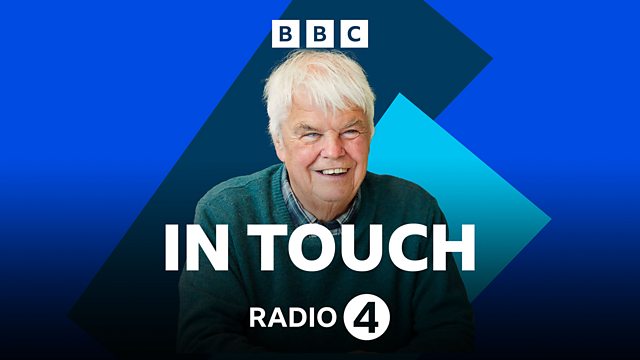
Website image description: Peter White sits smiling in the centre of the image, wearing a dark green jumper. Above Peter's head is the BBC logo (three individual white squares house each of the three letters). Bottom centre and overlaying the image are the words "In Touch" and the Radio 4 logo (the word Radio in a bold white font, with the number 4 inside a white circle). The background is a bright mid-blue with two rectangles angled diagonally to the right. Both are behind Peter, one of a darker blue and the other is a lighter blue.
Last on

In Touch transcript: 15/08/2023
Downloaded from www.bbc.co.uk/radio4
THE ATTACHED TRANSCRIPT WAS TYPED FROM A RECORDING AND NOT COPIED FROM AN ORIGINAL SCRIPT. BECAUSE OF THE RISK OF MISHEARING AND THE DIFFICULTY IN SOME CASES OF IDENTIFYING INDIVIDUAL SPEAKERS, THE BBC CANNOT VOUCH FOR ITS COMPLETE ACCURACY.
IN TOUCH – RNIB Job Advert; Access to the Women's World Cup
TX: 15.08.2023 2040-2100
PRESENTER: PETER WHITE
PRODUCER: BETH HEMMINGS
White
Good evening. Tonight, how what started as in-stadium tailormade commentary on football matches for visually impaired fans is now going global – available worldwide and, for the first time, at the women’s World Cup – giving you an alternative way of following the all-conquering Lionesses.
Clip – Commentary from Women’s World Cup
Well, you can follow the team tomorrow as they take on the Matildas of Australia in the second round of the semi-finals.
But first, from Lionesses to JAWS but not the famous man-eating shark but the bit of software, whose initials – JAWS – stand for Job Access With Speech. It’s a programme which does exactly what it says – it enables large numbers of blind and partially sighted people to read what’s on their computer screens, using synthetic speech, making a far wider range of employment accessible. So, imagine the reaction when people saw an advert for the job of a customer support officer at the RNIB, of all places, with this warning: “This position requires using multiple systems that are, unfortunately, not compatible with JAWS screen reader.” This is the same RNIB which a little further down the same advert describes itself as: “The organisation which is leading the creation of a world where there are no barriers for people with sight loss.” And one of their key aims being the creation of a fully accessible society.
Well, unsurprisingly, this advert drew an instant and indignant reaction from a number of people who read it, many of them, no-doubt, using their JAWS screen readers to do so. Some of that reaction came directly to us:
When I first saw the job advert my first feeling was shock because this is an organisation who are for blind and partially sighted and if they can be so open in a job advert about inaccessibility, then what is there to stop other organisations doing the same?
White
Many of the reactions have appeared as comments on Facebook, of which these are just a sample:
Facebook clips
If the systems are not compatible with JAWS then it should be made adaptable, after all, it doesn’t seem very inclusive for the people the charity is supposed to represent.
When advertising for a web accessibility consultant, a couple of years ago, the description stated that the job needed someone who could use a computer with assistive technology. The RNIB’s employment rate of blind people is shocking.
RNIB aside, there is one particularly important issue here – tech companies being allowed to create products which are not accessible in the first place and the complicity of businesses who fail to use their procurement power by continuing to purchase such systems and products. Most businesses, whatever their disability credentials, will tend to purchase the most effective and most affordable products in the marketplace, it’s a failure of law and regulation if there is indeed a legal duty to make products and services accessible then it’s not working.
White
Those comments from Mandy Robinson, Claire Randall and Gary Denton.
Well, when this feeling was brought to the attention of the RNIB on Twitter, the advert was quickly amended. The relevant part now reads: “This position requires multiple systems that are currently not 100% compatible with JAWS screen reader. However, we intend to switch to more accessible systems in 2024. For experienced JAWS users it is possible to use the current systems with some workarounds, for example, JAWS Scripts.”
Well, better late than never or has some real permanent damage been done?
Well, I’m joined by David Newbold, who’s Director of Services at the RNIB and Matt Johnson, an experienced tech user and a data protection and privacy lawyer and Matt is someone who’s already talked on this programme about the problems of big companies producing inaccessible software. David, first.
We know errors happen but this does seem to have been a particularly unfortunate one. I mean an advert for an RNIB job, which might seem to imply there wasn’t really much point in visually impaired JAWS users – and there are a lot of them – even applying. How could that have happened?
Newbold
First of all, I just want to apologise for this because it’s an utterly awful mistake and I really want to apologise to anyone who was made to feel that they weren’t welcome to apply for the role. We’re preaching to other employers about being accessible…
White
Well, exactly, that’s the point – a lot of the people who are objecting is you are the people who are supposed to be telling people to do this. I want to know how it could have got into the public domain. I mean how much oversight would there be of a job advert before it goes public?
Newbold
Absolutely. So, two failures happened here, Peter, one there was an individual who just lacked the understanding that there’s always a workaround. But then there was a failure in HR to put the proper checks in place. And I can’t tell you how seriously we’re taking this to make sure that this just never happens again because we’ve let people down and we’ve let ourselves down. This just should never have possibly happened. And it’s not what we stand for. We’re working so hard to try and support people to stay in work. Last year we supported about a thousand people to stay in work, often with cases where employers were like – you can’t access that software anymore. Every day we’re going into employers, saying – no, there’s scripting, there’s other adjustments that are possible. So, the fact that this happened and we dropped the ball is so disappointing and I really do want to say the role we really do welcome applications from JAWS users for this role.
White
Okay, a mistake was made and you’ve acknowledged it but shouldn’t you be concentrating on putting more pressure on companies you work with to produce software which is compatible with software like JAWS which so many blind people use, I mean it’s probably the most used piece of software?
Newbold
Yeah, absolutely. So, when we’re procuring new systems, we have really strict requirements around accessibility because we want to be the best employer we possibly can be for blind and partially sighted people. So, we make sure all new systems are super accessible. But we do have a few legacy systems which may be 10 years old, they are a very, very small number and they’re a dying breed and we’re replacing them as quickly as we possibly can. But in terms of any system we now purchase and have done for a number of years, they have to meet really strict accessibility requirements. So, in this case, there is a legacy system which is over a decade old. But the irony in this case is there are other JAWS users using the system that the recruiting manager clearly wasn’t aware of because, as I said, there are always workarounds. We’re a very different organisation to where we were a few years ago.
White
Ah well, we’ll come to that. I want to bring in Matt Johnson – what was your reaction to the advert?
Johnson
The first one was sort of abject horror in that obviously, there a couple of industry leading packages, sadly, that are still in accessible but there are many that do work very, very well and the question is – well, how did the RNIB procure something that wasn’t accessible. I mean it was no less the RNIB 10 years, if it’s truly legacy. Or the RNIB is big enough to pressure software suppliers to make things accessible. But the other side of my reaction, though, was a sort of this is a Tuesday because I think what the general impression was, from a lot of people I spoke to and a lot of people who saw the advert who commented, was well actually this is pretty much business as usual for the RNIB, quite frankly they don’t have a particularly good reputation of actually employing blind people. What actually here is someone just said the quiet part out loud.
White
Well, let’s deal with that. David, a lot of the people who reacted strongly, as Matt says, to the initial advert also connected it with what they saw as an unwillingness by the RNIB to commit totally to employing more blind people themselves. After all the availability of sophisticated technology should make that increasingly easy to do.
Newbold
We’re up to just under 20% of our paid staff and just under 60% of our volunteers are blind or partially sighted, that’s a record high for RNIB and it is rising.
Johnson
You’re mentioning obviously that 60% of your volunteer base is blind, whereas 20% of your employed staff are blind and it feels to me thereby that you’re much more happy to allow people to volunteer for you than to actually pay them.
White
Okay, David?
Newbold
Okay, yeah, so first of all just thinking about our paid staff. As I said, we’ve increased from between 12-13%, over the last couple of years we’ve introduced things like a paid work placement programme, which has often been a springboard for people who’ve got a gap on their CV, either into RNIB or elsewhere. We’ve got apprenticeship schemes, we’ve got internship programmes we run with the sector. But also, we’ve got a dedicated staff network to look at how we can be a better employer and new disability policies. But with our volunteers, so many of our volunteers are blind and partially sighted, advocates, representatives who go out into the community and that’s massively changed recently. But we also, I really want to see our numbers, across the board, of blind and partially sighed people increasing where people realise that we are a very different place and we are supported and we will get the right adjustments and support in place.
White
Matt, can I pick up one of the points that you made, when you said, you know, the RNIB, surely, is powerful enough, strong enough, to put pressure on some of these companies. I’m just wondering, in the real world, they have to work with these companies, after all RNIB may be a big charity but they don’t have the kind of resources which some of these multi-million-pound companies have, so I’m just wondering the extent to which they can really influence them.
Johnson
I think it’s a really good point and there are obviously two ways that customers put pressure on suppliers, whether that is directly, of course, in terms of negotiation and saying – well, listen we can’t exactly contract with you if you’re not accessible. But the other way is either a name and shame style campaign, where we sort of say – listen, we know that many industry leading packages are accessible, we’re publicly calling upon some of these big companies to make their applications accessible, to allow more blind people to work. And thirdly, through the legislative process. The RNIB, by virtue of being the RNIB, has a certain degree of access to lobbying to government. I recognise there are limits to that and I’m a realist in that sense but surely one of the ways by which pressure could be put on companies is to get the laws changed or at least lobby to get the laws changed.
White
Right, so David, the question there is are you being touch enough with the people you have to influence, like the government and these companies?
Newbold
We’re really involved with big tech, whether that’s Microsoft, for example we’re on their accessibility summit and they are fantastic in the fact that they have accessibility built into every new product design and that’s the nirvana we’d love to get to. Similar with Salesforce, similar with Google. More of our concern is the fact that so many people are buying, as Matt said, those low-cost software packages which may be developed in Malaysia, may be developed off-the-shelf in South Africa with very different legislation and very different expectations as well. And so, that’s one issue. But then in terms of our own legislation here in the UK, absolutely, we’ve embedded this in our priorities to influence the different political parties ahead of the next election.
White
Matt, I heard… I wasn’t sure if it was a groan or a cry of exaltation. Do you think the people who are doing very well, are they doing very well, you know your way around the tech world?
Johnson
Honestly, I don’t think so. The main reason, for example, that certain tech products have basic assistive technology built in is because there is a standard in America that requires a base level of accessibility to allow these companies to bid for government contracts. So, actually, I think it’s the other way around. We don’t start with big tech and trying to get their attention, just saying – oh please, would you mind throwing us a crumb or two of accessibility. We start with the legislative process and we start with the requirement that the law imposes. Once one or two countries change the game and change the way that the laws require accessibility to be implemented others will follow – one. And two there will be requirements on these teams internationally that say – well, you can’t sell into the US market if it’s not accessible, you can’t sell into the UK market if it’s not accessible.
White
Okay, well, we’ll have to leave it there, this goes on, but thank you both for coming on – David for fronting up on this issue and Matt for spreading a little light on what’s going on. And if you’d like to add your contribution to this debate do get in touch, contact details at the end of the programme.
Now, still with access, although on a rather lighter note, news of a development affecting a sporting event which has absolutely got the nation gripped at the moment, even those who probably really wouldn’t call themselves sports fans. I’m talking, of course, about the Lionesses – the England women’s football team – making waves at the World Cup with moments like this:
Clip – Women’s World Cup commentary
Well, of course, as most people now know, they made it to the semi-final and they’ll play the old rival – Australia – tomorrow morning. And this tournament is now being streamed with what’s being called ‘audio description commentary’ or ADC, which has usually just been available in the stadium itself but is now available to be streamed globally. It’s being sponsored by FIFA. Hala El-Ousta is FIFA’s senior diversity and accessibility manager.
Hala, what is the significance of this for the women’s World Cup?
El-Ousta
Well, Peter, it’s been a key principle of ensuring our tournaments are safe, inclusive and [indistinct word] free. So, over the years, as technology has advanced and accessibility topics have also evolved, this feature, in terms of audio descriptive commentary has allowed us to enable that vision in terms of to bring the game to all but not just within the stadiums but now as a feature within people’s homes around the world. Historically, it’s been done with equipment at the stadium, with receivers and headphones, whereas now with this new technology it’s able to be streamed on people’s phones. So, we can use their own devices, their own headphones – it’s more hygienic, especially after covid as well.
White
One thing I must ask you, I mean, what does it offer that a standard commentary, on BBC Sport or talkSPORT, what does it offer that they can’t?
El-Ousta
So, it’s specially trained commentators that are able to provide that additional detail of that additional narration that describes the significant visual information. So, during the live match experience, it can focus on things like body language, expressions of the players, of the officials, of the crowd, it could be scenery, it could be the colours within the stadium. It’s also the exact location or distance of the ball. Did the player use the inside or outside of their foot to score the goal. Did they drop their shoulder. How did they celebrate afterwards. So, it really gives you that holistic picture.
White
Well, let me bring in Mike Rice on that subject as well. Mike is the operations manager at CAFE, that’s the Centre for Access to Football in Europe and they’re the company who train the AD commentators.
I mean, Mike, staying with that idea, is that exactly what you’re doing – this wider idea?
Rice
Exactly right, yeah. So, there’s often an assumption with TV and also radio commentary, to a lesser extent, that the listeners have watched the live matches before and certain information maybe will be by-passed in that case. So, where there is fill in the blanks, it’s especially helpful for many partially sighted and blind fans but we’ve also had really positive feedback from other fans as well who said that it’s really helped to complement their matchday experience.
White
And what kind of training are the commentators actually given?
Rice
So, CAFE works with a number of expert trainers from across the globe, covering different languages and different locations. Typically, it’s about a day and a half in person training and then there’ll be some home-based tasks as well, giving them, first of all, an introduction to what audio descriptive commentary is and what makes it different to commentaries. We’ll start with really small clips or maybe even a picture and then we pick up on the different areas, it can be really helpful in commentating at a live match. So, the commentary follows exactly what’s happening on the pitch in a timely manner, so that their partially sighted and blind fans don’t get left behind.
White
And how do people at home actually access this?
Rice
Through the FIFA interpreting app. The app’s available on the Apple app store and also the Google play store. There’s just an access code to include in there and then you can tune in to the matches live, listening to the live commentary alongside any of the matches taking place during the women’s World Cup.
White
And Hala, are there any other plans, are you expanding this at all after the women’s World Cup?
El-Ousta
It’s something we’re definitely working on, really building that local base of commentators around the world so that it’s not just for our own tournaments but it exists beyond for the local clubs, games and future events as well in sports.
White
Well, Hala El-Ousta from FIFA and Mike Rice from CAFE, thank you both very much indeed. And we’ll put details of that access code for the FIFA interpreting app on our website. And, of course, we’ll all be rooting for the Lionesses tomorrow, except for a few resident Aussies, who may not be.
That’s it for today. If you want to respond to anything you’ve heard in the programme, email intouch@bbc.co.uk, leave a voice message on 0161 8361338 or go to our website bbc.co.uk/intouch.
From me, Peter White, producer Beth Hemmings and studio managers Sue Stonestreet and Amy Brennan, goodbye.
Broadcast
- Tue 15 Aug 202320:40BBC Radio 4
Download this programme
Listen anytime or anywhere. Subscribe to this programme or download individual episodes.
Podcast
![]()
In Touch
News, views and information for people who are blind or partially sighted