What You're Entitled To; Access to BBC Sounds
Details of what services you are entitled to in the event of sudden sight loss or a diagnosis and why BBC radio streaming will soon cease on certain internet radio devices.
Following on from last week's discussion about whether you can prepare for sight loss, we've been asked to provide further information about the type of services you are entitled to. Simon Labbett is a rehab officer and Chair of the Rehab Workers Professional Network and he provides details of changes that can be made in the kitchen, what you should be asking for and from whom.
If you own an older internet radio streaming device, you may have heard a recent announcement from the BBC stating that it will no longer be streaming on select devices, as of mid-2023. We investigate why this is and what can be done about it.
Presenter: Peter White
Producer: Beth Hemmings
Production Coordinator: Paul Holloway
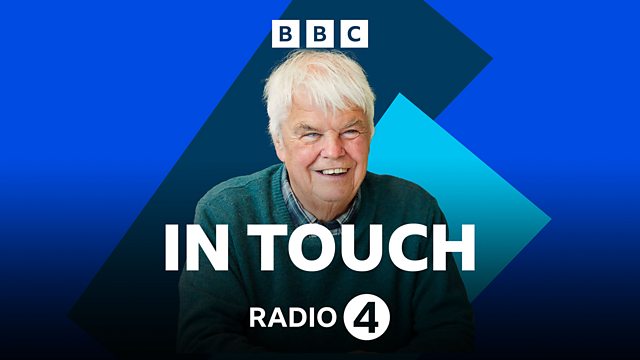
Website image description: Peter White sits smiling in the centre of the image. He is wearing a dark green jumper with the collar of a check shirt peeking through at the top. Above Peter's head is the BBC logo, across Peter's chest reads "In Touch" and beneath that is the Radio 4 logo. The background is a series of squares that are different shades of blue.
Last on

In Touch Transcript 291122
THIS TRANSCRIPT WAS TYPED FROM A RECORDING AND NOT COPIED FROM AN ORIGINAL SCRIPT. BECAUSE OF THE RISK OF MISHEARING AND THE DIFFICULTY IN SOME CASES OF IDENTIFYING INDIVIDUAL SPEAKERS, THE BBC CANNOT VOUCH FOR ITS COMPLETE ACCURACY.
IN TOUCH – What You're Entitled To; Access to BBC Sounds
TX: 29.11.2022 2040-2100
PRESENTER: PETER WHITE
PRODUCER: BETH HEMMINGS
White
Good evening. Now, here’s a message I bet you’ve heard quite often recently:
Clip
Subscribe now on BBC Sounds and you can also check out every single episode in video format on BBC iPlayer. The Joe Wicks podcast for BBC Radio 4.
White
But just how easy is it for all BBC radio listeners to take this advice? More on that towards the end of the programme.
But first, we’ve had a very gratifying response to our item last week on how feasible it is to prepare for the loss of your sight, however, tactlessly people are sometimes given the news. Listeners were particularly impressed with the honesty and practicality with which our contributors talked about the issue:
Listeners’ emails
Balsom
The doctor, nurse and art therapist were so honest and articulate, I could not turn my attention away from all that they shared. Life is unfair but your guests weren’t lost in self-pity, quite the opposite, with their combined efforts to find ways to enable them to continue to enjoy their lives, I’m just hoping that the woman who was so recently diagnosed will receive the services that she needs, so that she too, can take confident steps toward a rewarding life.
Riley
I feel particular empathy for Pauline as our circumstances seem similar. I, too, live alone and although I have friends, I’m childless and an only child of only children – mum since dead.
White
Those emails there, among many, were from Elizabeth Balsom and Carrie Riley. But there was one reservation and listener, Martin Packer, summed it up.
Packer – email
As someone whose sight is deteriorating, I listened to the item with great interest. However, all I learnt was that, yes, perhaps it is possible to prepare for sight loss but I didn’t learn what preparation might consist of. For example, skills were mentioned – what skills? I think someone mentioned modifications to the kitchen – what modifications? All in all, by the end of the programme, I was frustrated. Another programme perhaps?
White
Well, Martin, I’m sure you appreciate that just under 20 minutes isn’t long enough to run a full-scale rehab course, nonetheless, we thought you had a point. So, today, we’ve invited Simon Labbett, he is a rehab worker himself and he chairs the rehab workers professional network, to give us a few clues about the practicalities.
Simon, first of all, in a nutshell, what are newly blind or severely sight impaired people entitled to – what are their rights?
Labbett
Well, to start off with, their first right is the right to an assessment and assessment is just a posher word for a proper conversation where the individual says what they think they need and to find out what services are available. It should be led by the person who’s making the enquiry. So, someone like me, would try and find out what you’re really concerned about, what your strengths are, what you’d like to be able to do better or to continue doing and we take it from there.
White
Okay, so let’s just take the example that Martin, in his email, mentioned which was the kitchen. So, I mean regular listeners to this programme will know that many visually impaired people and totally blind people cook confidently and competently but where do you start to teach someone trying to do it from scratch?
Labbett
Yes, well let’s make the working assumption that the person’s already been cooking to some extent. So, you’re starting in their kitchen. I’d say to Martin, if I were working with him, show me what your kitchen’s like, I try and work out whether it needs more lighting, are there things that need to be changed about the environment to make safer, you know how to keep your fingers from being cut by a knife when you’re chopping might be a consideration. So, it depends what particular aspect of that you’re not too confident about. And how you can adapt to that.
White
And there is quite a lot of adapted equipment around, isn’t there?
Labbett
There’s lots of adaptive equipment. There’s some very specific things, like the classic liquid level indicator to tell you how far the water is up in the cup. Sticky bump-ons you put on to a cooker to let you know how far the dial’s turned. But it may be just a question of improving the lighting or adapting the layout that you’ve got in front of you. If you’re prone to knocking a pan over, it might be better to use the back part of the hob than the front part of the hob.
White
Okay, let’s leave the kitchen. I mean you could spend several hours doing this but we haven’t got several hours. In terms of having the confidence to move around, presumably you’d start inside the home really?
Labbett
Yes, I mean a lot of people say already I can move around the home, I’m confident about that, once I get out the front door, that’s a different matter. A lot of, what they call, mobility – orientation and mobility training or walking practise, as someone I’m working with calls it, what is walking practise about is confidence building. What is it that’s making you nervous? Is it the crossing of the road, is it the fact that you can’t see the kerb edge? And that’s where you might focus the training.
White
A lot of people will, because it gets a lot of publicity, will think about the dog, that’s, presumably, just one of the options, yeah?
Labbett
It is one of the options and we would always discuss that but for people with very low vision it’s often long cane training and long canes come with, for some people, an element of stigma but some people find them incredibly liberating. And I suppose part of the discussion is if you feel that a cane would help, how you introduce that. But it’s also, if you’ve got some residual vision, it’s using the vision you’ve got but it might be that having a cane helps you use the vision you’ve got.
White
There’s obviously a huge range, also, of technology. Just tell us a bit about the range of equipment now available, you know, stuff to help you read, to scan print, to get online radio stations – I’m just wondering how you deal with that because that, too, must seem pretty daunting to start with.
Labbett
It can be very daunting. I think the starting point, again, is where someone’s already at. If they already use a smartphone, we would start by looking at the accessibilities on a smartphone or on an iPad or whatever it is. There are some quick fix gadgets which are quite expensive, things that will read a whole piece of text to you in one fell swoop but they often can be quite expensive but with an app on a phone, there may be a much cheaper way of doing that. The barrier is usually the befuddlement. Vision and IT don’t always go well together so starting slowly with some basic applications on an ordinary mainstream phone is the starting point.
White
Right. Now people will be hearing a lot, though, whatever we say about all these exciting things that are available, they’ll be hearing about the problems of funding social care. Bluntly, how likely are you to get these services that you’ve talked about?
Labbett
There should be a vision rehabilitation specialist in every local authority area in the country. The way, I suppose, to really push it is to be assertive about what you want but when you are saying – I’d like an assessment – be very clear why you want an assessment, what you’re having difficulty with. I suppose it’s fair to say that social services are, by necessity, reactive, so they’re not going to come out calling on your door, so you have to phrase it in a way that says – If I can’t see well, these are the consequences of that, I am at risk of x, y and z. It seems a very negative way of phrasing it but it’s more likely to get a response that way. And having clarity in your mind, what it is you want to achieve.
White
And who is the person, Simon, because the trouble is social services is a word, for a lot of people they’ll never have dealt with social services, they’ll never have needed to – who actually is it that you bully?
Labbett
The person you are assertive with, let’s say that, would be the access point at adult social care, usually. Sometimes, the voluntary sector have the contract and you can talk straight to the voluntary sector organisation…
White
That’s your local organisation for the blind, basically.
Labbett
Yeah and that’s a lot simpler but in the majority of places that’s not the case. So, you’re looking at adult social care and the person you are talking to will have to have a very wide of knowledge of lots of health conditions. So, you need to be saying – I’m losing my vision, I need this help, I would like help from the sensory needs team or from the vision rehabilitation team. And if they’re not sure, they will need to go away and find out if they’ve got one of those.
White
So, there’s a lot that’s available if you can get to it?
Labbett
If you can get to it and you’re willing to push at it. And don’t be fobbed off. Say, I’m going to call back in four or five weeks if I’ve not heard from you and see how far we’ve got. How does that sound?
White
Four or five days might be better.
Labbett
Oh absolutely.
White
Simon Labbett, thank you very much indeed.
Now, with the BBC celebrating its centenary this year, it’s a good time, perhaps, to remind ourselves that the arrival of radio 100 years ago was almost certainly the biggest step ever to put visually impaired people on equal terms when it came to getting information about news, culture, entertainment, far more significant than braille which many people can’t master. But is that equality in danger for some when they hear adverts like these?
BBC advert
This is sneakernomics.
Subscribe at BBC Sounds.
Expect the unexpected – Woman’s Hour, listen on BBC Sounds.
That’s One Dish with me, Andi Oliver, listen now on BBC Sounds.
White
BBC Sounds, a digital service which visually impaired people, who have smartphone and app skills, can use. But Ray Gee is one of those whose concerned about the rest who can’t.
Gee
Many blind internet radio listeners, myself included, have been getting messages on our specialist players that the streams we are using will not be available after mid-2023. This is very concerning as players like those supplied by Humanware and other specialist manufacturers are very likely to be unable to access the streams provided via BBC Sounds, the BBC wants us to use when the present streams stop working. Accessing BBC Sounds does involve setting up an account on a smartphone or tablet but many blind listeners are not in a position to use the BBC Sounds app to do this. Increasingly, too, the BBC is driving listeners to BBC Sounds, which simply is not accessible to so many blind people, especially for using catch up services. Should not the BBC be our BBC as well as those able to use smartphones?
White
Well, another of our listeners who got the message that Ray referred to is Dennis Huckle and he joins us now. Dennis, first of all, just explain how you have been accessing BBC Sounds up to now, on what devices?
Huckle
Well, I can access BBC Sounds via a PC but the point that Ray makes is excellent because I use a very small device which is called the Victor Reader. This is produced by Humanware and what it enables you to do in one tiny box, so you can carry around with you, is play Daisy talking books, play MP3 audio files, connect to many radio stations, not just the BBC, but the BBC connection is extremely important. And I think that the BBC denying us access via these specialist devices is extremely concerning.
White
The real point about it is you’re saying this is actually simpler for those people who struggle with smartphones and tablets?
Huckle
Oh yes, it certainly is, Peter. All you do, you connect an SD card so that you can then easily set up your wi-fi connection for radio. Everything you do on the Victor Reader is spoken.
White
Okay and it was this message that you heard on your Victor Reader the other day.
Victor Reader
We are making changes to the way BBC livestreams are distributed via third party services and platforms and the BBC stream you are currently listening to will stop working by mid-2023.
White
So, Dennis, you’ve explained that you can cope without this but what is your concern really about this?
Huckle
Well, it is that I do use a specialist device at home and also when I travel and I paid 300 odd pounds for an excellent device and the BBC are denying me use on that device. But also, many people will find this easier to use than a smartphone with a touchscreen and there are many people, sadly, who aren’t able to use computers and they should be helped as much as possible.
White
Well, we have, for some time now, been inviting someone from the BBC on to In Touch to talk about this and other related issues but, again, we’ve been told that no one is available to join us but this is what they told us in a statement:
BBC statement
The BBC uses several streaming technologies to deliver BBC Sounds. If you are hearing a message informing of this change you are listening using Shoutcast. We’re making these changes because Shoutcast is an older streaming technology and many connected radio devices in the UK no longer use it for BBC streams. We informed the manufacturers and other service providers of these changes in May and provided instructions for them to update the devices to ensure listeners receive our supported streams. One of those we informed of the changes were the RNIB, which is responsible for the distribution of the Humanware devices mentioned in your listeners’ messages. If your listeners are using a device provided by the RNIB, they should get in touch with them, as they’ll be able to ensure the updates are made. If they’re using a different device, not provided by the RNIB, and are still hearing the message they should get in touch with the manufacturer.
Well, we’ve also been in touch with Humanware. They say: “At this current time there are no planned software updates on the Stream 2…” that’s the device that Dennis has. They say: “The platform will continue supporting all radio stations that stay on the streaming service we use.”
So, there still seems quite a lot to unpick here. So, we’ve gone to the British Wireless for the Blind Fund, which, for some time now, has done much more than simply provide radios to blind people and now attempt to give people help with a range of technology as it develops.
David Beard is the technology project manager at BWBF. David, I mean, can you just spell out in simple lay terms what the problem is here?
Beard
Ultimately, the internet is outgrowing some of these devices and everything is just moving on. And we recognise that people put their hand in their own pocket and pulled their own money out, you know, it was obviously – Dennis referred to – but, ultimately, these devices can’t live forever, they are static when they are made, the internet continues on after them.
White
Can I ask you a specific question? I mean I’m looking for possible solutions for people because they’re being urged to use BBC Sounds and then finding that they can’t. I mean what about smart speakers for instance, such as Amazon and Google, will they not do this job?
Beard
There is a BBC Sounds still but ultimately that will require obviously finding again and it potentially will never provide the full range of content that is provided through, obviously, the app and, obviously, through the standard PC online access.
White
Because, I think, for example, you can only get relatively recent programmes, you can’t go back into the mists of time with the smart speakers.
Beard
That’s correct, the full catalogue of information isn’t – and audio content – isn’t available.
White
So, David, whose job is it to solve this problem? I mean people like Dennis and Ray are being told to go to the manufactures or the RNIB but should, could, the BBC have anticipated this problem?
Beard
I believe the BBC have been talking about this problem for many years, Peter. I know that they first came to us, as an organisation, potentially, four or five years ago and they were looking at the number of people using these devices and, like I say, I just feel that there is potential for much more work to be done via the bigger tech companies to come and help the organisation to make smartphones and other applications more accessible to these individuals.
White
Can I just ask you, you’ve been working in the field of radio for – the organisation – for decades now, do you have any statistics about how many blind and partially sighted people depend on radio and do you have an idea of how many people won’t, at this stage, be able to use smartphones and other related equipment?
Beard
As an organisation, we currently support around about 40,000 people with radio and with digital app services at the British Wireless for the Blind Fund here. And recently through the end of one of our services we have recognised that there are hundreds, if not thousands, of individuals who are in the same place as Dennis and Ray are, in that they are unable to make that transition, obviously, to smart devices – smartphones, iPads and the like.
White
Let me just go back, finally, to Dennis. I mean, as we know, Dennis and Ray are perhaps in a better place than quite a lot of people because they have good technical skills. Can I ask you Dennis, what are you going to do about this?
Huckle
I’ve also contacted DCMS – the Department of Culture, Media and Sport – because I think they have a responsibility over the BBC. But I think really the problem that the BBC and the RNIB would have is that often these products are manufactured abroad. It’s a shame that there’s not a company over here that could look at this issue and say hang on, we may be able to do something. But in the end, it’s going to cost the user money. I think it’s always the case that these specialist devices are often behind technology, as David has rightly said, and this, I think, is the issue.
White
We’re going to have to leave it there. Dennis Huckle, David Beard, thank you both very much indeed.
Well, a lot to think about there. Your views please, I’m sure you’ll have some. You can email intouch@bbc.co.uk, you can leave voice messages on 0161 8361338 or go to our website bbc.co.uk/intouch.
That’s it, from me Peter White, producer Beth Hemmings and studio managers, John Cole and Simon Highfield, goodbye.
Broadcast
- Tue 29 Nov 202220:40BBC Radio 4
Download this programme
Listen anytime or anywhere. Subscribe to this programme or download individual episodes.
Podcast
![]()
In Touch
News, views and information for people who are blind or partially sighted