
Uprising
Donald Macleod continues his story of Liszt and Hungary with the composer's nationalist sentiments pitched against a turbulent Europe of revolution and uprising.
Europe in the 1840s saw a potent wave of nationalism with uprisings breaking out in many of the continent’s major cities as people campaigned against old feudal rule and the right to self-determination. As Donald Macleod relates, the uprising in Hungary was a prime example and it required a reaction and a response from the country’s most famous son, Franz Liszt, both personally and musically.
Hungarian Rhapsody No 15 'Rakoczy March'
John Ogdon, piano
Arbeiterchor
Dietrich Fischer-Dieskau, baritone
Netherlands Chamber Choir
Rudolf Jansen, piano
Uwe Gronostay, conductor
Symphonic Poem - 'Hungaria'
London Philharmonic Orchestra
Bernard Haitink, conductor
Liebestraum No 1 'Hohe Lieb'
Daniel Barenboim, piano
'Magyarok Istene' (version for organ)
Olivier Vernet (organ)
Last on

More episodes
Music Played
![]()
Franz Liszt
Hungarian Rhapsody No 15 'Rakoczy March'
Performer: John Ogdon.- EMI 392 747 2.
- EMI.
- 21.
![]()
Franz Liszt
Arbeiterchor
Performer: Rudolf Jansen. Singer: Dietrich Fischer‐Dieskau. Choir: Netherlands Chamber Choir. Conductor: Uwe Gronostay.- GLOBE : GLO-5070.
- GLOBE.
- 2.
![]()
Franz Liszt
Symphonic Poem - 'Hungaria'
Orchestra: London Philharmonic Orchestra. Conductor: Bernard Haitink.- PHILIPS : 426-636-2.
- PHILIPS.
- 2.
![]()
Franz Liszt
Liebestraum No 1 'Hohe Lieb'
Performer: Daniel Barenboim.- DEUTSCHE GRAMMOPHON : 435-591-2.
- DEUTSCHE GRAMMOPHON.
- 7.
![]()
Franz Liszt
Magyarok Istene
Performer: Olivier Vernet.- LIGIA.

Broadcasts
- Wed 19 Jan 202212:00BBC Radio 3
- Wed 23 Aug 202312:00BBC Radio 3
Beethoven Unleashed – the box set

The complete set of Radio 3 Beethoven Unleashed podcasts, with Donald Macleod.
What was really wrong with Beethoven?

Georgia Mann and neurosurgeon Henry Marsh examine the composer's numerous health problems
Composers A to Z

Visit the extensive audio archive of Radio 3 programmes about Composers and their works.
Who knew? Five eye-opening stories from Composer of the Week

The production team reflects on 5 of Donald Macleod’s best stories from the last 20 years
Five reasons why we love Parry's Jerusalem

What is the strange power of Jerusalem which makes strong men weep?
A man out of time – why Parry's music and ideas were at odds with his image...
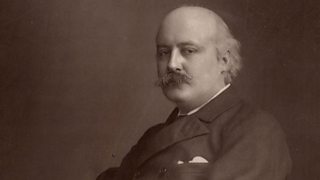
The composer of Jerusalem was very far from the conservative figure his image suggests.
Composer Help Page

Find resources and contacts for composers from within the classical music industry.
