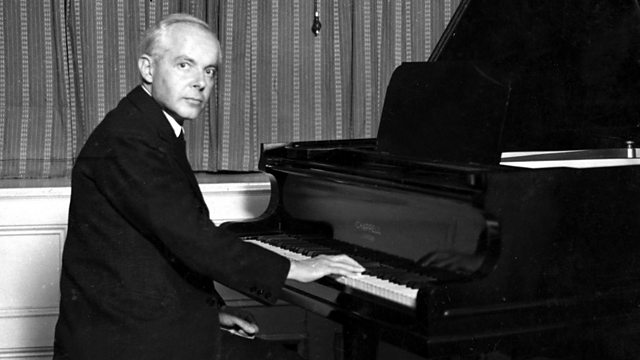
Borders Redrawn
Donald Macleod explores Béla Bartók’s life and work in the years after World War I.
Donald Macleod explores Béla Bartók’s life and work in the years after World War I.
In the early weeks of 1918, a virulent strain of influenza was detected among military personnel. It spread and it’s estimated that some 500 million people, a quarter of the population of the world, contracted what was called Spanish ‘Flu. One of them was Bartók. He was confined to bed for almost a month and at times was unable to speak. When he recovered, Hungary was in turmoil in the first of a series of upheavals which would see the borders of the nation redrawn and Bartók’s own uncomfortable position in the spotlight of political life.
Three Hungarian Folk Tunes
Zoltan Kocsis, piano
The Miraculous Mandarin Suite
Chicago Symphony Orchestra
Georg Solti, conductor
Village Scenes
i Wedding
ii Lullaby
New York Philharmonic
Ensemble Intercontemporain
Pierre Boulez, conductor
Dance Suite
Philharmonia Orchestra
Esa-Pekka Salonen, conductor
Last on

Music Played
![]()
Béla Bartók
Three Hungarian Folk Tunes, Sz 66
Performer: Zoltán Kocsis.- PHILIPS : 434-104-2.
- PHILIPS.
- 26.
![]()
Béla Bartók
The Miraculous Mandarin Suite, Sz 73
Conductor: Georg Solti.- DECCA : 470-516-2.
- DECCA.
- 8.
![]()
Béla Bartók
Village Scenes, Sz 79 (i Wedding; ii Lullaby)
Performer: Camerata Singers. Performer: New York Philharmonic. Conductor: Pierre Boulez.- SONY : SMK-45837.
- SONY.
- 5.
![]()
Béla Bartók
Dance Suite, Sz 77
Orchestra: Philharmonia Orchestra. Conductor: Esa‐Pekka Salonen.- SIG CD 466.
- SIGNUM.
- 12.

Broadcast
- Wed 22 Sep 202112:00BBC Radio 3
Beethoven Unleashed – the box set

The complete set of Radio 3 Beethoven Unleashed podcasts, with Donald Macleod.
What was really wrong with Beethoven?

Georgia Mann and neurosurgeon Henry Marsh examine the composer's numerous health problems
Composers A to Z

Visit the extensive audio archive of Radio 3 programmes about Composers and their works.
Who knew? Five eye-opening stories from Composer of the Week

The production team reflects on 5 of Donald Macleod’s best stories from the last 20 years
Five reasons why we love Parry's Jerusalem

What is the strange power of Jerusalem which makes strong men weep?
A man out of time – why Parry's music and ideas were at odds with his image...
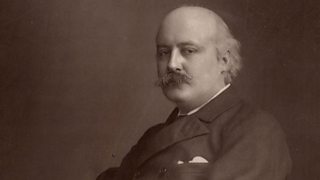
The composer of Jerusalem was very far from the conservative figure his image suggests.
Composer Help Page

Find resources and contacts for composers from within the classical music industry.
