The Shakespeare of Music
Donald Macleod's survey of Haydn's string quartets follows the events surrounding the 58-year-old composer's astonishing first visit to London, with Op 64 No 6 and Op 71 No 3.
Donald Macleod's survey of Haydn's string quartets follows the events surrounding the 58-year-old composer's astonishing first visit to London, with op 64/6 and op 71/3.
From his opus 0 and opus 1 of the 1750s to his unfinished opus 103 of 1803, Haydn’s 68 string quartets span the major part of his compositional life. While he wasn’t the inventor of the form, he’s fully deserving of the epithet, the “father of the string quartet” as he elevated the form to new heights. It’s his ideas that take the quartet from its 18th century antecedents to the conventions that are rather more familiar to us today. The conversational textures he created redefined the relationship between the four instruments. Always aware of his surroundings, and other musical influences, he used ideas and rhythms from folk music, dance, opera, the instrumental concerto and other genres for larger forces. He established a sequence of movements, and within them, adapted sonata form, as well as making use of the minuet-trio, the variation, the rondo and fugue forms. Original, serious, yet with his trademark, irresistible humour never too far away, Haydn’s quartets make up a unique body of work that justly receive both admiration and appreciation.
Across the week Donald Macleod enjoys a masterclass in string quartet writing from one of the great masters of the form. His survey of Haydn includes complete performances of opus 50 no 4 - a quartet written for a King in the grandest of styles, the brilliant and theatrically inspired op 64, no 2, and the spritely and playful Lark Quartet. The versatile composer produced opus 71 no 2 with the largest of concert spaces in mind, and the series concludes with the second of Haydn’s opus 76 quartets, the last complete set he wrote, and widely regarded as being among the supreme accomplishments of his career.
Pensioned off by the Esterhazy's, after serving the noble family for almost 30 years, then unexpectedly headhunted by an impresario, Peter Salomon, the timing was ripe for new pastures, and what an abundance of riches were awaiting him.
Symphony in G, Hob 1 no 8 (Le soir)
Presto – La tempesta
The English Concert
Trevor Pinnock, director
Piano Trio no 40 in F sharp minor, Hob.XV:26
I: Allegro
Kungsbacka Piano Trio
Symphony no 92 (Oxford)
I: Adagio – Allegro
LSO
Colin Davis, conductor
String Quartet, op 64 no 6 in E flat major
The Amsterdam String Quartet
l’anima del filosofo
Act 1 Sc 1: Filomena abbandonato
Cecilia Bartoli, mezzo soprano
Academy of Ancient Music
Christopher Hogwood, director
String Quartet no 56 in E flat major op 71 no 3 Hob III: 71:1
1: Vivace
The Lindsays
Last on

Music Played
![]()
Joseph Haydn
Symphony in G major "Le Soir" (4th mvt)
Performer: English Concert Orchestra. Director: Trevor Pinnock.- ARCHIV : 423-098-2.
- ARCHIV.
- 12.
![]()
Joseph Haydn
Piano Trio No 39 in G major, "Gypsy" (2nd mvt)
Ensemble: The Florestan Trio.- HYPERION : CDA-67719.
- HYPERION.
- 5.
![]()
Joseph Haydn
Symphony No 92 in G major "Oxford" (1st mvt)
Orchestra: London Symphony Orchestra. Conductor: Colin Davis.- LSO : 5099.
- LSO.
- 9.
![]()
Joseph Haydn
String Quartet in E flat major, Op 64, No 6
Ensemble: Amsterdam String Quartet.- CHANNEL : CCSSA28209.
- CHANNEL.
- 1.
![]()
Joseph Haydn
L' anima del filosofo, Act 1, Sene 1 Filomena abbandonato
Singer: Cecilia Bartoli. Ensemble: Academy of Ancient Music. Conductor: Christopher Hogwood.- DECCA : E4526682.
- DECCA.
- 5.
![]()
Joseph Haydn
String Quartet in E flat major, Op. 71, No 3 (1st mvt)
Ensemble: The Lindsays.- ASV : GLD-4012.
- ASV.
- 9.

Broadcast
- Tue 13 Apr 202112:00BBC Radio 3
Beethoven Unleashed – the box set

The complete set of Radio 3 Beethoven Unleashed podcasts, with Donald Macleod.
What was really wrong with Beethoven?

Georgia Mann and neurosurgeon Henry Marsh examine the composer's numerous health problems
Composers A to Z
Visit the extensive audio archive of Radio 3 programmes about Composers and their works.
Who knew? Five eye-opening stories from Composer of the Week

The production team reflects on 5 of Donald Macleod’s best stories from the last 20 years
Five reasons why we love Parry's Jerusalem
What is the strange power of Jerusalem which makes strong men weep?
A man out of time – why Parry's music and ideas were at odds with his image...
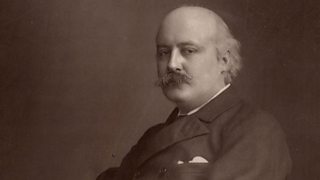
The composer of Jerusalem was very far from the conservative figure his image suggests.
Composer Help Page

Find resources and contacts for composers from within the classical music industry.
