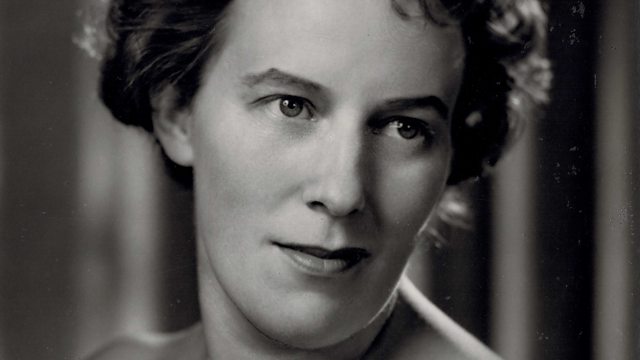
A Young Professional
Donald Macleod considers how one of the lowest points in Ruth Gipps's career was put to rest by academic success and the unexpected discovery that she could conduct.
Donald Macleod considers how one of the lowest points in Ruth Gipps's career was put to rest by academic success and the unexpected discovery that she could conduct.
Ruth Gipps was born in Bexhill-on-Sea in 1921. Her Swiss-born mother was an accomplished pianist and, recognising her daughter’s aptitude, taught her piano from an early age. Gipps was four years old when she gave her first public performance, at Grotrian Hall in London. It was from that moment on, she said later, that she knew without a shadow of a doubt, that playing the piano was her job and that she wanted to be a composer.
A highly gifted and versatile musician, on 25th March 1945, Gipps took part in a public concert as the soloist in Glazunov’s Piano Concerto before rejoining the woodwind section of the City of Birmingham Orchestra as an oboist for the premiere of her first symphony. Four more symphonies were to follow. But a troublesome injury to her hand, which she had sustained in childhood, brought her career as a concert pianist to an end in the 1950s. By this stage she had achieved some notable successes as a composer. The recipient of several composition prizes, an early high point was the selection of her orchestral work “Knight in Armour” by Sir Henry Wood for the Last Night of the Proms broadcast in 1942.
Awarded a doctorate in music in 1947, Gipps held teaching posts at London’s Trinity College of Music, the Royal College of Music and Kingston Polytechnic and did terms as Chair of both the Composers’ Guild and the newly founded British Music Information Centre. There’s little doubt though that Gipps faced considerable gender discrimination in several of the fields in which she excelled. On discovering her enjoyment of conducting, she overcame this by founding two orchestras, the London Repertoire Orchestra in 1955, and then the Chanticleer Orchestra.
A composition pupil of Vaughan Williams, Gipps defined her music as, “a follow-on from her teacher, Bliss and Walton, the three giants of British music since the Second World War.” While all these composers can be heard in her music, her music has its own distinctive and original qualities.
Publicly outspoken, Gipps remained firmly anti-modernist. She regarded 12-tone music, serial music, electronic music and avant-garde music as utter rubbish. From the late 1950s the musical establishment felt her music was out of step with the times, and they bypassed her work. She did have some admirers, including Sir Arthur Bliss, whom she had first met in 1942, who continued to support and admire her music but in general it fell to her own resourcefulness to get her music heard, arranging performances, which she would then conduct with her own orchestras.
Across the week Donald Macleod is joined by Victoria Rowe, the keeper of Gipps’ archive and her daughter-in-law. Together they build a picture of Gipps as a child performer, a young student, an educator, a conductor and a composer. The series features specially recorded material from the BBC’s performing groups, including Gipps’s Second, Third and Fourth Symphonies. There’s also a brand-new recording of Cringlemire Garden, for string orchestra, and two more new releases, both of which explore her chamber music. All three recordings are planned for release later this year, to mark the centenary year of her birth.
Preparing the City of Birmingham Chorus for a performance of Elgar's Dream of Gerontius made Ruth Gipps realise that if she wanted to further her ambitions as a conductor she would need to move to London in the near future.
Sonata Op 45 (4th movt)
Peter Cigleris, clarinet
Duncan Honeybourne, piano
Cringlemire Garden
South West German Chamber Orchestra
Douglas Bostock, conductor
Seascape for 10 wind instruments
BBC National Orchestra of Wales
Jonathan Bloxham, conductor
An Easter Carol Op 52
BBC Singers
Sofi Jeannin, conductor
Gloria in excelsis Op 62
BBC Singers
Sofi Jeannin, conductor
Symphony No 3 (3rd & 4th movts)
BBC Philharmonic
Rumon Gamba, conductor
Last on

Music Played
![]()
Ruth Gipps
Clarinet Sonata, Op 45 (4th mvt)
Performer: Peter Cigleris. Performer: Duncan Honeybourne.- SOMM : ---.
- SOMM.
- 1.
![]()
Ruth Gipps
Cringlemire Garden
Conductor: Douglas Bostock.- CPO : ---.
- CPO.
- 1.
![]()
Ruth Gipps
Seascape Op.53
Orchestra: BBC National Orchestra of Wales. Conductor: Jonathan Bloxham.![]()
Ruth Gipps
An Easter Carol, Op 52
Performer: Stephen Farr. Choir: BBC Singers. Conductor: Sofi Jeannin.![]()
Ruth Gipps
Gloria in excelsis, Op 62
Performer: Stephen Farr. Choir: BBC Singers. Conductor: Sofi Jeannin.![]()
Ruth Gipps
Symphony No 3, Op 57 (3rd & 4th mvts)
Orchestra: BBC Philharmonic Orchestra. Conductor: Rumon Gamba.- CHANDOS : CHAN 20161.
- CHANDOS.
- 1.

Broadcast
- Wed 10 Mar 202112:00BBC Radio 3
Beethoven Unleashed – the box set

The complete set of Radio 3 Beethoven Unleashed podcasts, with Donald Macleod.
What was really wrong with Beethoven?

Georgia Mann and neurosurgeon Henry Marsh examine the composer's numerous health problems
Composers A to Z
Visit the extensive audio archive of Radio 3 programmes about Composers and their works.
Who knew? Five eye-opening stories from Composer of the Week

The production team reflects on 5 of Donald Macleod’s best stories from the last 20 years
Five reasons why we love Parry's Jerusalem

What is the strange power of Jerusalem which makes strong men weep?
A man out of time – why Parry's music and ideas were at odds with his image...
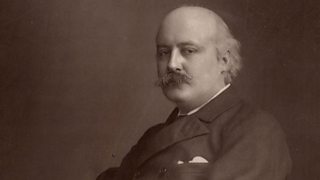
The composer of Jerusalem was very far from the conservative figure his image suggests.
Composer Help Page

Find resources and contacts for composers from within the classical music industry.
