Through Change and Chance
Canon Angela Tilby and Canon Stephen Shipley look to the start of the New Year and the Epiphany with a reflection on the changes and chances in their individual lives.
"Through change and chance He guideth, only good and only true."
Robert Bridge's translation of Joachim Neander's hymn "All my hope on God is founded" expresses faith and trust in God throughout the changes and chances of this fleeting world.
At a time of uncertainty, Canon Angela Tilby and Canon Stephen Shipley reflect on the changes and chances in their own lives; the personal challenges they have faced and how these have had an impact on their health, well-being, faith and vocation.
Through the writing of St Ignatius, Francis Thompson, John Henry Newman, Thomas Merton and GK Chesterton they explore the place of faith in unpredictable times. They focus on the central message of The Feast of the Epiphany, a revelation that transforms all knowledge and throws the world into a different perspective.
With music by Vaughan Williams, Messiaen, Schubert, George Gershwin and Peter Warlock, this conversation focuses of faith in times of trouble and finding God in all things.
Reader: Ian Dunnett Jnr
Producer: Katharine Longworth
Last on

More episodes
Sunday Worship
Stephen:We’ve been surprised by change, and often, not in a good way. For those who have faith it raises questions of God’s goodness and providence, and also of what his call and challenge is to us as individuals. What has happened to our nation and our world in 2020 is much greater than what has happened to us as individuals, and yet we’re all affected by it.
Angela:Stephen and I have worked together for over thirty years as both broadcasters and as priests. We’ve had the chance to travel the world together through pilgrimages and productions. The years have thrown up changes and chances that were entirely unexpected…and more so as we’ve got older.
StephenWe’ve remained good friends - and I think it’s fair to say that we’ve both sensed the providential nature of God’s call in our ministries. For both of us, the words of Robert Bridges’ hymn have expressed on many significant occasions what it means to follow that call: ‘Me through change and chance he guideth, only good and only true’ Hymn: All my hope on God is founded (Tune: Michael)
Stephen: Grant, O Lord, that among all the changes and chances of this fleeting world, we may find rest in your eternal changelessness. May we meet this New Year bravely, sure in the faith that, while people come and go, and life changes around us, you are always the same, guiding us with your wisdom and protecting us with your love. Amen.
Angela: Our greatest contemporary heresy is to think it’s normal - or even a universal right - to live in a pain-free, stress-free zone, where we are simply owed security, comfort, happiness.The shock and dislocation of Covid has challenged this belief and made us more aware of our vulnerability, as we try to come to terms with the brutal fact that sickness and accident can shatter our lives at any time. This realisation can make us angry and bitter with God and even want to run as far away from him as we can.
Stephen: ‘The Hound of Heaven’ is a poem by the nineteenth century mystic, Francis Thompson, describing the attempt to escape from God.
Reader:I fled him, down the nights and down the days; I fled him down the arches of the years; I fled him, down the labyrinthine ways of my own mind; and in the mist of tears I hid from him, and under running laughter. Up vistaed hopes I sped; and shot, precipitated, adown Titanic glooms of chasmed fears, from those strong feet that followed, followed after.
‘The Hound of Heaven’, like so much religious verse, takes its inspiration from a psalm – Psalm 139 - ‘O Lord, you have searched me out and known me. ’ It’s one of my favourite psalms, which is why, I’m sure, I’m so enthusiastic about the poem. One critic called it ‘one of the great odes of which the English language can boast.’ With God’s hunt for lost souls described beautifully throughout the poem, the climax comes at the end with the description of the wandering soul’s final surrender to God’s love:
‘Ah, fondest, blindest, weakest, I am he whom thou seekest! Thou dravest love from thee, who dravest me.’
Both Angela and I have found the psalms an enormous help as they accompany our lives and help us to pray. Both of us at different times have sat for many hours in the chapel of Westcott House in Cambridge(where I studied and Angela later taught) reciting the psalms, morning and evening. There’s an honesty in them that helps us to acknowledge the depth of our experience and to re-orientate ourselves in God.
Angela: A lot of people find the psalms really difficult. I certainly did as a child when I went with my family to Mattins at our parish church and I used to wonder why on earth we were chanting unrhyming verses that often had very grim content mixed in with cries of praise. English culture doesn’t always allow for grief, and the way the emotions are both expressed and contained in the psalms can be challenging, until you realise that the expression and the containment are two sides of the same coin.
Here’s Psalm 42, a prayer which swings between desperation and hope. It’s sung by the choir of St John’s College Cambridge to a stirring chant composed by Samuel Wesley.
Music: Psalm 42 (Chant: Samuel Wesley)
1 Like as the hart desireth the water-brooks * so longeth my soul after thee, O God.2 My soul is athirst for God, yea, even for the living God * when shall I come to appear before the presence of God?3 My tears have been my meat day and night * while they daily say unto me, Where is now thy God?4 Now when I think thereupon, I pour out my heart by myself * for I went with the multitude, and brought them forth into the house of God;5 In the voice of praise and thanksgiving * among such as keep holy-day.6 Why art thou so full of heaviness, O my soul * and why art thou so disquieted within me?7 Put thy trust in God * for I will yet give him thanks for the help of his countenance.
AngelaThe cries from the depths in that psalm echo the cries of so many who have faced challenge and loss this past year - those who have lost health, loved ones, income, a future. I myself have lost old and loved friends, and I miss them and mourn for them. The psalms show us that there’s no use pretending to God that all is well when it isn’t. Optimism is not faith but we’re sometimes tempted to think it is, which is why loss and grief can knock the stuffing out of us and cause us to doubt any faith we may have in God. Sometimes we just have to accept the pain of lamentation and the perplexity that goes with it.
Stephen: It’s over ten years ago that I was diagnosed with Parkinson’s disease. Of course it came as quite a shock – to say the least! – although I’d known for some time that things weren’t quite right. Like many people, I tried to hide it at first. Gradually though, as I expected, the physical symptoms began to manifest themselves. Colleagues in my world of broadcasting would notice and, without saying a word, would gently support me. Eventually it became clear that I should think of retirement and the conclusion of my 25 years working in BBC Religion was, I like to think, elegant and straightforward. I was touched by the response from listeners when I first mentioned the diagnosis during a Daily Service I was presenting – and I was grateful for the sensitivity of my colleagues. I must say that that was another step in the long journey of coming to terms with what I’m going to live with for the rest of my life. Of course it will affect my ability to do as much as I could in the past. For most people, growing old is part of life - and my determination not to let the disease rule my life will, I hope, bring encouragement to those around me. The sentiments of this next hymn – sung by the choir of Manchester Cathedral to a folk melody arranged by Vaughan Williams -had a particular resonance at that time of conflicting emotions: Hymn: I heard the voice of Jesus say (Tune: Kingsfold)
Reader:‘God has created me to do him some definite service. He has committed some work to me which he has not committed to another. I have my mission. I may never know it in this world, but I shall be told it in the next. I am a link in a chain, a bond of connection between persons. He has not created me for naught. I shall do good, I shall do his work. I shall be an angel of peace, a preacher of truth in my own place, while not intending it if I do but keep his commandments. Therefore I will trust him, whatever I am, I can never be thrown away. If I am in sickness, my sickness may serve him, in perplexity, my perplexity may serve him. If I am in sorrow, my sorrow may serve him. He does nothing in vain. He knows what he is about. He may take away my friends, he may throw me among strangers. He may make me feel desolate, make my spirits sink, hide my future from me. Still, he knows what he is about’.
Stephen:That meditation was written by the most recent saint to be canonised in Britain. John Henry Newman was originally an Anglican priest. His conversion to the Catholic faith resulted in his losing many friends, including his sister who never spoke to him again. At his beatification Mass in Birmingham ten years ago, Pope Benedict said that Newman's ‘insights into the relationship between faith and reason - into the vital place of religion in civilised society - continue today to inspire and enlighten many all over the world.’
Angela: Newman’s meditation challenges us to see how even in ‘sickness and perplexity’ the threads of vocation are still there. We can still serve God even when we feel most cut off from him. We still have a choice at such times. We can refuse to submit to the scepticism of our age. We can refuse to give in to any inner voices that might tell us our faith is empty and our hope is void. We can trace the threads of continuity weaving through the years which we might not have noticed before. And we can discover how God’s call to us as individuals to do some ‘definite service’ remains constant. We all ‘have our mission’.
Stephen:And it’s the revelation of that mission that we’re praying for particularly this morning. The mission of our nation following Brexit, the mission of the Church in a time of scepticism and unbelief, and the personal mission of each one of us. The book of Job in the Old Testament, although it focuses on a very specific person and situation, is in fact about everyone and for everyone. It’s a challenge to seek to live wisely in a world full of tragedy and brokenness. William Boyce set words from Job to music in this anthem sung here by the choir of New College, Oxford: ‘O where shall wisdom be found, and where is the place of understanding?’
Anthem: O Where Shall Wisdom be Found? William Boyce
Angela:Job’s complaints run on and on for nearly forty chapters while he is offered rather trite spiritual advice by his so-called friends. Job’s friends tell him that he is suffering because he has done something wrong. Job insists that this is not so and challenges God to turn up and explain himself. Eventually God does…..
Reading: Job 38
The Lord answered Job out of the whirlwind:2 “Who is this that darkens counsel by words without knowledge?3 Gird up your loins like a man, I will question you, and you shall declare to me.4 “Where were you when I laid the foundation of the earth? Tell me, if you have understanding.5 Who determined its measurements—surely you know! Or who stretched the line upon it?6 On what were its bases sunk, or who laid its cornerstone7 when the morning stars sang together and all the heavenly beings shouted for joy?8 “Or who shut in the sea with doors when it burst out from the womb?—9 when I made the clouds its garment, and thick darkness its swaddling band,10 and prescribed bounds for it, and set bars and doors,11 and said, ‘Thus far shall you come, and no farther, and here shall your proud waves be stopped’?12 “Have you commanded the morning since your days began, and caused the dawn to know its place,13 so that it might take hold of the skirts of the earth, and the wicked be shaken out of it?21 Surely you know, for you were born then, and the number of your days is great!
Music: Job – a Masque for dancing (Vaughan Williams) Galliard of the Sons of the Morning
Angela: The climax of the book of Job is an Epiphany, a revelation of God’s presence in and through all things. God shows Job the whole kaleidoscope of nature with its wise and foolish creatures, its strong and weak elements, its boundaries and its breakages. Job’s privilege is that he is able to see this, to get a ‘God’s eye-view’ on the whole of material reality.
Stephen: We are not isolated individuals, we are deeply embedded in nature and we share each other’s lives whether we acknowledge it or not. As Newman put it, ‘I’m a link in a chain, a bond of connection between persons’. In Job’s epiphany every part of nature is distinctive and yet everything fits together. This is the world that God declares ‘good’ and which he is bringing to fulfilment. Our part is to bear witness to God’s hiddenness and God’s glory as honestly and faithfully as we can. As John Henry Newman makes clear, we don’t really understand our part in the time that we are living through: ‘I may never know it in this world, but I shall be told it in the next’.
Angela: This is a wild world, where some of the plainest things are strange.
Reader: GK Chesterton poem A Child in a foul stable,Where the beasts feed and foam,Only where He was homelessAre you and I at home;We have hands that fashion and heads that know,But our hearts we lost - how long ago!In a place no chart nor ship can showUnder the sky's dome.This world is wild as an old wives' tale,And strange the plain things are,The earth is enough and the air is enoughFor our wonder and our war;But our rest is as far as the fire-drake swingsAnd our peace is put in impossible thingsWhere clashed and thundered unthinkable wingsRound an incredible star.To an open house in the eveningHome shall men come,To an older place than EdenAnd a taller town than Rome.To the end of the way of the wandering star,To the things that cannot be and that are,To the place where God was homelessAnd all men are at home.
Music: ‘Vingt regards sur l’enfant Jesus’ No 11 (Messiaen) with prayers of intercession.
AngelaSo we journey on, into this unknown new year giving thanks for the strands of vocation which run through our lives and which God is still calling us to fulfil.
StephenWe use a prayer that could almost be a response to Newman’s prayer, the Methodist covenant prayer which is the heart of the New Year Covenant service.
AngelaThere is no assumption here that the road ahead will be easy, or that we will be spared suffering and sorrow.
StephenThe commitment made here is a generous self-giving to God in spite of our circumstances, a bid for freedom for ourselves and those we love and a response to God whose grace for us and for all humanity and all creation is simply without limit.
Angela I am no longer my own, but thine.Put me to what thou wilt, rank me with whom thou wilt.
StephenPut me to doing, put me to suffering.Let me be employed for thee or laid aside for thee,exalted for thee or brought low for thee.
Angela Let me be full, let me be empty.Let me have all things, let me have nothing.I freely and heartily yield all things to thy pleasure and disposal.
StephenAnd now, O glorious and blessed God, Father, Son and Holy Spirit, thou art mine, and I am thine. So be it.
Angela And the covenant which I have made on earth,let it be ratified in heaven. Amen. Stephen:Our Father, who art in heaven,Hallowed be thy name.
Angela:Thy kingdom come,Thy will be done on earth as it is in heaven.
Stephen:Give us this day our daily bread,And forgive us our trespasses,As we forgive those who trespass against us.
Angela:And lead us not into temptation
But deliver us from evil.
Stephen:For thine is the kingdom,The power and the glory,
Both:For ever and ever. Amen.
God’s desire for all of us is that we’ll discover who we really are and that we’ll follow in his way. Sometimes though, that way isn’t clear. Thomas Merton, the American journalist who became a Trappist monk, spiritual writer and counsellor, reflected on the journey of uncertainty in prayer:
Thomas Merton, Thoughts in SolitudeMy Lord God, I have no idea where I am going. I do not see the road ahead of me. I cannot know for certain where it will end. Nor do I really know myself, and the fact that I think that I am following your will does not mean that I am actually doing so. But I believe that the desire to please you does in fact please you. And I hope I have that desire in all that I am doing. I hope that I will never do anything apart from that desire. And I know that if I do this you will lead me by the right road though I may know nothing about it. Therefore will I trust you always though I may seem to be lost and in the shadow of death. I will not fear, for you are ever with me, and you will never leave me to face my perils alone.”]
Bethlehem Down (Warlock)
Angela So like the wise men in the Epiphany story we set out at the beginning of 2021 as though from a far country where we never expected to be. And yet we seek our true home. And that true home is where God is at home with us, in Jesus, born in a stable, born among the beasts.
HYMN: Brightest and Best (Tune - Epiphany)
StephenMay God’s light and peace, mercy and powerbe with you today and all your days,and the blessing of God Almighty, the Father the Son and the Holy Spiritbe among you and remain with you always. Amen.
Broadcast
- Sun 3 Jan 202108:10BBC Radio 4
Lent Talks
Six people reflect on the story of Jesus' ministry and Passion from their own perspectives
No fanfare marked Accession Day...
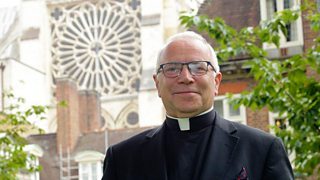
In the Queen, sovereignty is a reality in a life, says the Dean of Westminster.
The Tokyo Olympics – Stretching Every Sinew

Athletes' reflections on faith and competing in the Olympics.
"We do not lose heart."
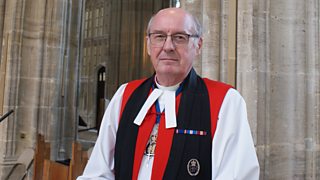
Marking the centenary of HRH Prince Philip's birth, a reflection from St George's Chapel.
St David's Big Life Hack
What do we know about St David, who told his monks to sweat the small stuff?
Two girls on a train
How a bystander's intervention helped stop a young woman from being trafficked.
Sunday Worship: Dr Rowan Williams
How our nation can rise to the huge challenges it faces, post-Covid-19.
