We are on the cusp of technological and social changes greater than the Industrial Revolution.. Aleks Krotoski asks, who will we be in the age of automation, AI and post-scarcity?
For decades, technologists, futurists and even our favourite science ficti has been predicting that technology will do away with the drudgery of work, take care of our basic day to day needs and create a world where scarcity will be a thing of the past.
The media has been focused on the economic impact of these new tech advances, but we should be asking a different question. Who will we be in an age of plenty?
Last on

Dr Adrian Bowyer
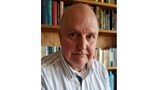
Adrian Bowyer is a semi-retired academic engineer. His main areas of research are the mechanics of friction, geometric computing, the application of computers to manufacturing, the creation of smart hydrophilic-polymer gels, and the engineering use of biology, called Biomimetics. In Biomimetics he works on self-copying and self-assembly in engineering.
He tells us about the worldwide RepRap Project - a project he founded that has created humanity's first general purpose self-replicating manufacturing machine - widely credited with starting the low-cost 3D-printer revolution.
Dr Tom Chatfield

Dr Tom Chatfield is a British writer, broadcaster and tech philosopher. He’s interested in improving our experiences and understanding of digital technology.
Tom’s non-fiction books exploring digital culture—most recentlyCritical Thinking (SAGE Publishing) andLive This Book! (Penguin)—have appeared in over thirty countries and languages. His debut novel, This is Gomorrah(Hodder), was published worldwide in July 2019.
Topics he’s written about recently include the ethics of AI, what it means to think well, technology in deep time and the philosophy of fake news.
He talks to us about the psychological, and social impact of an automated, AI optimised world, and how making things easier and easier may have drastic unforeseen consequences.
Helen Goulden

Helen Goulden is Chief Executive Officer of The Young Foundation. Prior to joining us in October 2017, Helen was Executive Director at Nesta, responsible for leading their Innovation Lab supporting and scaling innovation in the arts, civil society, government and education sectors.
She tells us about the recently completed Barcelona Basic Income trial, how easing the pressure of poverty affected people’s cognitive abilities and mental well being, but despite the enthusiasm of some in the tech world, that it is not a neat simple solution for deeply ingrained social problems. Another very human layer is required to really help people.
Gray Scott

Gray Scott is a futurist, techno-philosopher and one of the world’s leading experts in the field of emerging technology. Gray has advised advertising agencies, think tanks and corporations in the area of foresight, including AT&T’s recent 25th anniversary YOU WIL campaign. Gray has spoken at conferences around the world, including NASA Johnson Space Center, Boston University, London Business School and the International Judicial Symposium of the Supreme Court of Korea.
He gives us a glimpse into a technological post-scarcity world, and reveals the dramatic social and psychological changes we will all have to go through to have a chance of making it a reality.
Broadcast
- Mon 23 Mar 202016:30BBC Radio 4
Podcast
![]()
The Digital Human
Aleks Krotoski explores the digital world