The ASMRnswer
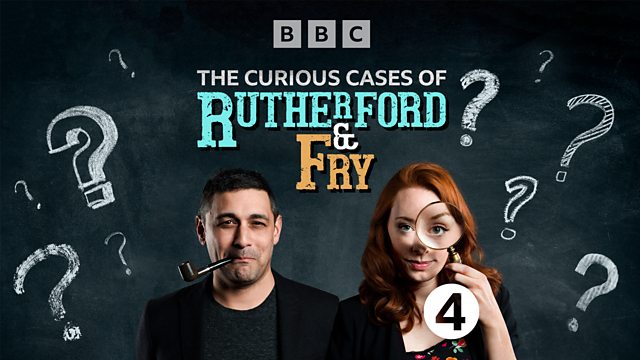
What is ASMR and why does it only affect some people? Science sleuths Drs Rutherford and Fry investigate. From February 2020.
"My question is about something I became aware of at a young age," explains Samantha Richter from Cambridgeshire.
"I was sitting on the carpet at school, being read a story by the teacher. My hair felt as though it was standing on end as waves of a tingly sensation washed over my head. I subsequently found certain scenes in films had this effect, when actors were talking softly, or someone was having their hair brushed."
"Then, a few years ago, I discovered that there is a name for the tingles, it's called ASMR. My question is, what is ASMR, and why do we experience it?"
In this episode, we explore the world of Autonomous Sensory Meridian Response. It's a trend which has risen quickly on YouTube, with devoted subscribers following their favourite 'ASMRtists' whose videos receive millions of plays.
Hannah speaks to Dr Nick Davis, who published the very first research paper on the phenomenon in 2015. And Adam is put to the test by Dr Giulia Poerio, to see if he is susceptible to the sensation of ASMR. Are there any proven benefits for devoted fans, or is it just a YouTube fad?
We've concocted our very own Curious recordings so you can find out if your brain begins to tingle. You'll find them in our normal podstream, where you can enjoy Adam and Hannah crafting a very ASMRy cocktail for your listening pleasure.
Presenters: Hannah Fry, Adam Rutherford
Producer: Michelle Martin
First broadcast on BBC Radio 4 in 2020.
Last on
More episodes
![]()
Adam's ASMR cocktail
Adam Rutherford concocts an Old Fashioned cocktail - listen after our episode on ASMR.
![]()
Hannah's ASMR cocktail
Hannah Fry mixes a mojito - listen after our episode on ASMR.
Broadcasts
 Wed 19 Feb 202009:30BBC Radio 4
- Wed 19 Feb 202020:45BBC Radio 4
- Sat 22 Feb 202005:45BBC Radio 4
- Sun 10 Apr 202210:45BBC Radio 4 Extra
- Sun 10 Apr 202221:45BBC Radio 4 Extra
- Thu 14 Apr 202211:45BBC Radio 4 Extra
- Thu 14 Apr 202221:45BBC Radio 4 Extra
Why do you see faces in unexpected places?

We are “hardwired” for recognising faces and it starts at birth.
Podcast
![]()
Curious Cases
Hannah Fry and Dara Ó Briain tackle listeners' conundrums with the power of science!