River
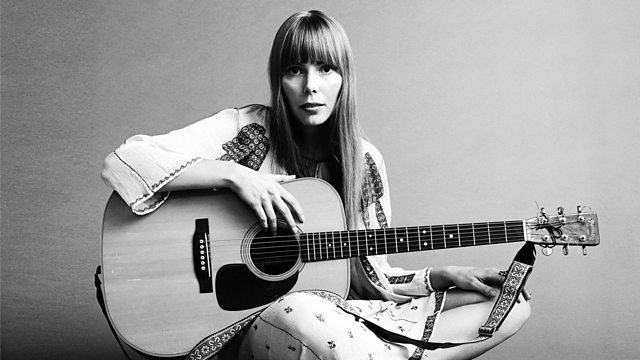
How Joni Mitchell's song 'River', from her iconic 1971 album Blue, continues to inspire people. With Rob Crossan. From 2018.
Soul Music with stories of the lasting impact of Joni Mitchell's song 'River', from her iconic 1971 album Blue.
A song about the breakdown of a relationship and of a longing to be elsewhere that has become a melancholy Christmas anthem.
It's coming on Christmas
They're cutting down trees
They're putting up reindeer
And singing songs of joy and peace
Oh I wish I had a river
I could skate away on....
Emotional true stories of what the song means to different people, including:
* Comedian Chris Forbes, who lost his father on Christmas Day
* Isobel, who fell sick far from home and understands the longing to be elsewhere captured in the song
* Laura, who heard the song while pregnant at Christmastime
* Writer Rob Crossan, who will forever associate the song with his first love
* Canadian poet Lorna Crozier who describes the frozen rivers of her and Joni's Saskatchewan childhood
Plus thoughts from Joni Mitchell's biographer, David Yaffe.
Includes a rare live recording of 'River' from a BBC Concert in 1970, hosted by John Peel.
The other versions of the song are by (in order of appearance):
Joni Mitchell (Blue, 1971)
Scott Matthews (Live Session for BBC 6 Music, 2011)
Béla Fleck and the Flecktones (Jingle All the Way, 2008)
The Belgian indie choir Scala & Kolacny Brothers (Live Session for BBC 6 Music, 2011).
Series about pieces of music with a powerful emotional impact.
Producer: Mair Bosworth
First broadcast on BBC Radio 4 in December 2018.
Last on

Broadcasts
 Wed 19 Dec 201809:00BBC Radio 4
- Wed 19 Dec 201821:30BBC Radio 4
- Fri 23 Dec 202220:30BBC Radio 4 Extra
- Fri 10 Nov 202320:30BBC Radio 4 Extra
- Boxing Day 202510:00BBC Radio 4 Extra
- Boxing Day 202516:00BBC Radio 4 Extra
- Sat 27 Dec 202500:00BBC Radio 4 Extra
Featured in...
![]()
Holiday Sounds
It's still the holidays (in our heads) - let's keep the festive cheer alive

Why Sam Cooke's 'A Change Is Gonna Come' became a Civil Rights anthem
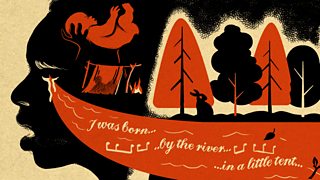
Watch the animation - Professor Mary King describes how the song became a symbol of hope.
Podcast
![]()
Soul Music
Series about pieces of music with a powerful emotional impact.