Working at the Sainte-Trinite
Donald Macleod on Messiaen's appointment as organist at Sainte-Trinite in Paris, where members of the congregation were alarmed by his adventurous and dissonant improvisation.
The devil's voice is heard in Messiaen's music presented by Donald Macleod
Olivier Messiaen was the single most important contributor to the organ repertoire in the twentieth century. He took up learning the organ whilst he was a student in Paris, and was fortunate to hear virtuoso organists around the city including Louis Vierne, Charles Tournemire, Charles-Marie Widor and Marcel Dupré. Aged just twenty-two, he succeeded Charles Quef as titular organist at the Sainte-Trinité in Paris. Messiaen remained in this post for over sixty years, composing many solo works for the organ that pushed the instrument to its very limits. He rose to become one of the leading composers in France, and also a worldwide musical celebrity. This week Donald Macleod focuses each day on one specific organ work Messiaen composed, whilst exploring the period in which it was written along with those other instrumental works from the same time.
In 1931 Messiaen was appointed the youngest titular organist in Paris, at Sainte-Trinité. Members of the congregation were alarmed by his occasional adventurous and dissonant improvisation at the organ, and some claimed they could hear the devil's voice emerging from the organ pipes. It was in these early years, after leaving his studies at the Paris Conservatoire, that he composed his orchestral work Le tombeau resplendissant. Messiaen said of this work that he wanted to write a kind of Beatitude for those who discover in their faith something more than the illusion of distant youth. The following year, 1932, he married the violinist Claire Delbos, who was the daughter of a professor at the Sorbonne University. His wedding gift to his new bride was a chamber work, a Theme and Variations for them both to play together on the violin and piano. By 1934 Messiaen had completed a new work for solo organ called L'Ascension. Originally for orchestra, he transcribed this piece for organ adding a new third movement. Like so many of his compositions, L'Ascension is deeply rooted within Messiaen's own Christian beliefs.
Livre d'orgue (2nd mvt Première pièce en trio)
Olivier Messiaen, organ
Le Tombeau resplendissant
Orchestre de l'Opéra Bastille
Myung-Whun Chung, conductor
Theme and Variations
Maxim Vengerov, violin
Itamar Golan, piano
L'Ascension
Thomas Trotter, organ
Producer Luke Whitlock.
Last on

Music Played
![]()
Olivier Messiaen
Livre d'orgue - Premiere piece en trio
Performer: Olivier Messiaen.- EMI: CZS7674002.
- EMI.
- 7.
![]()
Olivier Messiaen
Le Tombeau resplendissant
Orchestra: Bastille Opera Orchestra. Conductor: Myung-Whun Chung.- DEUTSCHE GRAMMOPHON : 445-947-2.
- 11.
![]()
Olivier Messiaen
Theme and variations
Performer: Maxim Vengerov. Performer: Itamar Golan.- TELDEC : 9031773512.
- TELDEC.
- 9.
![]()
Olivier Messiaen
L' Ascension
Performer: Thomas Trotter.- Decca: 436002.
- Decca.
- 1.

Broadcasts
- Tue 11 Jul 201712:00BBC Radio 3
- Tue 11 Jul 201718:30BBC Radio 3
Beethoven Unleashed – the box set
The complete set of Radio 3 Beethoven Unleashed podcasts, with Donald Macleod.
What was really wrong with Beethoven?

Georgia Mann and neurosurgeon Henry Marsh examine the composer's numerous health problems
Composers A to Z

Visit the extensive audio archive of Radio 3 programmes about Composers and their works.
Who knew? Five eye-opening stories from Composer of the Week

The production team reflects on 5 of Donald Macleod’s best stories from the last 20 years
Five reasons why we love Parry's Jerusalem
What is the strange power of Jerusalem which makes strong men weep?
A man out of time – why Parry's music and ideas were at odds with his image...
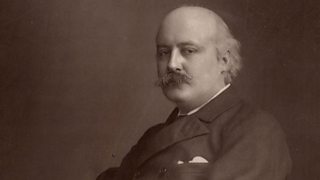
The composer of Jerusalem was very far from the conservative figure his image suggests.
Composer Help Page

Find resources and contacts for composers from within the classical music industry.
