Welsh consumer issues. Rachel Treadaway-Williams meets the Barry family tricked out of their life savings by a cloned investment firm.
Rachel Treadaway-Williams meets the Barry family tricked out of their life savings by a cloned investment firm.
Are you a cashback fan? Rhodri Owen gets some top tips from a Tredegar woman who's made thousands through moneyback websites.
And there is an update on one of the most complained about car dealers in Wales.
Last on

Dating Scams

Dating websites are now huge global businesses, but at the same time, they've become a big hit with the scammers.
Last year more than three and a half thousand people in the UK went to the police after losing money through romance fraud. It's almost certainly the tip of the iceberg
Detective Constable Neil Richards, from South Wales Police’s Economic Crime Unit, said: “The victims feel they've lost their confidence, some of them feel silly that they've been drawn into these things and given their money to a fraudster.”
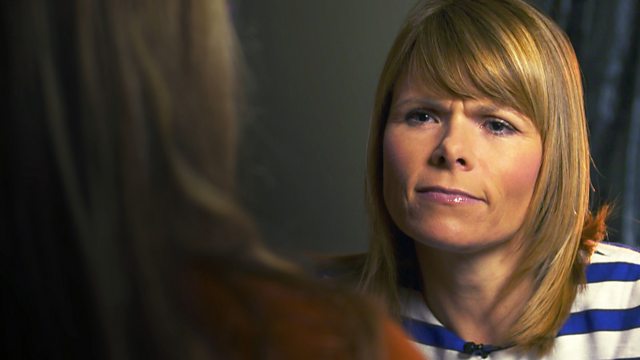
One Welsh victim, who we'll call Sue, has bravely agreed to speak out. She wanted to warn others about the tactics scammers use.
She said: “While I was on these websites, I met a gentleman who told me he was a doctor attached to the United Nations and serving out in Afghanistan. We built up a friendship and corresponded every single night.”
She was gradually drawn into a world where she believed that the man who was emailing her really cared for her
“I was really lonely. This person was making me feel good,” Sue explained.
The man began asking for money, convincing Sue that he was on his way to start a new life with her. She paid £500 so he could get “leave” to join her, and actually went to meet him off a flight on Christmas Eve.
Sue said: “I turned up at Cardiff airport and I waited, and I waited, and there was no sign of this person. I felt really sick in my stomach, thinking oh what's going on.
The man didn't show up, but was quickly back in touch with a series of extraordinary excuses, designed to make her hand over even more money.
Sue said: “On the way to the airport he'd been kidnapped by the Taliban and they were holding him hostage. They wanted £3,000 to release him, so I ended up paying £3000.”
Then she paid £500 to give him a security escort to the airport, but he claimed his car had crashed on the way and he needed £5,000 for an operation on his leg. Sue paid again.
In total, she handed over a staggering £25,000 to her fake lover. A man she had never met. When all her cash had gone, he duped her into letting him use her bank account. He told her that the money flowing into it came from his friends, when in fact it came from other victims.
Sue said: “One morning I had a knock at the door and it was CID. I was under arrest for fraud and money laundering, they put me in a cell, took my photo and fingerprints and basically treated me as a criminal.”
She was eventually released without charge when the police realised she was a victim too.
Sue said: “They were reading different women's names out and how much these women had been sending the same guy that I had. Then it hit home. Then I sat there and thought oh my god, none of it is real. Now I know this man will never be here and he's probably doing it to some other woman now.”
Sue's story is a familiar one to detectives from South Wales Police's economic crime unit. They've caught some of those behind other, almost identical scams.
One recent case involved a scammer claiming to be a Captain Morgan Travis, an American soldier serving in Afghanistan. His photo appeared on a leading dating website, and he was soon speaking to a widow in Denmark. He quickly began asking for money.
DC Richards said: “It will start with a small payment. Can you just help me out with paying for a phone connection because he was apparently in Afghanistan.”
Once the woman had paid that, he started asking for more cash.
DC Richards said: “He started asking well look we want to get together, I want to get a flight out to come and visit you. I have to apply for leave. It costs me money to apply for leave. And that's another few hundred pounds, and then the flights are a few thousand pounds”
The woman ended up paying an incredible quarter of a million pounds before her bank alerted police. Their investigation led them not to Afghanistan, but to a Nigerian student, Tosin Femi Olasemo, living in a terraced street in Cardiff.
DC Richards said: “On his computer was evidence linking him to other women who he’d either defrauded or was in the process of trying to defraud.”
In July 2015, Olasemo was jailed for four and half years. Police are now trying to recover some of the money he stole from his victims.
Dr Martin Graff is a Reader in Psychology at the University of South Wales who is researching online dating scams.
He says that scammers often use a "foot in the door technique"; after rapport has been built they may ask for a small amount of money to start off, before asking for larger amounts. The thinking is that if you hand over a small sum of money, you are likely to be willing to hand over more.
To hear more on the psychology behind these scams, you can watch some of Dr Graff's interview here.
For more advice and information on online dating scams, visit the Action Fraud site:
Prusik

A family from the Vale of Glamorgan has lost their life savings after being duped into handing them over to a ‘cloned’ financial firm which had stolen the identity of a reputable company.
Last November Ann and Geoff Inch, from Rhoose, spotted an online advert from a company calling itself Prusik PLC. The firm claimed to be selling John Lewis bonds, and promised an impressive quarterly return of 5.7%. It was that which attracted Ann and Geoff, as they tried to plan their retirement.
Geoff said : ”After forty years of mainly shift work, hard graft - I think I have earned a good retirement.”
Ann explained: “Our dreams were to enjoy life - you know - go on holidays as many times as we could.”
The couple, along with another family member, were looking to invest a total of £50,000. They were reassured that the contract from Prusik PLC had a Financial Conduct Authority(FCA) number, and they invested their life savings in early December. They had been promised their first returns would be paid just weeks later on the 14th December.
When the money didn’t arrive, they tried to call the company, but were shocked when they couldn’t get any answer.
Ann said: “It was just ringing off. I was thinking they have got all of this money of ours - how can we get it back?”
The couple went straight to the police and then contacted X-ray for help to help find the elusive Prusik PLC and their money.
We discovered that the registered address in Devon was false and that John Lewis did not directly sell any bonds at all in 2015. We also investigated the FCA number, and found the FCA itself had issued a warning about Prusik PLC. They said it appeared to be a clone financial firm, and had been using the details from a genuine firm, Prusik Umbrella UCITS, to trick customers and run a scam.
Cyber security expert Professor Andrew Blyth, from the University of South Wales, explained: “They are creating a name that looks like that real company and they are using that to socially engineer you into believing you can trust them and therefore give them your money.”
X-ray tried to contact Prusik PLC, but they did not respond. It looks like Ann and Geoff’s money has gone, devastating news for the couple.
Geoff said: “It’s all the emotions you feel - you know sad, angry, all mixed up.”
Ann added: “You always think it is never going to happen to you, but it has.”
Cashback Websites

Did you know you can earn yourself some money just by shopping online? Instead of shopping directly with a retailer, you could use a cashback website. There are dozens of them - Topcashback and Quidco are the biggest
The amounts you can earn aren’t much by themselves, but if you use a cashback website often, it can really add up. Science fiction writer Meg Kingston from Rhymney buys almost everything from holidays to electrical goods and even her weekly grocery shopping through cashback sites. Since 2008 she has earned almost £6000!
Many people are concerned about safety, but if you are comfortable shopping online then this is just an extra click to go through and to something you were going to do anyway.
But remember there are a few things to keep in mind when using Cashback websites:
· Always shop around to make sure you are getting the best overall price, not just the one with most cashback
· Don’t purchase something just because you’ve been seduced by the cashback amount you could potentially earn, it isn’t guaranteed. For example a technical problem could mean you don’t get your payout!
· Cashback sites don't always guarantee the deals are accurate and up to date so you could end up getting less than you expected.
So the name of the game - shop around and treat any cashback as a bonus!
Credits
| Role | Contributor |
|---|---|
| Presenter | Lucy Owen |
| Presenter | Rhodri Owen |
| Reporter | Rachel Treadaway-Williams |
| Series Producer | Jo Dunscombe |
Broadcast
- Mon 8 Feb 201619:30BBC One Wales HD & Wales only
