Main content
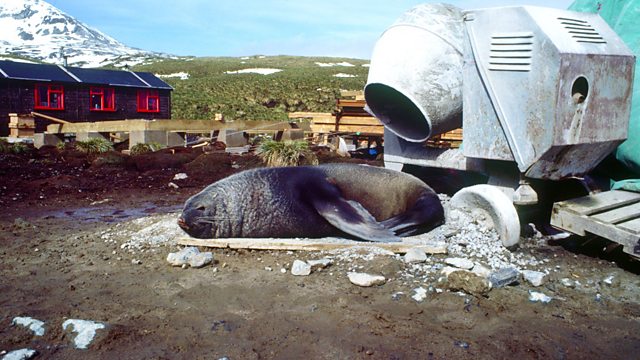
Are We Getting Used to Less Wildlife?
Each generation has its own impression of normal wildlife abundance - a new baseline. But if abundance is falling does that mean we just get used to living with less?
The diversity and abundance of wildlife is declining across the world. As people grow older they notice the changes but for each new generation the baseline is reset. Is each generation is getting used to living with less and less wildlife? With so many other distractions do young people today notice the wildlife around them? Monty Don explores whether shifting baselines are a problem for conservation or simply inevitable in a system already subject to natural fluctuations.
Last on

Mon 29 Sep 201421:00
BBC Radio 4
More episodes
Previous
Professor Kevin Gaston

Kevin Gaston is the inaugural Director of the Environment and Sustainability Institute (ESI) and Professor of Biodiversity and Conservation at the University of Exeter.
The ESI conducts cutting-edge research into solutions to problems of environmental change, thereby enhancing people’s lives through improving their relationships with the environment. It has staff drawn from a variety of backgrounds - including mathematicians, engineers and environmental, political and social scientists - reflecting the need for an interdisciplinary approach to such solutions.
An ecologist with diverse interests, a major strand of Gaston’s research is concerned with the health and well-being benefits that people gain from natural environments. This program of work includes determining the breadth and form of these benefits, the components of nature that provide them, the dynamics of this provision, and how the provision can most effectively be improved.
Twitter: @KevinJGaston
The ESI conducts cutting-edge research into solutions to problems of environmental change, thereby enhancing people’s lives through improving their relationships with the environment. It has staff drawn from a variety of backgrounds - including mathematicians, engineers and environmental, political and social scientists - reflecting the need for an interdisciplinary approach to such solutions.
An ecologist with diverse interests, a major strand of Gaston’s research is concerned with the health and well-being benefits that people gain from natural environments. This program of work includes determining the breadth and form of these benefits, the components of nature that provide them, the dynamics of this provision, and how the provision can most effectively be improved.
Twitter: @KevinJGaston
Professor Aubrey Manning, OBE
Professor Aubrey Manning is recognised as one of the country’s leading authorities on animal behaviour.
He rose from Assistant Lecturer at the University of Edinburgh to become a Professor of Natural History at the university in 1971, a position he retained until retirement in 1997.
Manning's storytelling skills have led to him presenting television programmes such as BBC2’s Earth Story and Talking Landscapes and he has worked on a range of radio output including recent Radio 4 programme The Sounds of Life, in which he explores natural sounds ranging from the seabed to the jungle.
He is a Fellow of the Royal Society of Edinburgh, holds honorary degrees from Toulouse, the Open University and St.Andrews, and was awarded an OBE in 1998. He has been Chairman of the Scottish Wildlife Trust and a Trustee of the National Museums of Scotland and Project Wallacea.
He rose from Assistant Lecturer at the University of Edinburgh to become a Professor of Natural History at the university in 1971, a position he retained until retirement in 1997.
Manning's storytelling skills have led to him presenting television programmes such as BBC2’s Earth Story and Talking Landscapes and he has worked on a range of radio output including recent Radio 4 programme The Sounds of Life, in which he explores natural sounds ranging from the seabed to the jungle.
He is a Fellow of the Royal Society of Edinburgh, holds honorary degrees from Toulouse, the Open University and St.Andrews, and was awarded an OBE in 1998. He has been Chairman of the Scottish Wildlife Trust and a Trustee of the National Museums of Scotland and Project Wallacea.
George Monbiot
George Monbiot is an environmental campaigner, a regular columnist for the Guardian newspaper and the author of several best selling books, including Heat: How we can stop the Planet Burning, The Age of Consent: A Manifesto for a New World Order and Captive State: The Corporate Takeover of Britain, as well as the investigative travel books Poisoned Arrows, Amazon Watershed and No Man's Land. His latest book is Feral: Searching for Enchantment on the Frontiers of Rewilding
Twitter: @GeorgeMonbiot
Twitter: @GeorgeMonbiot
Professor EJ Milner-Gulland
Professor E.J. Milner-Gulland works on improving the design of conservation interventions so that they work better for both poor people and wildlife in developing countries.
She is the Director of Imperial College's Grand Challenges in Ecosystems and the Environment (GCEE) initiative and runs the Imperial College Conservation Science (ICCS) research group.
ICCS works at the interface of social and ecological systems, using a range of approaches to address key issues in current conservation. The underlying philosophy is that in order to make progress the incentives, pressures and challenges faced by individual decision-makers must be considered.
Twitter: @EJMilnerGulland
She is the Director of Imperial College's Grand Challenges in Ecosystems and the Environment (GCEE) initiative and runs the Imperial College Conservation Science (ICCS) research group.
ICCS works at the interface of social and ecological systems, using a range of approaches to address key issues in current conservation. The underlying philosophy is that in order to make progress the incentives, pressures and challenges faced by individual decision-makers must be considered.
Twitter: @EJMilnerGulland
Broadcasts
- Tue 23 Sep 201411:00BBC Radio 4
- Mon 29 Sep 201421:00BBC Radio 4
Learn about habitats with The Open University
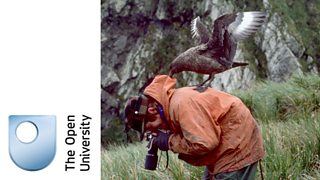
Explore the twists and connections of natural life in four different UK habitats.
