13. From London to Marrakech
Neil MacGregor on African gold’s complex connection between Elizabethan England and the Moors of the Mediterranean. From 2012.
Sunken gold from West Africa sheds light on the complex relationship Elizabethan England had with the Moors of the Mediterranean.
Object-based history series presented by Neil MacGregor, former Director of the British Museum.
Taking artefacts from William Shakespeare's time, he explores how Elizabethan and Jacobean playgoers made sense of the unstable and rapidly changing world in which they lived.
With old certainties shifting around them, in a time of political and religious unrest and economic expansion, Neil asks what the plays would have meant to the public when they were first performed.
He uses carefully selected objects to explore the great issues of the day that preoccupied the public and helped shape the works, and he considers what they can reveal about the concerns and beliefs of Shakespearean England.
Producer: Paul Kobrak
First broadcast on BBC Radio 4 in May 2012.
Last on

More episodes
Previous
![]()
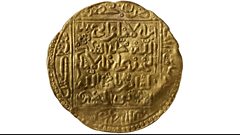
African Treasure
Watch a short video of the treasure.

African Treasure
Date: 1600
Size: W:28.5mm
Made in: Marrakech
Made by: the Sherifs of Morocco
Material: Gold
Our encounter with African treasure begins not in lands far away but in seas only twelve miles off the coast of Devon. It was here in 1994 that a hoard of Moroccan gold was discovered.
This astonishing array of golden riches tells of vast Moroccan wealth. The 450 coins speak of powerful dynasties and of far-reaching trade networks spanning the globe.
But behind the glistening gold lies a more disturbing tale of xenophobia meted out by the people of London to the Moors in London, leading to the eventual expelling of Moors from Elizabethan England.
Shakespeare didn’t shy away from the subject of inter-racial marriage and around 1604 he takes us back to Venice to explore the treatment of his most famous Moor, Othello.
This object is from the British Museum
Quotations
'Mislike me not for my complexion, The shadowed livery of the burnished sun, To whom I am a neighbour and near bred.'
The Merchant of Venice, Act 2 Scene 1
'I spake of most disastrous chances ... Of being taken by the insolent foe, And sold to slavery.'
Othello, Act 1 Scene 3
Background
- The treasure was discovered in 1994 by a team of amateur marine archaeologists and semi-professional divers on the seabed 12 miles off the Devon coast
- They found about 400 gold objects (coins, ingots and jewellery) along with other items such as lead weights and pewter tableware - but no ship wreck
- The ship was almost certainly travelling from Morocco to Europe when it sank
- Moor' was quite a loose term to an Elizabethan: depending on the context it could mean Muslim, white North African, Indian, Native American or Jew
More from Radio 4: Black Elizabethans
Justin Champion examines how the presence of Moorish, Black and Asian immigrants in London contributed to a veritable melting-pot of cultures and influences.
More from Radio 4: Pieces of eight
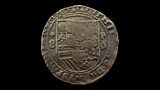
Neil MacGregor is this week focusing on European encounters around the world between 1450 and 1600. Today he is with the with the first truly global money - silver pieces of eight.
More from Radio 4: Tughra of Suleiman the Magnificent
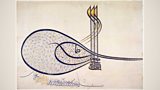
Neil MacGregor's world history explores the great empires of the world around 1500 - the threshold of the modern era. Today he examines the signature of Suleyman the Magnificent.
Broadcasts
 Wed 2 May 201213:45BBC Radio 4
- Wed 2 May 201219:45BBC Radio 4
- Wed 24 Oct 201214:15BBC Radio 4 Extra
- Wed 25 Mar 201514:15BBC Radio 4 Extra
- Thu 26 Mar 201500:15BBC Radio 4 Extra
- Wed 27 Jul 201613:45BBC Radio 4
- Wed 2 May 201814:15BBC Radio 4 Extra
- Thu 3 May 201802:15BBC Radio 4 Extra
- Wed 1 Nov 202307:15BBC Radio 4 Extra
- Wed 1 Nov 202312:15BBC Radio 4 Extra
- Wed 1 Nov 202317:15BBC Radio 4 Extra
- Thu 2 Nov 202302:15BBC Radio 4 Extra
Podcast
![]()
Shakespeare's Restless World
Neil MacGregor uncovers the stories 20 objects tell us about Shakespeare's world.