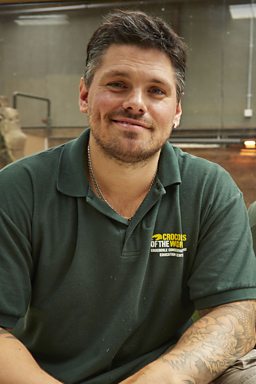
Shaun the Crocodile Specialist
How did you become a crocodile specialist?
You cannot afford to make any mistakes.Shaun Foggett
It all started with a childhood fascination. I read and researched as much as possible, and the more I learned the more I wanted to know. When I was 19 years old, I came to own a 14 inch baby caiman privately, under license. This spurred me on to get involved with crocodiles full-time. Nine years later, I have dedicated my life to crocodiles, selling my house to fund the creation of the UK's first and only crocodile zoo – Crocodiles of the World. I now have my dream job and get to work with crocodiles every day!
Has your passion for crocodiles taken you across the globe?
I have visited many countries to see crocodiles, a particularly memorable experience being my involvement in an American crocodile conservation project in Florida. During my time there I helped night-time surveys of wild crocodiles and even reintroduced baby crocodiles back to the wild. In the future, I would love to do more in-situ conservation work particularly in Cambodia with Siamese crocodiles.
What is it you admire so much about crocodiles?
So many things! I am particularly fascinated by how long they have been around on our planet – over 220 million years! They have adapted so well to be able to survive the often cruel course of nature.
What does it take to maintain the largest crocodile collection in the UK?
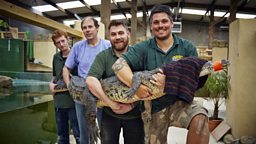
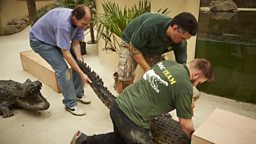
Managing crocodiles in captivity is different to managing other captive animals. There is no place for complacency. It can be very dangerous, so you need to always be aware and make sure you know and respect the animals. You also need to be sensible, levelheaded and avoid taking risks. You cannot afford to make any mistakes – the biggest would be putting yourself in a situation where you may be bitten.
Tell us about a typical day in the life of a Crocodile Specialist.
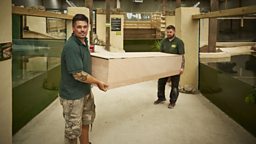
You need to have your Weetabix! After a good breakfast, the first job of the day is to check all animals are well and equipment is working properly, which includes an array of checks relating to exhibit temperatures and incubators. The majority of cleaning happens before we open to the public and food is prepared for the crocodiles for the day ahead. The rest of my day is spent across conservation and research projects we are involved in.
We see you moving some of the most aggressive crocs in the world, have you ever had any close encounters?
Of course - it's extremely rare, yet an obvious hazard of the job. I work with dangerous animals every single day of my life. I would be lying if I said that there were never any close encounters, but I ensure this risk element is managed carefully.
What would we be most surprised to learn about crocodiles?
One that never fails to surprise visitors is just how clever crocodiles can be. It’s even possible to train them to respond to verbal and visual signals. Most of our crocodiles are trained, which is a great source of enrichment for both the crocodiles themselves and visitors.
What does the future hold for the world’s crocodiles?
Public awareness of crocodiles is definitely increasing, which is making people sit up, listen and take action. Back in the 1970s every species of crocodilian was protected. Certain species have made a remarkable recovery. However, seven species are now classified as critically endangered. We want to help change this by continuing to raise the profile of crocodiles and educating our visitors.