7 Reasons you need more Leoncavallo in your life
Ruggero Leoncavallo is now essentially only known for writing the phenomenally successful opera Pagliacci. But there’s much more to this contemporary of Puccini than his blockbuster tragedy. Here are seven reasons why you need more Ruggero L in your life and on your playlist.
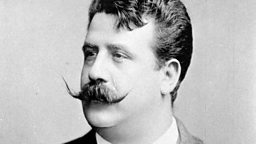
Strong moustache game
Meet Ruggero Leoncavallo. Born in 1857 (the year before Puccini, fact fans) in Naples, Leoncavallo first came to the attention of the music world with a symphonic poem called La Nuit de Mai premiered in 1887. More importantly, though, look at that moustache:
Because verismo operas are bananas
It takes a special kind of person to write an opera about clowns murdering each other and call it realism.
Pagliacci, the work that would go on to define Leoncavallo was premiered in 1892. It’s a classic story of jealousy – but set within a travelling acting troupe.
Leoncavallo was inspired to write the work when he saw the success of Mascagni’s Cavalleria rusticana – an opera written in the fashionable verismo – or ‘realism’ style.
Although a story about clowns killing each other may seem to stretch the word ‘realism’, ‘verismo’ essentially means operas that deal with human stories – rather than the myths and legends that earlier operas dramatised. In short, verismo works are the soap operas of the classical world.
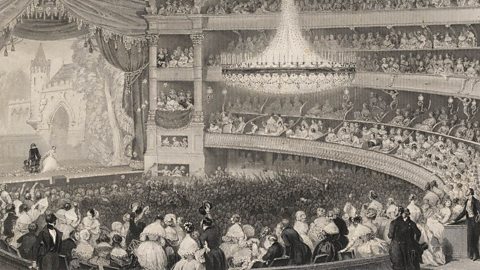
Beniamino Gigli performs 'Vesti la giubba' from Leoncavallo's Pagliacci
Soloists, orch & chorus of Teatro alla Scala, Milano cond. Franco Ghione EMI CDH 763309 2
He wrote La bohème
No, really. In 1892 Leoncavallo began work on an opera based on Henri Murger’s Scènes de la vie bohème. He then mentioned the fact to his friend and fellow composer, Puccini… who, a couple of months later, announced that he was writing an opera based on the same text.
**refrains from comment**
In a very public spat (in a series of letters to a newspaper, no less), Puccini threw down the gauntlet saying: “Let him compose, and I will compose. The public will judge.”
The public did judge – and it initially seemed that Leoncavallo’s opera was the victor, but it wasn’t long before Puccini’s La bohème became the bohème that everyone knew.
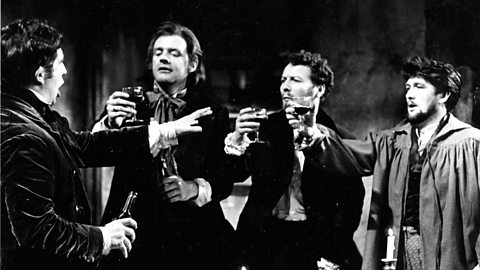
Leontina Vaduva performs 'Sono andati' from Puccini's La bohème
London Voices/London Oratory School/Philharmonia Orchestra cond. Pappano. EMI Classics
Puccini thought Leoncavallo was great
The aforementioned spat aside, Leoncavallo and his fellow-moustachioed composer actually had a lot of time for each other, to the extent that Leoncavallo even contributed to the libretto of Puccini’s Manon Lescaut.
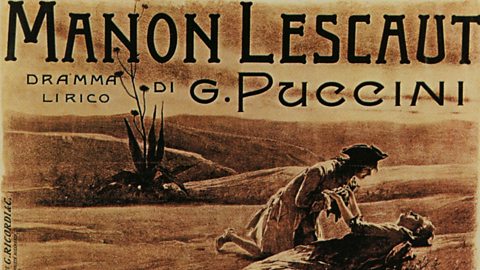
Peter Dvorsky performs 'Donna non vidi mai' from Puccini's Manon Lescaut
Soloists, orchestra & chorus of Teatro alla Scala cond. Maazel. Sony Classical S2K 48 474
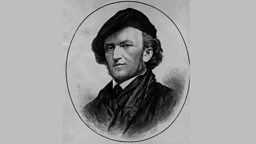
His influences range from Wagner to French music-halls
Leoncavallo’s musical influences range far and wide – from Wagner, whom he met when he was a young man – to the sound of French music halls.
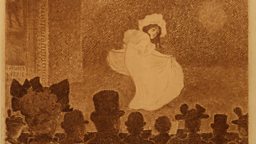
It was this world of glamour and dubious morals which inspired his 1900 opera, Zazà.
Zazà is one of the great women of opera
Alongside Violetta, Mimì and Tosca we should make space for a less familiar name. Zazà, the title character in Leoncavallo’s early 20th century opera, is a French music hall singer who begins an affair with a rich gentleman.
It is only later that she discovers he has a wife and child. The central scene of the opera is Zazà’s encounter with her lover’s daughter, who entirely defuses the singer’s rage with angelic innocence.
What makes this role so interesting, though, is that it is hugely demanding. At the opera’s premiere, the role was played by Rosina Storchio, who went on to premiere the title role in Puccini’s Madame Butterfly. And for many years some of Zazà’s arias were concert favourites. Come along to the performance on Friday and find out why!
And finally, because this is pure aural sunshine
Leoncavallo wrote this utterly delightful song in 1904 for the great tenor Enrico Caruso and it’s since become one of the most familiar and best-loved of tenor concert arias.
Humming along is definitely encouraged.
Luciano Pavarotti performs Leoncavallo's Mattinata
Philharmonia Orchestra cond. Rumon Gamba. Decca 470 130-2
Image Credits
1. Leoncavallo, Collection Dupont/AKG Images
2. Intérieur du Théâtre des Italiens, Mottram after Lami, British Museum/CC UK
3. La Boheme, BBC
4. Manon Lescaut, Bignami, Teatro Regio di Torino/CC PD 1.0 US
5. Richard Wagner, BBC
6. Le café-concert, Théo van Rysselberghe, British Museum/CC UK