Meet the Ravensbourne students
Alice and Victoria Geary
Wind Knots and British Folklore
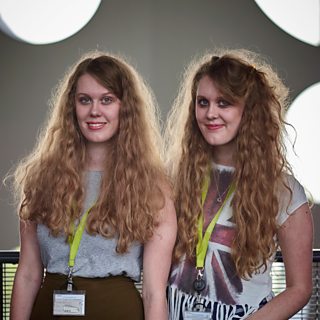
We are twin sisters studying Animation at Ravensbourne and decided to work together to develop an animation for Radio 4.
We loved reading all of the radio scripts. There were several stories in the Storm programme script that stood out to us, particularly a small line about the folklore of the wind witch. We had never heard of wind witches and we were excited to do our own research. We learned how they tied the wind into rope charms.
We were inspired by several people including Beatrix Potter and her watercolour illustrations. John Constable was another painter who we felt drawn to. His dramatic cascading pieces gave us an insight into the passion of a storm.
We first created lots of concepts, storyboards and pre-production art. After this we worked on separate shots to complete the piece. We did this by doing frame-by-frame 2D animation.
We collaborated with music and sound students at Ravensbourne to create the audio for the piece.
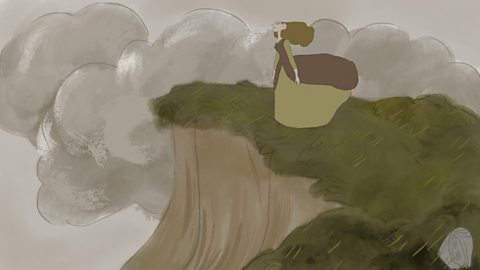
Wind Knots and British Folklore
British folklore tells of witches who could tie the wind into knots to sell to sailors.
Natasha Kirke

There is something magical about the beauty and harshness of winter which is why I chose it as my theme.
I named my piece Winter In Durnover Field, after the poem of the same name by Thomas Harvey. The poem tells the story of three birds trying to find grain in a frozen corn-field and I felt it captured the bitterness and harshness of winter in a humorous way.
I wanted to capture the feeling of winter but also make it fun and enjoyable. To achieve this effect, I used lots of whites, greys, blues and cold colours within the animation with the sounds of wind and wildlife provided by Sean Miller to evoke the sense of a cold winter’s day. I also wanted to bring a whimsical, hand-drawn feel to the piece.
I was inspired by Nick Murray Willis’s illustrative animations for the music videos How Do You Say You’re Sorry (Fred Melendres) and I’m Not Yours (Angus and Julia Stone), by Will Anderson’s simplistic yet humorous animations of pigeons and Sally Elford’s illustrations.
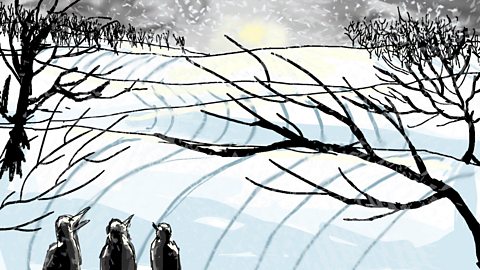
Winter In Durnover Field
Three birds try to find grain in a frozen cornfield. A poem by Thomas Hardy.
Giulia and Peppe Russo

We chose the Wind programme script because we liked the idea of challenging ourselves to represent the wind. We focussed our attention on the section about ancient Greece’s mythology.
We decided to use the visual style and format of a title sequence, using ink drops to represent the flow of the wind and classic hand-drawn drawings to portray the gods. The ink drops function as a window to a mythological environment, so the audience can feel part of their existence.
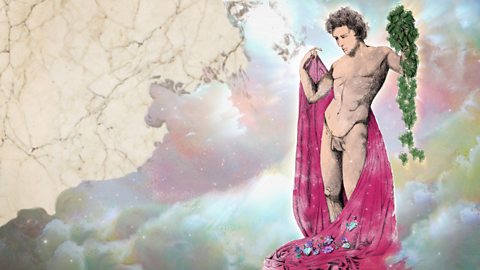
The Four Winds
The Greek gods of the four cardinal wind directions; Boreas, Zephyrus, Notos and Eurus.
Foong Mei Pang

I choose the Britain and the Sun programme as my project inspiration.
The script reminded me of my home far away in Malaysia where summer is all year long. I was inspired by the history of British summer through the centuries.
My idea was to portray the different centuries of summer in Britain by using visuals from the point of view of the audience with bright colours and atmosphere.
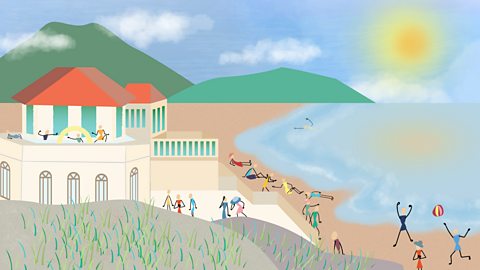
Britain and the Sun
A history of summer in Britain from the 17th to the 21st Century.
Lisa Cooper

I chose The Wisdom of Winter script because I found the section about Anglo-Saxon beliefs very interesting.
I felt that there was a good narrative I could use and one which would inform viewers about Anglo-Saxons beliefs on the weather and life.
With regard to the visual style, I took influence from Asian shadow puppetry as this is something I have always felt looks very aesthetically pleasing. It also fitted with the mood I was trying to convey.
I wanted to demonstrate the harshness of winter, whilst also showing its beauty. This is a theme I kept throughout the animation, which I feel was also effectively conveyed through the music produced for it.
Creating a mood driven piece of animation was very exciting as it really allowed me to be creative with my stylized approach to animating. I had complete creative freedom with the look of the animation and I am very happy with the outcome.
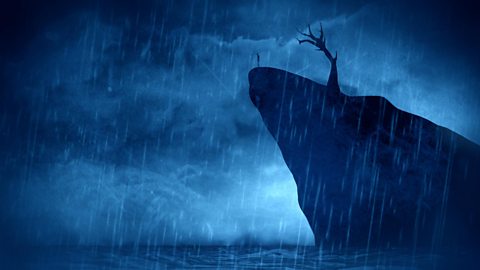
The Winter Wanderer
The Anglo-Saxon Wanderer is a lonely, melancholy figure facing winter sorrow on his own.
Deannise Andreu Cuevas, Jake Preedy, Dina Thorstein, Chidi Campbell and Ryan Morrison

We chose the Holiday on Ice programme script as we were particularly inspired by the use of powerful imagery and metaphorical language to describe the feelings and sights at the Frost Fair.
We immediately saw the Frost Fair on the River Thames in a 3D style of animation with characters and props to bring the scene to life. We were also drawn to the brief’s requirements of using text to convey a message.
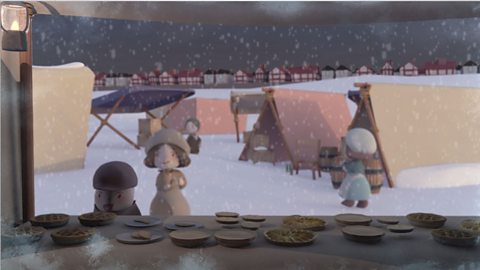
Frost Fair
The Little Ice Age of the 17th and 18th centuries saw fairs held on the frozen Thames.
Andrew Benedetti

When I had this opportunity to create an animation about the weather I decided to show the effects of The Little Ice Age which began in the early 14th Century.
It was an event that affected the whole of Europe and I wanted to visually explore this strange phenomenon.
I decided to create simplified visuals in contrasting monochrome values while maintaining the look of a traditional style.
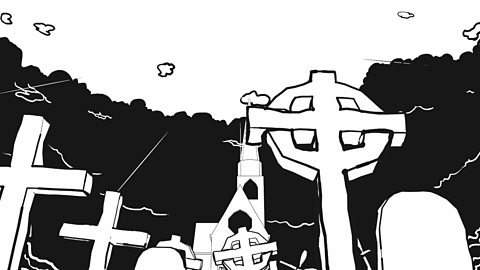
The Great Famine of 1315
How a changing climate had a devastating effect on Europe in the 14th Century.

