Sounds of science: the physics that links these musicians
A BBC Radio 4 documentary explores one of the world’s most unusual scientific experiments – involving a brass band, a steam train and the universe.
Read on to discover more about the Doppler effect, and we reveal eight music masterpieces that reflect this strange phenomenon…

Such a common experience in our everyday lives, the Doppler Effect has proved to be a major factor in demonstrating the existence of an ever-expanding universe.
Simply put, the effect occurs when someone experiences the change in frequency of waves as they approach, pass and then recede. In light waves this happens extremely fast, but we hear it in sound waves on a daily basis as sound travels at a significantly slower speed.
A good example of this is when we hear a police car or ambulance pass us at high speed: the tone and pitch of the sound appears to change as it passes us by, though this does not actually happen.
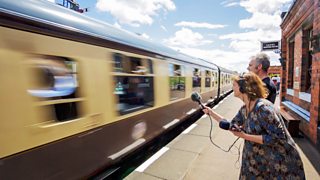
In 1845 in a strange and ground-breaking experiment conducted by the Dutch mathematician, Christoph Hendrik Diederik Buys Ballot, decided to put Christian Doppler’s theory to the test, using a brass band and a steam train to prove how such a pitch change proved the universe is expanding. We’ve recreated it here:

How can a brass band and a steam train help us understand the universe?
Scientists jumped on this simple technique as it shows such a key principle in our understanding of the world we live in, but it is the extent to which it has captured the imagination of contemporary musicians from The Smiths to Queen which is almost as interesting as the principle itself.
Here are eight songs that either unwittingly use the Doppler Effect in their creation, or purposely attempt to recreate it in all its glory.
Jimi Hendrix: Little Wing
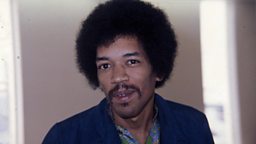
Hendrix wasn't a scientist (although he was an avid science-fiction reader) but like a lot of musicians of the '60s and '70s was interested in experimenting with sound. In Little Wing he used the Leslie speaker, which was first designed and produced by Don Leslie in 1940, to add the panache of a big fairground organ swirl to the basic sound of a Hammond organ. The speaker achieves the Doppler Effect by rotating another speaker inside its mechanism to create a "wah-wah" style sound which Hendrix loved when applied to his beloved guitar.
Queen: The White Queen
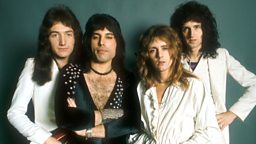
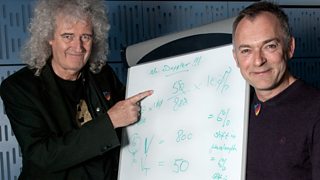
Brian May, Queen's legendary guitarist, is also a scientist of some repute (an astrophysicist to be exact), who has been interested in the Doppler Effect for quite some time, both as a scientist and as a musician. On Queen's second album Queen ll, he was able to put the Doppler Effect into action by using the Leslie speaker on some of the acoustic guitar parts which he was having difficulty keeping in tune. Miraculously it solved the problem!
The Beatles: Tomorrow Never Knows
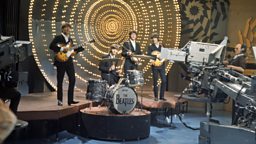
John Lennon supposedly adored the effect of the Leslie speaker on his vocals and used it on several tracks including this one from Revolver, a precursor to the more adventurous psychedelic sound The Beatles championed at the end of their career, where they spent time trying out more experimental techniques in their music.
► The Beatles:Tomorrow Never Knows (BBC Music)
Booker T And The MGs: Hip Hug-Her
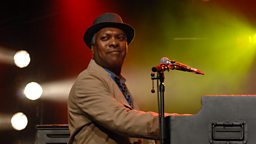
Booker T was one of the Hammond players mentioned earlier who wanted to boost the sound of their keyboards, and recorded many of his most famous tracks including Hip Hug-Her, Hang 'Em High, and Time Is Tight using the Leslie speaker, though it was absent on his first breakthrough hit, Green Onions. All those wonderful swells and tremolo surges are the Leslie speaker in full effect. Other famous players who utilised it included Jimmy McGriff, Graham Bond, Shirley Scott and Jimmy Smith. Whether or not they realised they were proving the existence of an ever-expanding universe while nimbly fingering the keys isn’t known, but presumably not!
Pink Floyd: On The Run

Hammond organ-players used the Doppler Effect of the Leslie speaker to enhance their sound, but a new generation of keyboard players were discovering synthesizers and using these to simulate the effects they wanted. On their epic album Dark Side Of The Moon synthesizers replicate the sound of the Doppler Effect in On The Run, with broad stereo swooshes giving the effect of vehicles moving past at high speed.
Kraftwerk: Autobahn
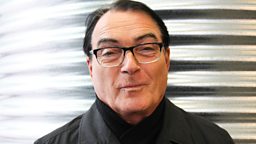
Similarly, over in Germany Kraftwerk were using synthesizers in their more delicate electronic soundscapes to replicate both cars and trains passing at high speed on their albums Autobahn and Trans Europe Express. This was the Doppler Effect mimicked for the first time by machines to create one of the classic sounds of modern life.
The Orb: Plateau
In more recent times music technology has resulted in a plethora of electronic acts and far less use of traditional instrumentation and outboard studio hardware. In this track The Orb actually use a Doppler Effect software plug-in on the vocals to obtain the sound they want to achieve, the point being that there are now Doppler Effect simulators available for musicians to apply to any sound they feel would benefit from the effect.
► The Orb: Plateau (BBC Music)
The Smiths: How Soon Is Now
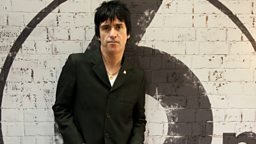
Last but certainly not least, we have to mention one of rock music's most iconic tracks. With its fabulously syncopated vibrato rhythm, achieved (according to Johnny Marr, their much-celebrated guitarist) by playing the track back using four old twin amps vibrating in unison, and restarting the recordings every 10 seconds as they slipped out of time, this is almost replicating the tremolo sound of the Leslie speaker itself. But it is actually the slide guitar part that sounds like the Doppler Effect as we know it, with its sweeping tonal change and stereo effect sounding like a perfect musical recreation of a note or tone passing by at high speed.
More from BBC Radio 4
![]()
How a brass band and a train help us understand the universe
The Doppler Effect explains why moving siren changes pitch as it passes.
![]()
The Doppler Effect with Charles Hazlewood
Conductor Charles Hazlewood and Dr Brian May of Queen celebrate the Doppler Effect.
![]()
Photographs taken while recording The Doppler Effect
Photographs taken from the Doppler experiment.
![]()
BBC Inside Science
Dr Adam Rutherford and guests illuminate the mysteries behind the science that's changing our world.