Bogus! The Most Unreliable Unreliable Narrators in Literature
In Sarah Pinborough’s fantastically unsettling novel Behind Her Eyes, we hear from both Adele and Louise, two women intimately involved with the same man. But can they be believed? As the twisted plot unravels, we realise that all these voices could be lying to us for their own personal gain. The unreliable narrator has been used again and again in fiction to pull the rug from beneath unsuspecting readers and inject some inciting uncertainty into a plot. Here are some of the more notable fictional fibbers, frauds and fantasists…
Daphne Du Maurier - Rebecca
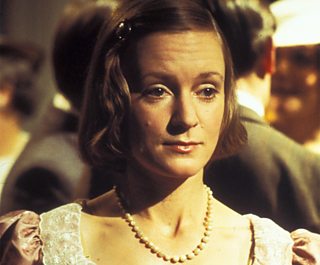
It’s not a mental unbalance that can establish the unreliability of a novel’s voice. In Rebecca, the second Mrs de Winter simply has no idea what is going on around her as the sinister Mrs Danvers and her suspicious new husband drip feed her information about her mysterious predecessor and her untimely death. The reader is continually tripped up alongside her.
Edgar Allan Poe - The Tell-Tale Heart
There should be warning bells immediately sounding when the unnamed protagonist of this macabre tale is at pains to convince the reader that he is definitely not insane. Though this lack of madness is not exactly reinforced by the recent murder he’s just committed for no discernible reason. His mental disturbance, erratic behaviour and insistence on hearing a beating heart beneath his feet make us question his sanity and his credibility.
Ken Kesey - One Flew Over the Cuckoo's Nest
The exploits of Randall McMurphy within an Oregon psychiatric hospital are recounted by Chief Bromden, a schizophrenic who thinks a shadowy conglomerate called ‘The Combine’ is controlling society. He also pretends to be deaf and mute and so is privy to the hospital’s more intriguing secrets, while undergoing the occasional hallucination.
Jim Thompson - The Killer Inside Me
Thompson’s hard-boiled, pulpy, often bafflingly surreal stories tend to involve characters so depraved and deranged that you can’t believe a single thing they tell you. In Killer Inside Me, the mild-mannered deputy sheriff, Lou Ford, appears to be a charming good old boy, but he slowly reveals himself to be a vicious, manipulative psychopath without a shred of decency.
Vladimir Nabokov - Lolita
In attempting to justify his predilection for young girls, Nabokov’s slippery Humbert Humbert cajoles, coerces and confounds the reader in an attempt to garner some sympathy. So effective was this technique that many critics felt the writer himself was attempting to confess his own unnatural desires, an accusation he had to continually refute.
Emily Bronte - Wuthering Heights
How much can we trust Lockwood, who is jotting down the tale of Wuthering Heights in his diary as told to him by a servant, Nelly? As the facts are already once removed and Nelly seems prone to exaggeration and embellishment, is Lockwood also adding his own spin on the story of the Earnshaw and Linton families? There’s almost too much perspective offered.
Anthony Burgess - A Clockwork Orange
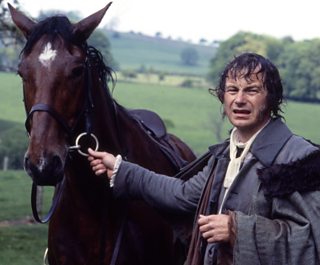
Alex, the ultra-violent ‘Droog' from Burgess’ dystopian classic is an unmitigated narcissist, completely enveloped in his own desires and personality. Every element of the tale is recounted from his particularly damaged point of view, interspersed with drug taking, drunkenness and a liberal smattering of a fairly impenetrable slang, called Nadsat, that only Alex appears to speak.
Chuck Palahniuk - Fight Club
Hard to provide all the details of ‘Jack’s’ unreliability in Palahniuk’s beloved modern fable without dispensing a whole range of spoilers, but once you reach the reveal concerning the identity of Tyler Durden, the reader feels entirely taken in by the storyteller.
Gillian Flynn - Gone Girl
Not only two enormously unreliable narrators, but also two pretty despicable ones. Suspicion and recrimination swings between Nick and Amy as we watch their marriage disintegrate but then slowly learn that they are both openly lying to the reader as layer upon layer of mistruth is added.
JD Salinger - Catcher in the Rye
Holden Caulfield happily admits to being a liar at the opening of his story and proceeds to wage war against phonies and the tyranny of adulthood. But his increasing distress and instability make the reader start to question his motives and his mental state.
Bret Easton Ellis - American Psycho
If you dare delve into the world of Patrick Bateman, then you can expect a lot of drugs, Fleetwood Mac and hard to stomach brutality. But is all this stuff the idle thoughts of an investment banker with an over active imagination or a deranged serial killer? Or both?
More from Radio 4
![]()
Behind Her Eyes
Psychological thriller by Sarah Pinborough.
![]()
4 Stories
Exceptional readings and dramas from Radio 4.
![]()
A Good Read
Books worth reading.
![]()
Book of the Week
Readings of some of the most fascinating non-fiction out there.