10 singers who'll make you fall in love with country music
Country music is many things to many people. Little Richard called it the white man’s blues, others define it as something closer to rural soul. For some, it remains the purest reflection of our emotional selves - a repository for the highs, lows and rock-bottoms of everyday life - but for detractors it’s a gaudy cavalcade of sentiment, sequins and ridiculous hair.
It's perhaps more misunderstood than any other musical genre. It is, in reality, a dense, deep subject that draws from a diversity of roots, among them gospel, folk, blues and rock'n'roll, and explores the big issues: faith, love, death and the rest. Still not convinced? The following artists should set you right.
Words: Rob Hughes


1. Hank Williams
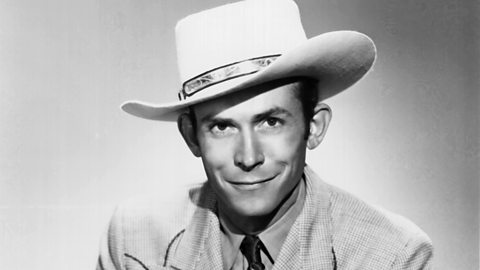
Thanks Hank Williams
Mark Radcliffe looks at Hank Williams’ songwriting and its influence on Bob Dylan
Alongside The Carter Family, Hank Williams laid the foundations of modern country and became its first true superstar. His mix of influences - from honky-tonk to gospel to western swing - expanded both the vocabulary and populist reach of country, as well as pointing the way for future generations of rock'n'roll artists. Indeed, Williams’ demise was arguably the first rock'n'roll death, expiring in the back of a car en route to a gig, aged just 29, after years of alcoholism and drug abuse. His legacy remains undimmed 64 years on and his deeply personal confessionals - from Lovesick Blues, Cold, Cold Heart and Long Gone Lonesome Blues to Why Don’t You Love Me, Your Cheatin’ Heart and I Saw The Light - are now mainstays of popular culture. You can hear more about Hank Williams in Mark Radcliffe's BBC Radio 2 Country documentary, Thanks Hank.
Key album: Moanin’ the Blues (1952)
2. Alison Krauss
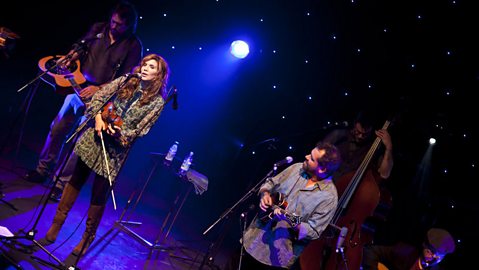
Alison Krauss and Union Station perform Miles To Go
Alison Krauss and Union Station perform Miles To Go. This is a web exclusive track that was performed as part of Alison's encore for Radio 2 In Concert.
Fiddle player Alison Krauss was a prodigious young talent, landing her first record deal at 14, releasing her debut album two years later and becoming a member of the Grand Ole Opry soon after her 21st birthday. As both a solo artist and leader of Union Station, Krauss brought a malleable pop sensibility to a traditionally stiff-backed rural genre, while the cool purity of her singing voice was at odds with the more strident tones of her female forebears. Her appearance on the soundtrack of the Coen brothers’ 2000 film O Brother, Where Art Thou? helped introduce bluegrass to a modern audience. Krauss’s crossover appeal was further enhanced by 2007’s Raising Sand, an album of glorious duets with Robert Plant. Alongside Quincy Jones, she is the most decorated living Grammy winner, with a staggering 27 awards to her name.
Key album: Lonely Runs Both Ways (2004)
3. Johnny Cash
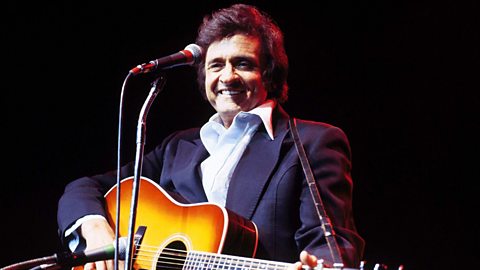
Johnny Cash enters Michael Ball's Singers Hall of Fame
Scott Dougan nominates Johnny Cash for Michael Ball's Singers Hall of Fame
Country music’s quintessential rebel, Johnny Cash was the poor boy from Arkansas whose formative years as a rockabilly rouser made him an anomaly within the conservative confines of Nashville. Cash duly self-mythologised as The Man in Black, an image that posited him as champion of all manner of causes, a spokesman for the downtrodden and the disowned. He campaigned for civil liberties, Native American rights and prison reform, delivering songs in a granite voice that only seemed to underline the surety of his conviction. The two live prison albums he cut in the late 60s - At Folsom Prison and At San Quentin - turned him into both a working-class beacon and an international superstar, while the final decade of his life saw another spike in popularity when Cash made a series of vulnerable, intense albums with producer Rick Rubin.
Key album: At San Quentin (1969)
4. Sturgill Simpson
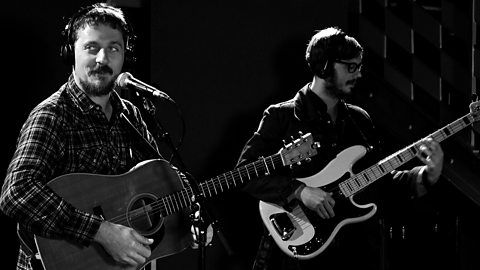
Sturgill Simpson | interview and Session
Ricky Ross has a session and interview with American singer-songwriter Sturgill Simpson.
Sturgill Simpson is perhaps country’s unlikeliest success story of recent times. Four years ago, he was relatively unknown - a reformed alcoholic trying to get a foothold in Nashville and issuing self-funded records. Now he’s hailed as the saviour of country, signed to a major label and picking up plaudits and awards by the bucketful, the latest being a Grammy for last year’s A Sailor’s Guide to Earth. Simpson’s appeal is twofold. His rich, expressive voice places him in the direct lineage of George Jones and Merle Haggard, while his progressive leanings (he’s as partial to Radiohead and Nirvana as vintage bluegrass and soul) allow him room to temper old-school twang with psychedelia, electronica and cosmological allusion.
Key album: Metamodern Sounds in Country Music (2014)
5. Kacey Musgraves
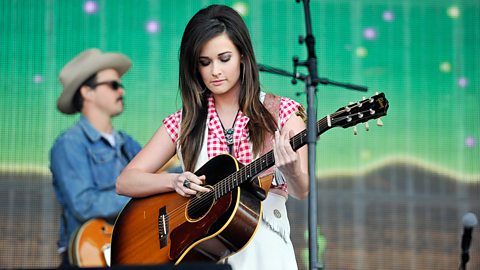
Kacey Musgraves on the Main Stage
Kacey Musgraves performs at Radio 2 Live in Hyde Park 2014.
Much like Sturgill Simpson, East Texan Kacey Musgraves is an outsider who’s successfully infiltrated mainstream country without sacrificing her edge. Her 2013 major label debut Same Trailer Different Park went gold in the States, its unvarnished tones recalling the heyday of the countrypolitan era. Lyrically, Musgraves concerned herself with issues of sexual equality, drugs and smalltown oppression, best heard on Follow Your Arrow, an impassioned plea for tolerance co-written with Shane McAnally and Brandy Clark. In the face of a mini-backlash from Nashville’s conservative right, Musgraves defended it as “a really positive anthem, just encouraging people of all kinds to do whatever makes them happy.” She underscored her egalitarian credentials on the even better follow-up, Pageant Material.
Key album: Pageant Material (2015)
6. Willie Nelson
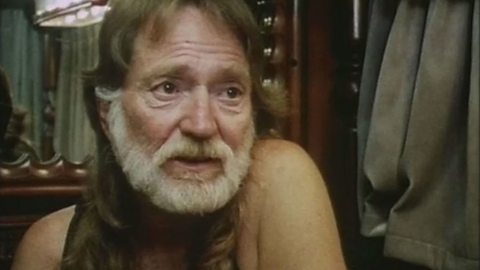
Patrick Kielty on his favourite country outlaw, Willie Nelson
Patrick loves his country outlaws and here he introduces his favourite, Willie Nelson
Now that Johnny Cash, George Jones and Merle Haggard are no longer with us, Willie Nelson is essentially the last of the original outlaws still standing. Having made his reputation as a songwriter at the dawn of the 60s, most famously as creator of Patsy Cline’s Crazy, Nelson developed into a major solo artist. His contribution to the world of country is immense, not least for his role in widening its remit with ambitious concept albums such as 1974’s Phases and Stages and its extraordinary follow-up, Red Headed Stranger, a country opera about a fugitive from the law. Factor in Nelson’s tendency to assimilate jazz, pop and folk into his work and you have a highly idiosyncratic talent who continues to blaze a trail for others.
Key album: Red Headed Stranger (1975)
7. Brad Paisley
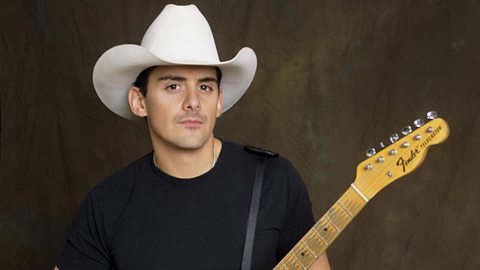
Brad Paisley joins Bob Harris discussing his career and playing at C2C Festival in the UK
The country star looks backs fondly at his appearance at C2C Festival 2014.
Taken at face value, there’s little to distinguish the smooth, stetson-toting Brad Paisley from other big-hitting mainstream stars like Dierks Bentley, Alan Jackson or Jason Aldean. But you don’t have to scratch too far below the surface to realise that Paisley is concerned with weighty matters of inequality, societal injustice and the ambiguous nature of his own Southern homeland. His great trick is an ability to coat provocative thought in digestible melodies, taking the message to the masses with album sales that now exceed 12 million while also holding the record for the most consecutive No. 1 singles on the Billboard Country Chart (ten, in case you’re asking). Nothing showcases his ambition more than ninth album Wheelhouse, whose stylistic spread is mirrored in the controversial subject matter of songs like Accidental Racist, featuring LL Cool J.
Key album: Wheelhouse (2013)
8. Loretta Lynn
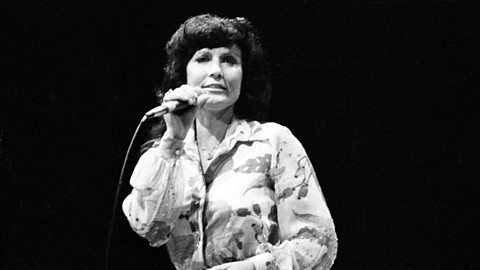
Loretta Lynn: 'I write about my life.'
Bob Harris visits Coal Miner's Daughter writer Loretta Lynn at home in Tennessee.
Kitty Wells emerged as the first female country star a decade earlier, but it was Loretta Lynn who radicalised women’s role in the overwhelmingly male bastions of 1960s Nashville. Lynn’s songs addressed birth control (The Pill), infidelity (Fist City), women’s rights (Your Squaw Is on the Warpath) and the double standards of gender politics (Rated X). This quickly translated into commercial success, with 1967’s unequivocal Don’t Come Home A-Drinkin’ (With Lovin’ on Your Mind) becoming the first gold album from a female country artist. The tale of her dirt-poor upbringing and rise to prominence was immortalised in 1980’s Coal Miner’s Daughter, for which Sissy Spacek won an Oscar for her portrayal of Lynn. She underwent a resurgence in popularity in 2004, when, aged 72, she won two Grammys for the Jack White-produced Van Lear Rose. White hailed her as “the greatest female singer-songwriter of the last century.”
Key album: Don’t Come Home A-Drinkin’ (With Lovin’ on Your Mind) (1967)
9. Steve Earle
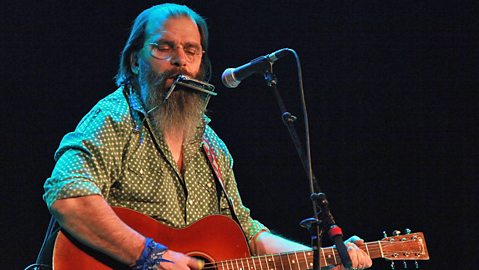
Steve Earle in conversation with Simon Mayo
Steve Earle tells Simon Mayo how he was influenced by the classic Beatles & Stones albums.
Barely out of his teens, Steve Earle first breezed into Nashville in 1975, swiftly aligning himself with a new band of rebels - Guy Clark, Rodney Crowell, fellow Texan Townes Van Zandt - who took traditional country as a rough fix and added liberal helpings of Southern blues, folk and rock'n'roll. More importantly, perhaps, Earle put the politics back into country during the 80s, serving up commentaries on Reagan, homelessness and the psychological legacy of the Vietnam War. Drug addiction and a spell in prison derailed him for a while, but he emerged as a voluble anti-war advocate and left-thinking politico who has since campaigned tirelessly to abolish the death penalty in the US. Anyone still labouring under the impression that country music is reactionary should seek out Steve Earle’s back catalogue.
Key album: Copperhead Road (1989)
10. Margo Price
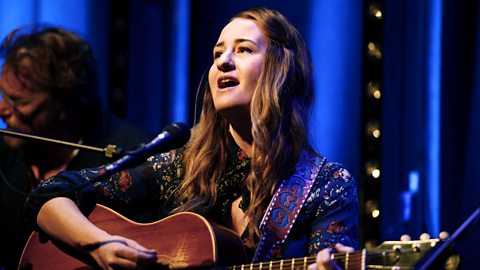
Margo Price - You Told Me With Your Eyes
Margo Price performs live on Another Country with Ricky Ross live from the CCA in Glasgow
Alongside the likes of Kacey Musgraves, Brandy Clark, Angaleena Presley and Ashley Monroe, Margo Price is part of the new breed of female singer-songwriters whose intelligent lyrics and thematic concerns provide a welcome antidote to the tiresome platitudes of Nashville’s bro-country crowd. Last year’s Midwest Farmer’s Daughter was a striking debut whose candid autobiography - the loss of the family farm, the death of a child, relationship problems, addiction to booze - was the stuff of classic country, as were the stylistic nods to Dolly Parton and Loretta Lynn. What ultimately sets Price apart, however, is her ability to drag the genre in unexpected directions, from sly blues grooves to rousing rockabilly.
Key album: Midwest Farmer’s Daughter (2016)