Alistair Beaton Asks "Can Politicians Tell Jokes?"
A brief history of the jokes (and attempted jokes) told by politicians
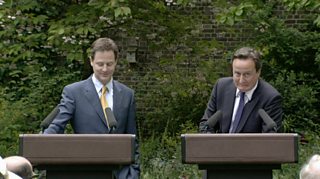
About eighteen months into the Conservative Lib Dem coalition, there was an extraordinary event: David Cameron cracked a joke. And it was funny. The miracle occurred during Prime Minister’s Questions. Ed Miliband had been ribbing the PM about his uneasy relationship with Deputy PM Nick Clegg. Cameron responded: "He shouldn’t believe everything he reads... it’s not like we’re brothers or anything."
It looked spontaneous and might actually have been spontaneous, because it’s not the most perfectly crafted gag. But it had the Tory benches weeping with laughter and left Miliband floundering.
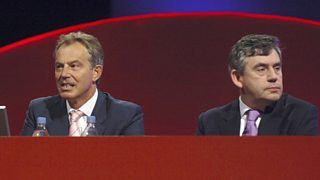
It reminded me of a rather good Blair joke, one that also linked the personal with the political. It was at the 2006 Labour Party Conference, where Cherie had allegedly called Chancellor Gordon Brown a liar. The following day, Prime Minister Blair told conference: “Well, at least I don’t have to worry about her running off with the bloke next door.”
Both those jokes work because they contain at least a grain of recognisable truth. And because they were both delivered with a degree of skill. This makes them rarities in the business of politics.
Most politicians simply aren’t very good at telling jokes. It’s not that they don’t want to. After all, being able to crack a joke makes the politician almost one of us. So why do they find it so hard?
Partly it’s because they realise the electorate would rather not have a joker running the country. Too much hilarity on the bridge of the ship of state does not make the passengers feel secure. Yet the voters also want their politicians to be human, to speak and behave like ordinary people.
In an age of over-rehearsed soundbites, this becomes refreshing, and helps explain – at least to some small extent - the popularity of such political oddballs as Nigel Farage.
This tension between the need for gravitas and the need for humour is at the heart of modern politics. Too much gravitas and you’re John Major. Too much funny stuff and you’re toast.
To solve the problem, most leaders bring in a gag writer, or if not a gag writer, then a speechwriter who knows how to turn a witty phrase. This can help. But if the politician in question has no feel for the joke, then it’s an uphill task (I know, I’ve been there).
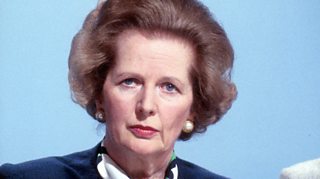
Margaret Thatcher famously had to be persuaded by writer John O’Sullivan to attempt a dead parrot gag at the 1990 Party Conference. Thatcher had never heard of Monty Python, far less watched it, but she duly did as requested, comparing the new avian logo of the Lib Dems to the famous expired bird:
"I will say simply this of the Liberal Democrats symbol, and of the party it symbolises… This is an ex-parrot; it is not merely stunned, it has ceased to be, expired and gone to meet its maker… it is a parrot no more, it has run down the curtain and joined the choir invisible… this is a late parrot."
What’s striking here is how Thatcher managed to pull it off. All uncomprehending, she delivered the lines as if she actually knew what she was talking about. What’s more, she kept a straight face. That’s really important. You definitely don’t want to be seen laughing at your own jokes.
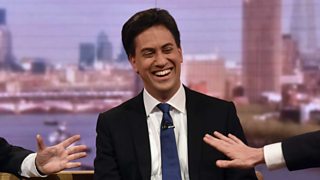
This is something Ed Miliband has yet to learn. In 2014, in an attempt to deal head-on with his image problems, he launched an attack on David Cameron as a purveyor of the photo op, following up with a self-deprecating line:
"He made his name as leader of the opposition with some fantastic photos, and we all remember them don’t we? Like hugging the huskies. Today, I congratulate him for that photo. Even my biggest supporters would say I haven’t matched him on that, and I’ve come to realise there are two reasons why: first, it’s not what I care most about, and second it’s not just that I haven’t tried…"
This was a thoughtful speech but here it got wrecked by the speaker’s own laughter. The self-deprecating suddenly becomes the self-regarding. Go take a look at that Thatcher parrot joke, Ed!
Conferences are usually considered safe places for jokes. The audience are on your side and wants to be amused. But that’s not enough to guarantee a rib-tickling success. Intelligence, skill, acumen, and timing all have to be in perfect harmony.
At the Tory Conference of 1992 Peter Lilley’s car crash speech revealed that he was lacking in at least three of those qualities, possibly in all four. Poor Peter had decided to rewrite Gilbert and Sullivan’s "little list" song from The Mikado, thereby delivering a comedy performance that when seen on television afterwards had toes curling up and down the country.
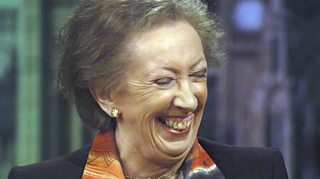
Then there was the occasion I once witnessed when Margaret Beckett, then Deputy Leader of the Labour Party, attempted a joke. Sadly, Margaret is not one of the world’s natural wits, so I listened in horrified apprehension as she ‘prepared the way’. This is always a mistake.
A joke should appear to fly spontaneously from the lips of the speaker, not have someone walking in front of it waving a red flag with the words ‘joke approaching’ written on it. In Margaret’s case, it was even worse than this; it was more like the Russian army mobilising for World War One.
As Margaret’s awful joke slowly hove into view over the horizon, I gazed down in pity at the hapless delegates, none of whom appeared to be particularly in the mood for humour (but then, at party conferences they rarely are). At last Margaret’s punchline arrived, not as a massive armoured division but as a single, solitary soldier in a tattered uniform, who promptly gave up the ghost as the feeblest of titters rippled through the hall.
On the comedy front, Conservative conferences are not much better, but they are slightly better. Back in Thatcher days, Michael Heseltine was the darling of Tory conferences, because he knew how to tickle the tummies of the geriatric party faithful.
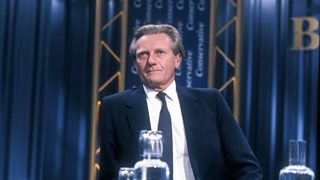
At the time, Ed Balls was largely unknown. Cheating slightly with the name, Heseltine used it to cap a mocking attack on Labour’s economic policy. He reads aloud: "Our new economic approach is rooted in ideas, which stress the importance of macro-economics, neo-classical endogenous growth theory and the symbiotic relationships between growth and investment in people and infrastructure…"
And with spot on timing, follows it up: "Clear, unambiguous… and to the point. Well, last week, the Guardian disclosed that the speech had not been written by Gordon Brown at all… but by a 27-year-old, choral-singing researcher called Ed Balls. So there you have it, the final proof of Labour’s brand new shiny modernist economic dream. But it wasn’t Brown’s - it was Balls!"
Happily, there are still a few brave politicians around who are prepared to risk a joke. That’s just as well. Because when we wake up on the morning of May the 8th, there may not be a lot to laugh about.
Alistair Beaton is a satirist, playwright, radio presenter, novelist and television writer whose credits include Not the Nine O’Clock News, Spitting Image, Feelgood and The Trial of Tony Blair.
More from Radio 4's Comedy Election...
![]()
Comedy Election Podcast
Comedy electioneering from The Vote Now Show, The News Quiz and John Crace’s Digested Manifestos.
![]()
Six obscure political expressions you might not have heard before
Learn how to use 'Gauche Caviar' and 'Wonk' in your next family argument over politics.
![]()
How did we get here?
The Vote Now Show summarise the last two years of British politics in just 3-minutes.
![]()
The Comedy Election Collection
Clips and articles highlighting the funny side of the general election.