Innocence Lost
By Alan Taylor
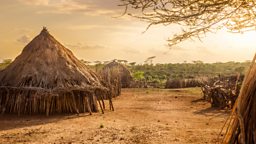
The sun was just going down, as the Umwazis left their little hut on the small hillock by the lake, to sit down around the fire for their evening meal, just like they did every night. The sky shone down on them with an opal blue, lightly tinged with a burnt orange, giving their freshly caught chickens and their dark brown faces a beautiful glow that they would’ve noticed, had they been less joyful in each other’s company. As this was not like any other night. This was the last night before Patrick Umwazi became a man.
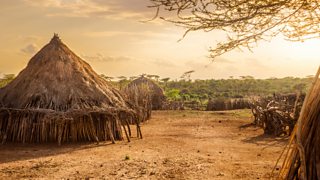
It was the day of the Reed in the year of the Salamander, which meant that it was the eve of Patrick’s 13th birthday. The celebrations were jubilant, and went on all the night. The neighbouring families, the Chiboks and the Khutans came out to share broiled chickens, ground maize and palm wine. They ate, drank and were merry, as was their tradition.
When the members of the neighbouring families got too tired or too drunk to continue, they went back to their huts to sleep long and sound. And although at that time the celebrations themselves died down, the night became all the more beautiful. The sky was now dark and the stars cast the only faint hue over the black lands. The elders, Kantu and Emwina Umwazi, lay down in each other’s arms, and stared at the night, thinking with quiet bliss about the rest of their life. Looking up, they saw their two youngest daughters, Akua and Akosua, playing in the small lake at the bottom of their little hillock. They were soaked, but laughing so brilliantly it cast all the worries in their mind into insignificance. Kantu and Emwina looked at each other, and embraced silently. Patrick was sitting down, looking ahead, with a solemn gaze.
In the morning, Kantu awoke early for the special day. As he left his hut, though, to stretch, he could see Patrick already out, still seated. He hadn’t been to bed. He knew what was coming. Turning 13, becoming a man, meant one thing and one thing and one thing only for the Bakwan people. Learning to kill.
After washing in the lake, and on an empty stomach, Kantu gestured for his son to follow him. Silently, the boy got up and walked, with his head held firmly upright, in the direction of his father. They kept plodding on in silence, past the lake, past the shrubbery, across the dry, cracked farmlands, and into the Wood of the Reckoning.
One quiet word slipped from Kantu’s mouth, ‘go’.
Soon they came out to a clearing in the trees. It was early, the sun was just creeping out of the cloudless sky, peaking through the holes in the trees. But there were no onlookers in human form. Just Kantu and Patrick. Father and son. Man and boy. Crouching, not looking at one another, each with a wordless acknowledgement of the other’s presence. Somehow they both know that, were they to look each other in the eyes, it would confront some unspoken, unknown trouble that had been hiding away for so many years. And for the Bakwans, confrontation was only ever physical. Never psychological.
So instead, Kantu quietly stepped forward and made a rudimentary chicken trap out of sticks and bamboo. He placed it down nimbly, covered it with leaves and went back to crouch with his son. They were careful not to stand too close together, yet he was anxious to be too long without his boy by his side. His baby. The boy he’d watch cry when the sun came out and then watch in awe when it went back down. The boy he’d saved from breaking his neck on the rocks in the Wood. The boy that was becoming a man. He realised these were the last few moments in which his boy, his baby, would still be his. Yet, he carried on looking straight ahead, not turning to look Patrick in the eyes for one last time.
Fleetingly, a chicken rushed out of the trees and fell into Kantu’s skilfully placed trap. It squawked in pain and struggled and squirmed to be free. But it was trapped.
One quiet word slipped from Kantu’s mouth, ‘go’.
Patrick knew what to do. He stepped up, took his short, sharpened knife from the bamboo sheath on his leg, looked at the knife, and looked at the chicken. The knife glistened in the growing morning sun, the chicken had started to bleed from its trapped leg. Patrick stared some more. He drew his knife up, not looking away from the dying animal. He was ready.
And then he felt something. Maybe for the first time in his life. A twang. Somewhere in his chest. He gave the chicken one more look and dropped the knife behind him. And he ran. He ran and ran and ran. He ran through the Wood of Reckoning, past the scorched farmlands, past the lake, past the shrubbery, and didn’t stop running until he was at the top of the hillock.
Catching his breath, he could immediately feel something wrong. He could sense it. Something more than the impending isolation from the Bakwans and his father that would come as he had avoided his God-given duty. He could feel a change. A chill in the air. A darkness looming over the bright sun. Then he realised what it was, what he had seen.
He slowly got up and looked down to the lake. He looked upon the clan of masked, white-skinned Makawis, the next tribe along, fleeing in the distance. Then he looked upon his little sister, in the lake. He looked upon her as his parents had looked upon her last night. Except instead of laughter coming out of her mouth, there was a steady stream of blood, pooling up around her and turning the water of the lake a dark, cold red.
More around the BBC
![]()
BBC National Short Story Award
The BBC Young Writers' Award is part of the BBC's National Short Story Award for over 18s.
![]()
BBC Writersroom
Development opportunities for for scripted content across Drama, Comedy, CBBC, CBeebies, Radio and Online.
![]()
Radio 2's 500 Words
Chris Evans' short story-writing competition for kids.
![]()
BBC Arts
Celebrate the short story with a selection of treats from the archive