Telescope Takeover at La Palma
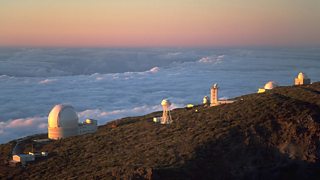
The Sky at Night is travelling to the island of La Palma in the Canaries to take over some of the best telescopes in the world – and we need your help to decide what to point them at!
Have you always wanted to see the turbulent atmosphere of Venus? Or the heart of a vast nebula? Perhaps there’s a distant galaxy you’ve heard of but never seen?
We are setting out to capture images of the most fascinating objects visible from the Northern Hemisphere in the last week of January and we need your suggestions.
If you would like to see what will be visible, you can check an online star chart, such as: The In-The-Sky.org Star Wheel
Make sure to change your location to where we will be observing – La Palma, but select Morocco on that site – and look at the end of January night sky. You should be able to see which constellations are visible, and by clicking on the map find a list of interesting objects to view.
Please EMAIL your suggestions to us at: skyatnight@bbc.co.uk (or tweet @BBCStargazing with the hashtag #TelescopeTakeover)
Need help with ideas? Read about some different types of objects below:
PLANETS AND COMETS
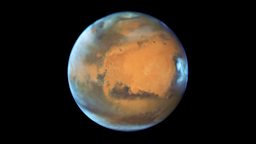
Venus, Mars, Jupiter and Uranus will all be well positioned in the sky at the end of January. Optical images will be able to capture the banded structure of Jupiter as well as its largest moons, whilst infrared images may be able to reveal the clouds of Venus.
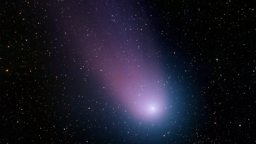
There are also a number of comets on show providing the chance to capture a comet’s tail.
GALAXIES
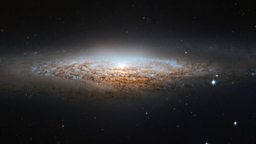
There are plenty of galaxies to see including some of the most famous Messier objects, such as the Triangulum Galaxy, the Black Eye Galaxy, and the Cigar Galaxy.
A range of globular clusters, tightly bound spherical collections of stars, will also be visible.
NEBULAE
Interstellar nebulae make up some of the most brilliant and bright deep sky objects. These vast clouds of dust and gas are popular to observe, and famous ones on show include the Crab Nebula, the Orion Nebula, and the Horsehead Nebula.
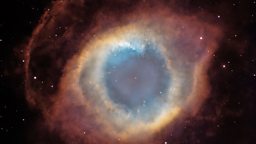
Planetary nebulae are generated from an expanding shell of gas surrounding an aging star. The Ring Nebula, the Little Dumbbell Nebula and the Owl Nebula will all be well placed.