Find out more
Susan Nelson
Before Susan came to rely on the Charity Organisation Society (COS), she was working as a local ‘gut girl’ at the cattle market in Deptford. Earning 13 shillings a week and working 12-hour days, she was butchering meat in freezing unhygienic conditions.
The gut girls were famously “a rowdy, boisterous bunch who have mouths like sailors and are as strong as the oxen they gut.” Susan must have been a strong woman. The gut girls had to be to survive.
Susan stopped working at the market when her first husband John returned from fighting the Boer War in South Africa in Feb 1903. He had clearly gone mad with “sunstroke”, what we now understand to be PTSD. Unable to work, and dangerously ill, he was sent to a huge Victorian asylum in Bexley. In September 1903, the relationship between Susan and the COS secretary Miss Margaret Marchant began.
Susan ended all contact with the COS in 1913, two years after she was acquitted of the attempted murder of her youngest son Alfred. In the following years she appeared to be trying to get her life back on track. In 1918, she married a local man called Mr. Thomas Pickering at Greenwich registry office. Thomas was a local Deptford ex-con. In 1910, he was serving a prison sentence alongside Susan’s ex Nathaniel Nelson for stealing old iron from the Thames. But by 1918, he appeared to be straightening himself out, along with Susan.
Thomas served in WW1 and listed Susan’s children, Alfred and Nathaniel, as his own. Susan and Thomas seemed able to carve out a new life from 1917: still poor but on the straight and narrow. They remained living at 100 Watergate Street, Deptford.
Some living descendants remember Susan living with a man they knew as Mr. Pickering. The family never left Deptford. Alfred took his mother Susan in to live with his family on Childers Street in Deptford during the later years of her life. He was probably completely unaware of the incident on the River Thames in his childhood because he was so young when it happened.
In the last 4 years of her life, Susan moved in with Alfred’s brother Nathaniel and his family on Armada Street. Susan shared a room with her grandchildren and they remember being kept awake at night by the glow of her clay pipe.
Margaret Marchant
Margaret never married, like many thousands of the COS lady visitors. But Margaret and her brother William helped raise the children of her nephew, Godfrey Marchant, whilst he was away serving with the British Army in India - Godfrey had married a lady called Frances and they had two children (Godfrey Jnr and Eileen), who were both born in India.
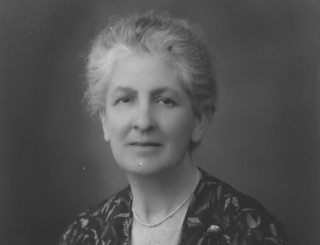
Godfrey Jnr died during WWII without ever marrying or having children - but Eileen went on to marry a man called James Hector Edmond in 1927 - a Colonel in the British Indian Army. They had two children: George and Louise (known by her middle name Anne).
Eileen and her family decided to move back to England when her husband James retired from the army – they wanted their children George and Anne to be educated in the UK. They all moved into a large house in Hampshire, overlooking the Solent. Margaret and William lived in the house around the 1950s. They had three servants, including a living housemaid called Elizabeth.
In a strange coincidence of time, Margaret Marchant and Susan Nelson passed away a year apart - Margaret was 86. Susan, a lifelong drinker and pipe-smoker, was 78.
Charlotte
Charlotte had a desperate childhood, she repeatedly asked Miss Marchant at the Charity Organisation Society (COS) for access to her money. She always had to justify every penny.
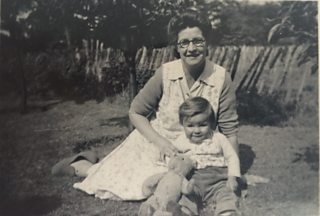
In her teenage years, Charlotte fufilled all the COS’ wishes except for one: she refused to go into domestic service – a trade encouraged by Miss Marchant. Her letters to Miss Marchant show that Charlotte hated this and would rather starve. She clearly valued her independence, and preferred to work in various factories than as a domestic servant.
Charlotte joined the Albany Institute (a school and charity set up to help local young women to save them from a life as a gut girl) in 1916-1917, but constantly had to move from job to job especially during the recession of the 1920s. At one point she received “Out of work dole” money for a short stretch. For one extraordinary spell in the 1920s Charlotte moved back with Susan and her two brothers Nathaniel and Alfred. They were together again under one roof.
In 1923, Miss Marchant wrote fondly of Charlotte:
“She has turned out better than I expected possibly because she lived with a friend, away from home...I should wish she would now get married to a decent man.”
Charlotte did end up courting a man called Arthur Avey. He was a semi skilled factory worker, and his family helped Charlotte find jobs until she had her own family. They married in 1925: she gave birth three days later. They had six children together and moved to Mottingham, Kent. Charlotte’s son Victor doesn’t recall Charlotte speaking much about her mother. Against the odds, Charlotte appears to have created a happy home for her family. This was perhaps a little triumph for Miss Marchant and the COS.
The Charity Organisation Society (COS)
Founded in 1869, the Charity Organisation Society (COS) was the earliest form of social care. Their focus on ‘family’ provided a key foundation to establish social work as a profession in the UK.
Before the COS, the Elizabethan Poor Laws made the parish responsible for taking care of the poor in its area. Over time, abuses to the system piled up. The 1832 Poor Law Commission documented how recipients were playing the system. In 1834 the New Poor Law ended outdoor relief. This meant no one could stay at home and receive assistance. The Government gave the poor a choice: either enter the workhouse or get nothing from the state.
A new urban underclass was born and in response, and a tidal wave of haphazard private charity flooded into the slums.
To manage charity giving better, the COS was born in 1869. It aimed to distinguish between the ‘deserving’ and ‘undeserving’ poor. The COS believed that indiscriminate handouts made people benefit dependent and worried that this would later lead to creating a ‘dependency culture’ in Britain. The society collected detailed records of each individual applicant by arranging meetings and sending ‘agents’ out on home visits. The Nelson files form about 200 pages of letters that document more than a 20-year history of a family unable to support itself, and forced to depend on long term relationships with COS ‘agents.’ The casework methods that were previously haphazardly collected were finally being gathered together in a more coherent plan. It was an early form of social investigation – visiting homes and interviewing the poor.
In 1901, the COS set up the first social work training course, and after the Great War in the 1920s; the COS was inundated with families across the country, because of the death of so many men. The society continued to investigate the circumstances behind any charity claimants ensuring that relief should be sufficient to keep them above the poverty line.
Finally, departments were established for the first time under a new welfare state and the first guide to Social Services was published. In 1946, the Organisation was renamed the Family Welfare Association to reflect its family-orientated role. The charity continued to play a major role in helping to establish what makes social work a profession. In 1975, FWS organized the first UK family therapy conference, at a time when family therapy was relatively unheard of in Britain and in 1978 the first GP-attached social workers started to offer patients a more integrated service.
In 2008, the Family Welfare Association was re-born as “Family Action” - the leading provider of services to disadvantaged and socially isolated families today. Today they support over 45,000 families through over 130 community-based services. They provide welfare grants for essential people and household needs to assist families and individuals with low incomes, particularly those living on benefits by offering practical, emotional and financial help.
For more information on Family Action, visit their website.

