'Things we learnt from the podcast 'How Do You Cope?... with Elis and John'
'How Do You Cope? ...with Elis and John' is a podcast about overcoming challenges.
Celebrity guests from all walks of life share the biggest hurdles they’ve ever had to face – and how they managed to surmount them.

Series 2 offered lessons about everything from living with OCD, to tackling racial stereotypes surrounding motherhood – and here are some of the standout stories.
Head to BBC Sounds now to hear the whole of series 2 of 'How Do You Cope?' and catch up with series 1 guests, including Adam Kay, Sally Phillips, Poorna Bell, Emily Dean and Paul Sinha.
George Ezra revealed he has been living with a form of OCD
Singer-songwriter George Ezra has achieved worldwide success with his feel-good music but he shared that behind the scenes, he’s been learning to live with a lesser-known form of OCD, informally known as ‘Pure-O’.
It feels like you're testing yourself"George Ezra
"Pure O is when you have the thought patterns and the intrusive thoughts without any of the physical actions to relieve them. It feels like you're testing yourself," George explains.
"It feels like you go 'God, in this situation, the worst thing to think is...' And then you have that thought. And then you think 'George, don't have that thought again,' so you do. And then you go ‘Well if you're somebody that can have that thought, does that mean you are that person? And if so, you're horrible'."
At worst, George’s intrusive thoughts would whirr into motion as soon as he woke up and last until he went to sleep. During these periods, George says he was barely "alive" because he was so cut off from the world around him. When the 27 year-old finally received his diagnosis, he cried.
"I went 'This is it!', which I have a very Hollywood memory of. It's like the choir started singing," he says. “It just felt like I’m not alone."
5 Live's Emma Barnett discussed the deep pain that endometriosis causes her
New presenter of BBC Radio 4’s Woman’s Hour, Emma Barnett, has spent years covering all sorts of stories and issues on radio and TV. But her struggle with endometriosis presented a new challenge to overcome.
It was like being in a terrible game"Emma Barnett
Emma’s diagnosis of the condition came later in life, as her contraceptive pill had been "hiding" the symptoms for a decade. When she stopped taking the pill, she was struck by uterine pain, which baffled doctors.
"It was like being in a terrible game," Emma recounts. "Doctors kept saying to me, the only way that might help my period pain – when they didn't know it was endometriosis – was to either get pregnant, which I couldn't, or go back onto contraception, which I couldn't because I was trying to get pregnant."
Her experience led her to speak openly and frankly about the obstacles affecting women’s health care and treatment of such conditions.
"It shouldn't be that there's such a spectrum of pain that people expect women to 'just put up with' because we know very little about women's gynaecology," she says.
Alex Brooker was worried about how his children would view his disability
TV presenter Alex Brooker has helped destigmatise disability through humour and humanity during his eight year career. But when he became a parent, Alex worried about how his children might react when they realised their dad looked slightly different to them.
She just carried on holding my hand and it was done"Alex Brooker
"The scenario of a child being scared of my hands has been something that I've probably worried about since I was 10 years old," Alex says.
"When I was younger one of my cousins was really frightened of them and it upset me so much, it's one of those moments that stays with you."
Thankfully, Alex’s fears proved to be unfounded. His eldest child noticed the difference this year.
"When [she] noticed, she just said 'Daddy you've got two fingers and I've got more haven't I?' and that was it, she just carried on holding my hand and it was done."
Author Candice Brathwaite is determined to cast aside stereotypes about black mothers
Author and influencer Candice Brathwaite has been at the forefront of a movement to make motherhood more inclusive – starting with challenging racial stereotypes surrounding single parenthood for black mothers.
Single motherhood was just this extra layer"Candice Brathwaite
Candice says there’s a silence attached to black single mothers within the black community because of a desire not to play into racist tropes.
"When it comes to black motherhood and black families because we were so thin on the ground in seeing positive role models, in terms of a man being the household, single motherhood was just this extra layer of 'oh my gosh, let's not talk about that'," she says.
Black single mothers have been dealing with judgement not just from the white community, but from their own, Candice says, which manifest in misogynistic ideas about single mothers failing to satisfy their former partners.
"For example the term 'she couldn't keep a man'," she observes.
"There's that idea within the community that it's a woman's job to keep a man engaged and satisfied and if you find yourself to be a single mother you've done something wrong."
Nature offers predictability to Chris Packham in a way humans don't
Wildlife presenter Chris Packham is known for his connection to the natural world, so perhaps it’s unsurprising to hear that he feels more at-home in the company of animals. But the broadcaster, who lives with autism, opened up about the extent to which nature offers him a safe haven.
There is always a crack in the glass, but this isn't the case with animals"Chris Packham
"There’s a security in the simplicity of the relationship," shares Chris.
"In my world there's no grey, it's black or white, it's either the truth or a lie, there's nothing in between. Animals are predictable. I'm not saying you always get it right but you get it right once you begin to understand that species."
Chris says that he’s never felt threatened by animals, only by humans. He also finds emotional bonds with animals easier to navigate.
"If I love something I can only give it 100%, I can't hold anything back," Chris says.
"With humans, in a relationship, your love is not reciprocated in an unconditional way all the time. There is always a crack in the glass, but this isn't the case with animals."

Other guests and topics in series two of 'How Do You Cope? ...with Elis and John' include:
- Comedian Josie Long - sexism and online trolls
- Former footballer Fabrice Muamba - suffering and recovering from his on-pitch heart attack
- Cricketer Monty Panesar - mental health
- Fashion stylist Grace Woodward - mother's eating disorder and impact of fashion industry on mental health
- Empire editor Terri White - trauma and abuse
- Sports broadcaster Simon Thomas - on suddenly losing his wife to cancer
- Author Michael Rosen - his hospitalisation from coronavirus and coping with the loss of his son, Eddie.
- Singer Damon Gough (AKA Badly Drawn Boy) - struggles with alcoholism
More podcasts from 5 Live
![]()
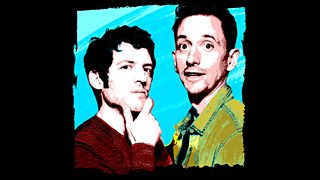
Elis James and John Robins
Terrestrial radio's most unproduceable presenters Elis James and John Robins with big laughs and top quality #content. Hilarious, warm and unashamedly ashamed, their award-winning chemistry get you over the finish line of the working week.
![]()
Ecstasy: The Battle Of Rave
When Ecstasy and Acid House first swept Britain, a group of lives would be changed forever. One Story. Half real life. Half drama. Welcome to Ecstasy: The Battle Of Rave.
![]()
What Planet Are We On? ...with Liz Bonnin
Offering solutions and practical tips as well as hearing from experts, campaigners and well-known names. Liz Bonnin and the team explore the impacts of climate change.
![]()
No Passion, No Point
Eddie Hearn, one of the world’s best-known sports promoters, goes behind the scenes with some of the biggest names from the worlds of sport, entertainment and politics.