Vaughan Williams and the Wars
1914: A Soaring Skylark
One of Britain’s most popular works, evoking images of a pastoral idyll and a soaring skylark is an unlikely war work. Composed originally for piano and violin the work captures the tranquillity of the languid summer days before outbreak of the First World War on 5 August 1914. He jotted down the notes of his beloved violin concerto that summer whilst walking along the cliffs of Margate as a response to a poem by George Meredith.
Aged 42 Vaughan Williams was not required to fight in the war but he enlisted as a Private in the Royal Army Medical Corps Territorial Force. He served in France where he survived the Somme in 1916, and a malaria-infested Salonika. There was no time for composing although he did manage to start a singing class. His experiences during the war heightened his nostalgia for a simpler time and a world that no longer existed as reflected in The Lark Ascending. He had set the work aside during the war but he took up the romance again, fine-tuned it and arranged it for orchestra. It was premiered in 1920.
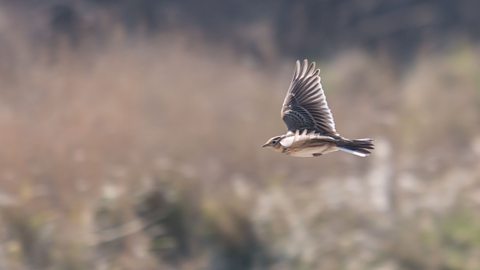
Vaughan Williams's The Lark Ascending
Janine Jansen performs Vaughan Williams's The Lark Ascending
War and loss
The war affected Vaughan Williams both mentally and physically for the rest of his life. The continual exposure to gunfire took a toll on his hearing leaving him almost entirely deaf in old age. He lost many friends during the conflict including composer George Butterworth, to whom he dedicated his London Symphony.
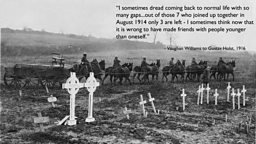
A Symphony for the First World War
“It’s really wartime music – a great deal of it incubated when I used to go up night after night in the ambulance wagon at Ecoivres and we went up a steep hill and there was wonderful Corot-like landscape in the sunset. It’s not really lambkins frisking at all, as most people take for granted.”
Listening to Vaughan Williams’s Pastoral Symphony and you might be inclined to think of visions of babbling brooks and bucolic meadows. The scenes that inspired it were not as Vaughan Williams put it “Lambkins frisking about” but the starkly opposite. Inspired by the battlefields of Northern France, it is regarded to be the most war-influenced of all his symphonies. There’s a passage in which a lone trumpeter represents a bugler practising and constantly hitting the wrong note. Sir Roger Norrington describes it as “a trumpeter practising his own funeral song and somehow you know he will be dead in a week.”
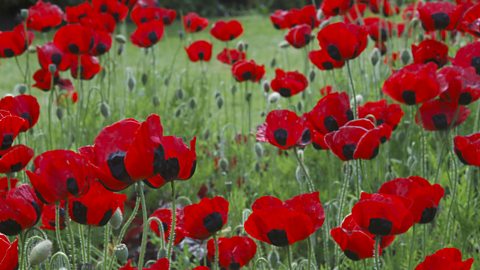
Vaughan Williams: Symphony No. 3 'Pastoral Symphony'
Sir Andrew Davis conducts the BBC Symphony Orchestra
‘The Angel of Death has been abroad throughout the land; you may almost hear the beating of his wings …’ – John Bright, 1855
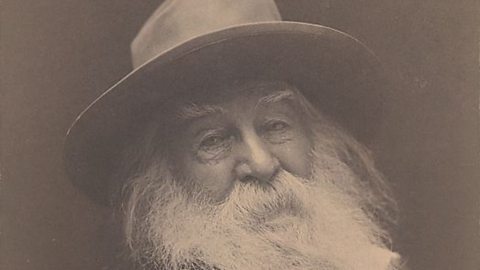
Vaughan Williams wrote his choral plea for peace Dona nobis pacem in 1936 at a time when the country was slowly awakening to the possibility of another world war. It sets texts from the American Civil War by poet Walt Whitman including his Dirge for two Veterans as well as poignantly opening the work with the Agnus Dei from the Latin Mass. It also includes a passage from a speech given in Parliament by John Bright in 1855 at the time of the Crimean War and the last two sections use a series of passages from the Old Testament expressing optimism for future peace.
'Beat beat! drums!' from Vaughan Williams's Dona nobis pacem
London Philharmonic Orchestra & Choir/Adrian Boult (EMI 1974/1989)
Vaughan Williams’s biographer Simon Heffer has said of Dona nobis pacem, his “main inspiration is drawn not from the soil of England but the whole world going mad around him.” The work reminds us of the misery and loss which war brings but given the circumstances, Vaughan Williams was convinced that this one needed to be fought.
'O man greatly beloved' from Vaughan Williams's Dona nobis pacem
Sheila Armstrong with the London Philharmonic Orchestra & Choir
![]()
Hear Vaughan Williams's Dona nobis pacem
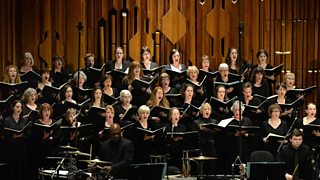
The BBC Symphony Orchestra & Chorus perform Vaughan Williams's moving choral plea for peace on 21 May at the Barbican
![]()
Vaughan Williams's Toward the Unknown Region at the BBC Proms
The BBC Symphony Orchestra & Chorus perform Vaughan Williams's large-scale masterpiece 'Toward the Unknown Region' on 26 July at the BBC Proms.

Skylark: Ivan Talboys/Creative Commons
Horse moving ammunition: National Library of Scotland/Creative Commons
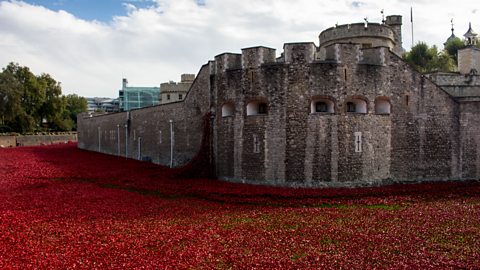
Poppy field and Poppies at the Tower of London: BBC
Walt Whitman: Library of Congress/Public domain