10 Incredible Things We learned from History’s Toughest Heroes
In the Radio 4 podcast, History’s Toughest Heroes, Ray Winstone shares the stories of 10 men and women whose endurance, bravery and resilience took them on extraordinary adventures.
Here are just 10 of the things we learned from the lives and legacies of these remarkable outsiders, campaigners, explorers and survivors.

1. Peter Freuchen - a great explorer can make use of anything
In an amazing act of improvisation, when trapped under his sled in the Arctic, explorer Peter Freuchen dug his way out of an icy tomb with a chisel fashioned from his own frozen faeces. His skills as a storyteller later led to a career as a speaker and author, and he went on to use the knowledge won during his years of exploration to win The $64,000 Question in 1956. It made him famous.
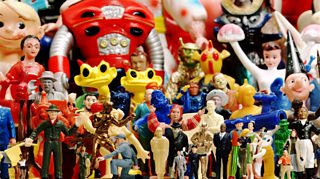
2. Kitty O’Neil - performing stunts could make you an action figure in the 1970s
Kitty O’Neil, the record breaking stuntwoman, had her own action figure made by Mattel as part of their TV’s Star Women set. The box, covered in colourful illustrations of her most famous stunts, made no mention of the fact she was profoundly deaf.
3. Robert Smalls - the freedom of 16 enslaved people was won with a hat
Robert Smalls was enslaved from birth, but while working on a paddle steamer during the American Civil War, he spotted a chance of freedom. He disguised himself as the ship’s Captain by wearing his distinctive straw hat and then calmly stole the ship and steamed under the guns of the forts defending Charleston Harbour. As a result, he saved his family and those of the other crew members and also delivered the ship, with an assortment of cannon and munitions on board, into Union hands without a single casualty or a shot being fired.
4. Constance Lytton - imprisoned suffragette ‘Jane Warton’ was an undercover aristocrat
Suffragettes staged direct actions during their Votes for Women campaign and were often imprisoned as a result. To avoid receiving preferential treatment because of her class, Lady Constance Lytton gave her name as ‘Jane Warton’ when arrested. Like many suffragettes, she went on hunger strike in prison and was force-fed, a brutal practice. On release, the extremely shy aristocrat immediately wrote a detailed account of her experiences and spoke to large crowds about her sufferings and those of her fellow campaigners.
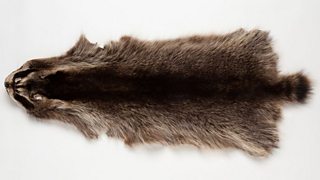
5. Hugh Glass - hunting for beaver pelts could make you a fortune
Beaver pelts were highly prized by European hat makers in the 18th and 19th centuries, so were an extremely valuable export for enterprising Americans. The Astor family fortune, for example, was built on the trade. On an expedition to gather beaver pelts in 1823 trapper Hugh Glass was mauled by a grizzly bear, and left to die in the wilds by his companions. His work didn’t make him a fortune, but his survival made him a legend.
6. Henry Johnson - an American infantry regiment served under French command in WWI
Henry Johnson, who fought off a raiding party of more than 20 German soldiers in 1918, was a member of the 369th Infantry Regiment, also known as the Harlem Hellfighters. When they arrived in France at the beginning of 1918, the mostly black regiment was given labouring duties, but they were eager to take a combat role. The American commanders resisted, preferring to keep black troops off the front line, but the French were desperate for fresh troops. The 369th were given French rifles and served under French command with distinction until the end of the war.
7. Margery Kempe - the first biography of an English woman survived because of a game of ping-pong
The Book of Margery Kempe, a lively account of a medieval Norfolk woman’s travels as far as Jerusalem, and her trials for heresy in England, survived because of a game of ping-pong. The only known copy of the manuscript was discovered in 1934 in a pile of old books when a group of guests at a country house went rummaging about for a new ping-pong ball.

8. Crazy Horse - among the Lakota, names can be a gift
Crazy Horse, the legendary Lakota warrior who played a key role in the defeat of General Custer at the Battle of Little Bighorn, was called ‘Amongst the Trees' when he was born, then ‘Curly’ because of his long, light-coloured hair. The name by which he is now known, Tashunka Witko or His Horse is Wild, belonged to his father. When Curly proved himself a brave and skilled warrior, his father passed on the name to him, and took another for himself.
9. Ida B. Wells - when Wells wrote about the cases behind lynchings in America, a mob destroyed the newspaper’s printing press
In 1892 Ida B. Wells wrote that relationships between black men and white women that often lead to lynchings, were in fact consensual romances. She said that the lynchings were in fact part of a violent campaign against Black progress. This enraged local whites who destroyed the presses of the paper she co-owned, The Free Speech. The crime was never solved.
10. William Marshal - tournaments could win you a fortune
In eleventh century Europe one way a knight could amass a fortune was by competing in tournaments. Skilled horsemen and fighters like William Marshal would capture knights of the opposing team on the Grand Melée, a sort of free-for-all fight that was a key part of the tournament. The knight would forfeit his horse and armour to his captor, and be forced to buy them back. Marshal’s abilities and honourable conduct meant he became known as ‘the greatest knight in Christendom’, and his skill and loyalty meant he also played a key role in setting the course of English history.
![]()
Peter Freuchen: Surviving the Arctic Wilderness
An arctic explorer is trapped in a snow drift the size of a coffin. How will he survive frostbite and make it out alive?
![]()
William Dodd Fights the Factories
In the industrial revolution, a worker takes on the factory system and demands an end to brutal conditions.
![]()
Dudley Clarke: The Great Deceiver
In Cairo, an eccentric British army officer draws on magic tricks to fool the Nazis.
![]()
Vasily Arkhipov and the End of Days
A young naval officer must choose whether to save the world or trigger its destruction.