Interview: Alisa Weilerstein

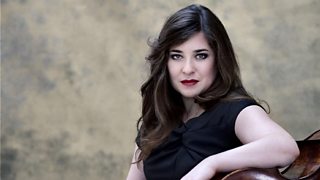
Still in her early thirties, Alisa Weilerstein is one of the leading musicians of her generation. She returns to City Halls this season to play Shostakovich’s Second Cello Concerto. We caught up with her on tour to talk about her life so far, musical heroes, and the advantages of music-making with your spouse.
Your career has really blossomed in the last couple of years. What have they been like for you?
Crazy – but in a nice way! I’ve actually been building this kind of life since I was 14, and my career was always very much ‘step by step’. I started out doing maybe one week a month in the US, then in past six years I’ve been travelling in Europe more frequently, and I visit Asia and Australia once a year as well. I’m very grateful to my beginnings, because even though it was just one week a month, it was amazing training because I was also a student at Columbia University and I had to juggle a lot of things at once, from a very early age. So by the time I was really travelling quite a lot it really didn’t feel overwhelming in any way. I also travel with a large suitcase that has most of my things with me so I don’t feel like completely disconnected, and technology these days means I’m in contact with my husband all the time.
When did you take up the cello?
Both my parents are musicians, so I had wonderful music constantly in the house, but no one told me that I should pick up the cello. In fact, I kind of demanded one from my mother when I was about four. I said “Mummy, I want a cello and a cello teacher” and she said ‘no, you’re too young’ but I kept on at her until she realised I was serious about it and then relented.

Who was your teacher?
I had many teachers but my first long term teacher was Richard Weiss (First Assistant Principal Cellist of The Cleveland Orchestra). He had this combination of being very kind but very demanding, which was perfect for me at the time and I also worked a lot with my father, maybe two hours a day between the ages of 9 and 16. He is a highly in demand teacher but he was really amazing because there’s always the issue of whether can a child really practise with their parents, but he was amazing at creating a very healthy distance between us when we were working together.
The last time we saw you in Scotland you played the Elgar Cello Concerto which you’ve recorded to great acclaim. How did you approach a piece like that and make it sound fresh?
I didn’t really consciously try to make it sound fresh. I really love the piece and Jacqueline Du Pré was always my favourite, and her recordings of that work have always been my absolute favourite. So when I was 12 and started learning the piece on my own, I forced myself to put those recordings away because her playing is so seductive and so wonderful that I was afraid I would start to copy some of her idiosyncratic touches.
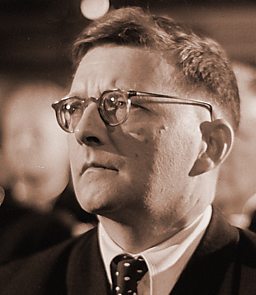
This season you’re going to play Shostakovich’s Second Concerto. How conscious are you of famous interpreters such as Rostropovich?
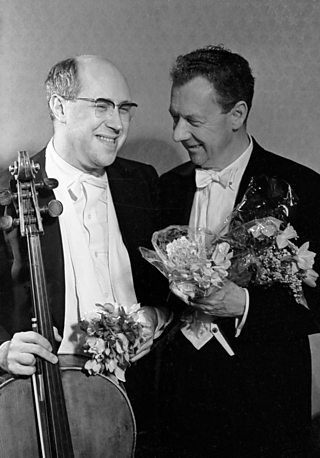
I was very lucky to play the first Shostakovich concerto for Rostropovich when I was twenty two, but unfortunately I never got to play the second one for him. He was such a remarkable presence, and he talked so much about the duality in Shostakovich’s music: even if Shostakovich was feeling terribly anguished he could never show it on the surface and so much of his music reflects that. Of course, I grew up with the Rostropovich recordings but again that was something that I had to force myself to put away because when you have such forceful personalities you need to ignore them to develop your own relationships with the works.
You’re still fairly young but some many of these works were written by musicians towards the end of their life. How do you get inside this music which is so full of sadness or despair?
when you have music that is so masterful, that speaks so directly, it’s almost impossible not to inhabit it.
Well, you could ask the same question of a method actor, and, you know, you just have to inhabit it. I think that’s completely possible, even if you haven’t had the same experience. Empathy is a huge part of human experience, and so while I wouldn’t pretend to know exactly what it was like to experience these emotions personally, when you have music that is so masterful, that speaks so directly, it’s almost impossible not to inhabit it.
Tell us about your cello.
I play a Montagnana cello from 1723. I found it in 2014 and I’m hoping it will become mine soon! I’m sure by the time I come to Scotland it will also be resolved. I still own my wonderful William Forster cello but the Montagnana is really a remarkable instrument.
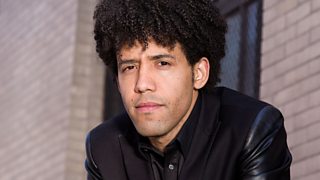
When you come to Glasgow you’ll be appearing with your husband (conductor Rafael Payare). What are the advantages/disadvantages of performing together?
There are no bad things about performing with my husband – and I’m not just saying that because he’s standing right next to me! It’s a real joy. We feel music very similarly, on a core level, which helps a lot but we also have a very open dialogue between us so if we disagree about something we always work it out in a very productive way, so it’s a lot fun to work together. We definitely don’t need to speak too much. We just play a bit and one of us says ‘oh that’s what you want to do’, we play it again and then it’s right. He’s in a very specific role when we’re doing a concerto and he’s very supportive.
Alisa Weilerstein plays Shostakovich’s Cello Concerto No.2 on Thursday 22 October 2015 at Glasgow City Halls, and at Leeds Town Hall on Saturday 24 October. The Glasgow City Halls concert will broadcast live on BBC Radio 3.
![]()
Shostakovich in Glasgow
Alisa Weilerstein plays the Second Cello Concerto at City Halls
![]()
Shostakovich in Leeds
Rafael Payare conducts music by Strauss, Shostakovich and Dvořák
Discovering Shostakovich
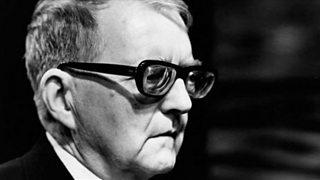
Donald Macleod explores Shostakovich's youth
Stephen Johnson explores Shostakovich's First Cello Concerto with Christian Poltera and the BBC Philharmonic
Related Links