The Most Bizarre and Captivating Adaptations of Wuthering Heights
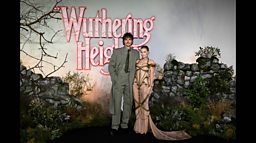
By now you’ve either seen or read about Emerald Fennell’s Wuthering Heights starring Margot Robbie as Cathy and Jacob Elordi as Heathcliff, complete with visuals that are luscious or ludicrous, depending who you ask, fabulous costumes and a lot of kinky squelching.
Emily Brontë’s first and only novel is famously tough (some might say impossible) to adapt. It’s long, with a fiendishly intricate structure; it is full of things that are difficult to film (a dog being hanged, to name just one); and its fans are both passionate and possessive.
But the tale of doomed love on the Yorkshire moors is also irresistible to adaptors; it’s been transplanted to a sun-drenched California school in a 2015 TV series called, gleefully, Wuthering High School; (Heath)Cliff Richard has made a musical of it; and in 2022 a video game called Limbus Company allowed you to go into a haunted house based on Cathy’s, and battle mysterious ‘Butlers’.
Here are some of the most interesting adaptations to date.
Wuthering Heights (1939)
William Wyler’s black and white swoonfest is still ranked top on film review aggregator site Rotten Tomatoes. The clothes are pure old Hollywood glamour, the moody cinematography is sublime, Merle Oberon’s Cathy is ethereal, Laurence Olivier’s Heathcliff is brooding. Does it matter that they ditched the second half of the story, ending with the lovers’ ghosts walking hand in hand through the snow? Not really. This is Wuthering Heights reimagined as a Thirties weepie and on its own terms, it is genius.
Wuthering Heights (2011)
Andrea Arnold’s raw, harrowing film is best known for finally casting a black Heathcliff, or rather two, with Solomon Glave playing him as a child and James Howson as an adult. Brontë never definitively specified Heathcliff’s race, but she did describe his darkness, difference and otherness, and Arnold’s film really brings out the way Heathcliff was a victim of both racism and class. She pares the story down to its essence, makes the moors look elemental and shiveringly brutal, and ramps up the cruelty – but also the tenderness of Cathy and Heathcliff’s childhood.

Wuthering Heights (2009)
Tom Hardy and Charlotte Riley fell in love while playing Heathcliff and Cathy in Coky Giedroyc’s film — and you can tell. The chemistry is off the scale. Hardy is volcanic, Riley is luminous, Pete Bowker’s smart script has a good stab at the second half of the novel, and Andrew Lincoln refuses to play Edgar as a posh buffoon and manages to give him some humanity.
Emily Brontë's Wuthering Heights (1992)
In Peter Kosminsky’s 1992 version, Sinéad O’Connor as Emily Brontë stalks the moors in a sumptuous cloak to introduce the story and sternly warn us it isn’t going to be funny. Ralph Fiennes smoulders dangerously as Heathcliff and Juliette Binoche plays both Cathy and her daughter in a giggly French accent. It’s notable that this film covers the entire novel.
Wuthering Heights (1967)
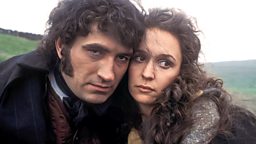
Ian McShane is a positively demonic Heathcliff to Angela Scoular’s cooler, bolder Cathy in this TV series by director Peter Sasdy. He went on to make a lot of Hammer horror, which might explain the spine-chilling vibe. Although it was filmed in colour, the videotapes were wiped so only a stark, sharp black and white version survives. The wigs are ridiculous, the sideburns fulsome and you can sometimes hardly hear the dialogue over the wuthering, but it is mesmerising – and inspired Kate Bush.
Wuthering Heights (1978)
Written over one moonlit night, when she was just 18, recorded in a single take, Kate Bush’s eerie, keening song is a Gothic melodrama in miniature, with Bush playing Cathy’s tormented ghost. Bush made two music videos for it, one as a wide-eyed, wild-haired ghost in floaty white, and one in a scarlet frock which has inspired joyous mass recreations by troupes of women all over the world.
Arashi ga Oka (1988)
If you’ve ever been to the moors and seen all the signs in Japanese, you’ll know how revered the novel is in Japan. But Yoshishige Yoshida was not afraid to diverge from the text. His primal, blood-drenched film transplants the story to feudal Japan, where Kinu (Yuko Tanaka, playing Cathy with limpid clarity) is from a priestly family living in windswept mountains. Onimara (Yusaku Matsuda, as a brutal Heathcliff) doesn’t just think about digging up Kinu’s grave but actually does it, only to be repulsed by what he finds. This is not the only grave-robbing incident in the film and the scene where Kinu’s daughter puts a dress on her mother’s skeleton will haunt you forever.
Abismos de Pasión (1953)
Luis Buñuel puts his cards on the table in his melodrama; the title translates as Abysses of Passion. Set in the deserts of Mexico, Heathcliff (here called Alejandro, played by Jorge Mistral) and Irasema Dilian’s Catalina, are crazed with lust, super-Catholic and genuinely scared they might go to hell. It may be the hottest (in every sense) version.
Wuthering Heights (1958)
Lost for years, and only recently rediscovered, this TV version should not, by rights, work at all. Filmed mostly in a studio in Brooklyn and broadcast live, Rosemary Harris had stepped in at the last minute to play Cathy and had a script hidden under a pillow for the deathbed scene because she hadn’t had time to learn her lines. Richard Burton didn’t let the small set cramp his style and played Heathcliff as though he was at the Old Vic, booming and growling, in billowing pirate shirts and tight trousers, tearing about, knocking things over, hoicking Cathy about and kissing her very much like he means it. It isn’t exactly good but my goodness it’s sexy.
Samantha Ellis is the author of How to be a Heroine, Take Courage: Anne Brontë and the Art of Life and Chopping Onions on my Heart, all published by Chatto & Windus.