9 weird and wonderful things we learned from disappearing down an Internet black hole

We've all been there. It all starts with one innocent Google search and suddenly it’s three hours later and you’re sitting alone in the dark, realising that you’ve gone down an Internet black hole.
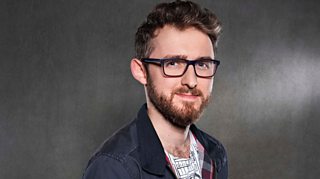
Radio 1's new comedy podcast Clickipedia is dedicated to that exact feeling. Presented by Matt Edmondson, each episode sees the host and two special guests, going from Wikipedia page to Wikipedia page in a pursuit for fascinating - but often quite useless - information.
The first two episodes are available now, with more still to come. But to give you a taster of what to expect, here are just some of the many weird and wonderful things we learned during our online exploration, including conspiracy theories about Avril Lavigne and how Drake (no not that one) might help us find E.T.
![]()
Listen to Clickipedia
Matt Edmondson and guests journey into an internet black hole of pointless, useless and worthless knowledge

1. Becks' Wikipedia page said he was alive in 18th century China
During episode 1, we get to grips with Wikipedia itself. Admit it: we’ve all Wikipedia-ed 'Wikipedia'. Since launching in 2001, the online encyclopedia has published more than 40 million articles in a whopping 301 different languages. The site's entire premise has long been that anyone can create or edit an entry, but due to this crowdsourced element, it’s pretty easy for misinformation to spread. In fact, it’s become something of a keen hobby among certain parts of the Internet to purposely vandalise the Wikipedia pages of famous people.
For example, did you know that David Beckham was a Chinese goalkeeper in the 18th century? Not really, but that’s what was said on his Wikipedia for a short time. Meanwhile, Karen Gillan’s page previously claimed that she held a world record with former Doctor Who co-star Matt Smith for "having the most children together". How many children did this sneaky vandal claim they had together? A whopping 68, which - considering Gillan is 31-years-old - would definitely not be possible.
People love vandalising Wikipedia pages so much that the site has started to make it much harder for you to edit freely, with some high-profile pages protected altogether. As Matt puts it: "It used to be a doddle. You used to be able to click Edit and then write whatever." These days, though, things are different and there’s even a sort-of black market of Wikipedia editors-for-hire. Guest Nina Nesbitt tells Matt during episode 1 that she once paid one of these "Wikipedia-changers" to remove some false information that ended up on her page.
To test Wikipedia’s new security procedures, Matt and the team decide to do a bit of Wiki vandalism themselves, altering Nina's page to contain something entirely made-up stuff. Did it remain untouched over the course of the show though? Listen back to episode 1 to find out.
2. The Olsen twins are not actually identical

One of the first pages that Matt and his guests stumble upon is the Wikipedia entry for twins, leading to some fun facts about twins, like that being tall increases your chance of having them, as does being over the age of 35.
Guest Amelia Dimoldenberg (host of the amazing Chicken Shop Date) is responsible for the biggest revelation though: that possibly the most famous lookalike twins in the world are not actually identical at all. Despite playing the same character on classic US sitcom Full House, Mary-Kate and Ashley Olsen are non-identical (also known as "dizygotic twins"). Not that it's any easier to tell the pair apart.
One handy way of telling actual identical twins apart, though, is that they don’t have the same fingerprint. So, as Amelia puts it, "they can’t unlock each other’s phones". However, this trick doesn't work if you’re using new Face ID technology - then your doppelganger could definitely be able to rummage through your texts.
3. Medieval delicacies included hedgehog and goat penis
During episode 2 we find out that food during the Medieval era was a lot different to what we eat today. Snacks were discouraged by the church (not that there were any chocolate bars for the monks to munch on), and you could expect some rather outlandish things on a banquet table.
Although we don’t tend to consume them today, hedgehog and porcupine could often be found in medieval recipes. Goat was also a popular meat during the time and, as Matt notes, goat genitals even made its way onto plates. Guest Tom Grennan got to have his very Bushtucker trial, comparing the taste of shredded goat penis to chicken - but listen back to episode 2 to find out exactly why.
4. Men favoured corsets to get that hourglass figure
Sticking with the historic theme, during episode 3 we delve into the topic of corsets, discovering that they were all the range among fashion-forward men during the 19th century.
In fact, there was a particular period between 1820 and 1840 when the hourglass figure (think Kim Kardashian) was the go-to look for men, who wore corsets to help them achieve this look. The news is particularly welcomed by Matt: "At least it was equal then. Men get away with just jeans and a t-shirt. Everyone in a corset and we’re all suffering."
5. The Internet thinks Avril Lavigne isn't the real Avril Lavigne

For a country with a population of 36 million (roughly half of the UK and a tenth of the US), Canada does punch above its weight musically. As guest Jayde Adams notes in episode 4, it's a nation that has given us everyone from Justin Bieber, The Weeknd and Drake to Michael Bublé and Céline Dion.
Canada is also the birthplace of Avril Lavigne; but did you know that some Internet conspiracy theorists believe that the Avril we know and love is actually a fake? Last year, a rumour spread on social media that Lavigne died and had been replaced by a body double called Melissa. What was their proof? Well, Avril-truthers point to supposed changes in the star’s appearance, so-called clues hidden away in her lyrics, plus the fact that she once had "Melissa" written on her hand in a photo.
In October of this year though, Avril appeared on Aussie radio to dismiss the entire theory as "so weird" and "so dumb". So we guess that’s the end of that.
6. Tug of war used to be an Olympic sport
There aren't too many games from school sports days that have made it to the Olympics - you’re probably not going to see conkers or the egg-and-spoon race at the 2020 Summer Games. But did you know that tug of war was an official Olympic event between 1900 and 1920?
Maybe we should bring it back too, because Great Britain holds the record for the most Olympic tug of war medals: two Gold, two Silver and one bronze. But before we start a petition calling for its return, make sure you tune in to episode 4 to hear all about the gruesome injuries people have suffered while involved in a tug of war contest. Ouch indeed.
7. We have laziness to thank for the sandwich
The origin story of the humble sandwich is exactly like you’d expect: born out of sheer bone-idleness. As we find out in episode 2, it’s named after John Montagu, the 4th Earl of Sandwich (or as Tom Grennan puts it: "The Earl of the sandwich"), who would order his servants to bring him meat and bread so he didn’t have to take a break to have a full meal while gambling with friends. And, just like that, the sandwich was born.
During the episode, we also get to hear about one Radio 1 listener’s rather strange sandwich filling of choice, while Tom tells us about his adventure to eat a sandwich in the Kent town of Sandwich.
8. One classic horror movie featured a cast of real skeletons
Horror movies remain one of the best-loved types of film, and Matt and co found out The Haunted Castle was the first-ever fright flick to be released way back in 1896. That silent movie started with a bat being turned into the devil and ended with a battle between man and demon, pretty much influencing the entire genre since.
Stumbling upon the topic of horror movies during episode 5, we also learn that real dead bodies and skeletons were used in the filming of 1982 cult classic Poltergeist. The reason? Because they were cheaper than buying fake ones. "I thought were plastic, but later found out they were real skeletons," star JoBeth Williams said years later. "It was a real nightmare."
9. Drake may hold the answer to whether aliens exist

Episode 6 ventures into the great unknown as we land upon the topic of extraterrestrials. Matt and guests Emily Lloyd Saini and Darren Herriot speak to Nigel Watson, a UFO researcher from Plymouth that doesn't actually believe in UFOs and aims to debunk tales of alien sightings.
But did you know that Drake may be the key to human contact with ET? Well, not Drake, the rapper, but Dr. Frank Drake, the famous American astrophysicist. In 1961, Dr. Drake came up with an equation to estimate the chances of humans coming into contact with extraterrestrial life forms. Recent calculations suggest that there could be as many as 10 alien civilisations within our galaxy capable of sending out signals that we can detect.
It might not have anything to do with Hotline Bling, but it’s still pretty interesting stuff…