10 Things We've Learnt From the New Generation Thinkers at Free Thinking Festival 2015
New ideas are at the heart of the annual Free Thinking Festival of ideas, and in 2015 we've heard talks from young academics - BBC Radio 3's New Generation Thinkers - on subjects as diverse as the role of beer in the British Empire and the relationship between sculpture and seduction in the eighteenth century.
Here is a thing or two we've learnt from them this year
1. A nice cup of tea
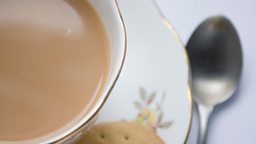
The first Chinese recipe to appear in England was for preparing tea with eggs and sugar. It was transcribed by Sir Kenelm Digby – founding member of the Royal Society, confidante of Queen Henrietta Maria (wife of Charles I), philosopher, alchemist and pirate.
Inside a Pirate's Cookbook - a culinary journey through the 17th century
Joe Moshenka explores the travels of astrologer, diplomat and gourmet Sir Kenelm Digby.
2. Modesty... please
In 1788, the nude sculptures on show at the Royal Academy in London were considered so offensive, that the Royal family requested their removal.
Sculpture and Seduction in the 18th Century
Danielle Thom explores the links between bawdy prints and classical sculpture.
3. Brutus Vs Scota
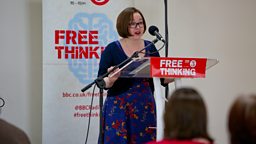
According to Geoffrey of Monmouth, an 1100s cleric – Britain is named after Brutus – grandson of Aeneas, the Trojan hero and subject of the great Latin epic by Virgil. Scotland created a counter myth arguing the name Scotland came from Scota whose father had been a Pharoah.
The Medieval Scottish Dream State
Kylie Murray explores visions of Scottishness in The Wallace and The Scotichronicon.
4. Living with the enemy?
As Vichy France enacted antisemitic policies, it also gave funding to Jewish Scouts to set up rural colonies which promoted Jewish living.
Jews in Occupied France - Co-existence with the Enemy?
Daniel Lee revisits Vichy France to uncover a different history of Jewish life there.
5. Beer rations
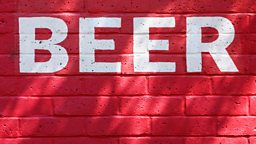
At the Siege of Lucknow during the Indian Rebellion of 1857, which ran from May to November, alcohol rations for 20 people were 'two bottles of indifferent champagne, one of claret, a pint of sherry and two pints of beer for the sick ladies'.
Beer and the British Empire
Sam Goodman explores the way beer was used as both beverage and medicine in colonial India
6. Highland oppression
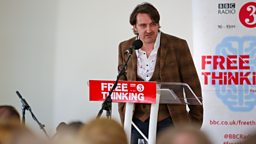
In the eighteenth century, following the Battle of Culloden, the kilt was banned in the Highlands of Scotland along with the Gaelic language and the carrying of weapons – on pain of prison or deportation.
Kilts, Celts and Clearances in WWI
Peter Mackay explores how WWI soldiers in kilted regiments discussed their allegiances.
7. 'Widows are Wonderful'...
In 1917 a musical called Yes, Uncle! popularised a song called Widows are Wonderful.
Women on Their Own - Widows in Britain, Now and Then
Nadine Muller on the hidden history of widows in Britain from the 19th century to today.
8. The first of the Medici
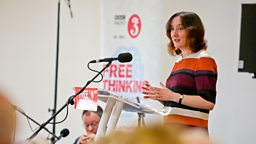
The first of the Medici family to rule Florence as a prince was called a 'mulatto' – intended as an insult implying illegitimacy - from mule, a cross between a horse and a donkey.
The Moor of Florence - A Medici Mystery
Catherine Fletcher explores claims the first Medici duke of Florence was of mixed race.
9. A remarkable politician
A young Irish nobleman born without hands or feet travelled 4,000 miles from Scandinavia to India in 1849. Arthur Macmurrough Kavanagh was also an MP and kept a pet bear.
Politician and Pioneer: Writing the Life of Arthur Kavanagh MP
Clare Walker Gore discusses our understanding of disability in the 19th century.
10. A rebellious heiress
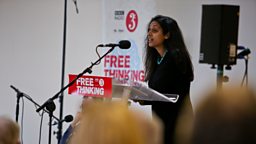
The figure of Fresca who appeared in an early draft of TS Eliot’s The Wasteland and in his poem Gerontion refers to the shipping heiress Nancy Cunard.
Nancy Cunard - The Rebellious Heiress
Sandeep Parmar on the tragic life of Nancy Cunard, scion of the famous shipping family.
All of the New Generation Thinkers talks will be broadcast on Radio 3 at 22.45 each week night 9-20 November, and available to listen online and download via the iPlayer Radio App.
More about Radio 3's Free Thinking Festival
![]()
Free Thinking Festival 2015
Details of all the programmes broadcast from and recorded at the Free Thinking Festival
More speech content from Radio 3
![]()
Free Thinking
The ideas shaping our lives today, Tuesday–Thursday at 2200 on BBC Radio 3
![]()
The Essay
Leading writers on arts, history, philosophy, science, religion and beyond, every week
![]()
Sunday Feature
Feature reports and discussions on any number of cultural subjects every week on Radio 3
![]()
Between the Ears
Innovative and thought-provoking features that make adventurous use of sound