How we carried a sound mixer all the way up the Paps of Jura and managed to film in an Atlantic lobster boat to make series 2 of Grand Tours of the Scottish Islands
By Kathryn Ross, Series Producer
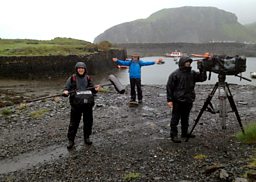
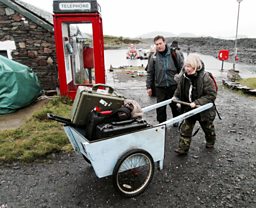
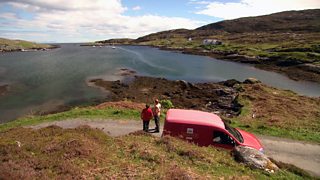
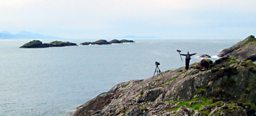
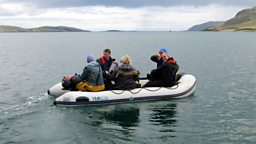
Every episode of a programme about islands involves a lot of getting on and off boats of variable size and seaworthiness. Ferries are a rare luxury; more commonly, we travel in smaller fishing boats and dinghies, which can present a few challenges.
Sea water is very corrosive to kit and so all the camera and sound equipment have to be carefully protected. When we are out and about on boats soundman Richard Paterson uses specialist waterproof radio microphone transmitters and sound mixing kit which are placed in custom-made waterproof sealed bags but this makes operating them tricky; when its cold or wet (or both as it often is!) the clear screen on the bags constantly mist up with condensation which makes it hard to see what the sound levels are. But all of these challenges are what make filming the series interesting – every day brings a new problem to be solved.
And filming out in the Atlantic in a lobster boat with quite a large swell on can make staying on your feet a challenge (although holding onto your breakfast is sometimes even harder). It’s not considered safe to wear a harness in a boat while filming (if the worst happened, being attached to the boat would not be good) so the key to being able to film successfully in these conditions is years of experience and a talent for rolling with the swell while holding a camera weighing 10kgs on your shoulder.
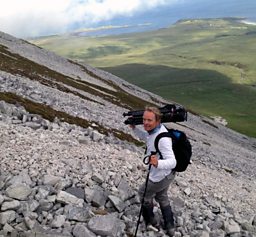
One of the most demanding things which we do every series is climbing some of Scotland’s famous peaks. Presenter Paul Murton is a big fan of Scotland’s mountains and is always keen to feature them in at least one or two of the episodes.
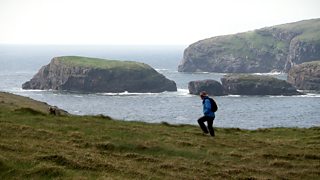
To be strictly accurate, most of the hills we tackle involve a walk rather than a climb but tackling the boulder field on the Paps of Jura while carrying a sound mixer or camera isn’t easy. By stripping down the sound kit to the key essentials Richard can reduce the weight of his equipment to about 6.5kg which needs to be fitted into a rucksack along with provisions for the day plus microphones etc. Cables are obviously potentially a bit of a hazard and so everything we film has to be shot using a special wireless system – it would be impossible to film while climbing the Paps of Jura with the soundman and cameraman linked together by a cable as used to be the case.
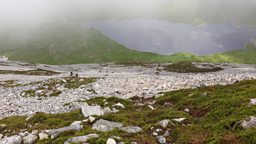
Also, the weather can change at any time so we need to be prepared and a walk which would normally take about four or five hours will take us around eight to ten hours, as filming eats up a lot of time. We need to carry emergency provisions, spare clothing and lots of water. But when you get to the top it’s always worth it. Even if you are fogged in as does sometimes happen!
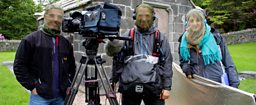
Our crew of soundman Richard Paterson and cameraman Richard Cook are very experienced at dealing with whatever the elements throw at them at any altitude. They even manage to smile through all the rain, midges and sea sickness!
Where possible, we do try to carry on filming in all conditions as we like to reflect the real Scotland, but this often means experiencing the extremes of all four seasons in one day.