The Ethnography Award Shortlist 2016
The shortlisted entries that help expand our understanding of those around us
The winning entry of the 2016 Ethnography Award was Zimbabwe's Migrants and South Africa's Border Farms: The Roots of Impermanence, by Maxim Bolt (Cambridge University Press, 2015).
Thinking Allowed in association with the British Sociological Association announces the annual award for a study that has made a significant contribution to ethnography: the in-depth analysis of the everyday life of a culture or sub-culture. The award has been running since 2014, and is decided by a panel of five academic judges. Last year’s winner was Ruben Andersson, with the publication, Illegality, Inc.: Clandestine migration and the business of bordering Europe. The winner of this year’s award will be announced on 13 April.
From child poverty to prison gangs, here’s the short list for Thinking Allowed’s third Ethnography Award.
1. You don’t find all homeless people on the street.
Emma Jackson discovered that contemporary, urban homelessness is a far cry from the rough sleeping, ‘cardboard city’ stereotype. From sofa surfers to hostel dwellers, she uncovered lives of rootless mobility.
‘Young Homeless People and Urban Space: Fixed in Mobility’ by Emma Jackson

2. The Glasgow ‘gang’ is an urban legend, where fact and fiction jostle.
Alistair Fraser finds that the dominant image of the American youth gang, as a ruthless, hierarchical and street based organisation, doesn’t have universal application. His findings identify many inconsistencies between the American portrayal of gangs and the realities on the streets of Glasgow.

‘Urban Legends: Gang Identity in the Post Industrial City’ by Alistair Fraser.
3. Unintended consequences of breaking the silence.
Nayanika Mookherjee explores the unintended consequences of the Bangladesh government’s public designation of the thousands of women raped during the 1971 war of independence as "brave women”.
‘The Spectral Wound: Sexual Violence, Public Memories and the Bangladesh War of 1971’, by Nayanika Mookherjee
4. Keeping faith in secular times.
Anna Strahn’s reveals the beating heart of a conservative, Christian church in the City of London. Congregants see themselves as both aliens and strangers in a metropolitan milieu with little interest in their message.
‘Aliens & Strangers? The Struggle for Coherence in the Everyday Lives of Evangelicals’
5. Rhythms and rituals of The House of Commons.
Emma Crewe offers a revealing, behind the scenes account of the everyday life of those Members of Parliament who inhabit one of Britain’s most public, yet most mysterious institutions.
‘The House of Commons: An Anthropology of MPS at Work’ by Emma Crewe
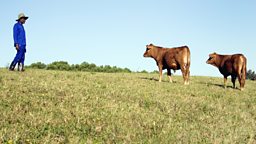
The Thinking Allowed Award for Ethnography 2016 Winning Entry
Maxim Bolt, Zimbabwe's Migrants and South Africa's Border Farms: The Roots of Impermanence, (Cambridge University Press, 2015).
Listen to the Thinking Allowed episode that revealed the 2016 winning entry.
During the Zimbabwean crisis, millions crossed through the apartheid-era border fence, searching for work as farm labourers. Maxim Bolt explores an overlooked story of migration at the intersection of the border between Zimbabwe and South Africa.
![]()
Find out more about Ethnography
The 2015 Ethnography Award winner, Dr Ruben Andersson explains what Ethnography is and it's relevance in a modern society.