“I smell funny” - How Covid still affects my sense of smell
By Zoë Swann // BBC The Social Contributor // 14 April 2022
Hi, I’m Zoë, and I smell funny.
No, not like that. I have parosmia, one of my continuing symptoms of long Covid.
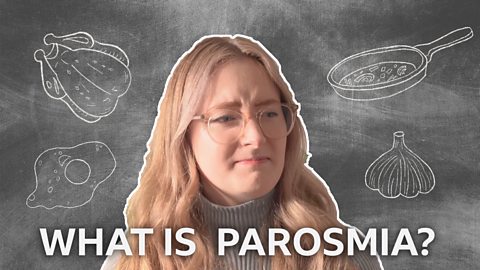
What Is Parosmia?
Zoë talks about parosmia - a condition that affects her sense of smell and taste.
Losing my sense of smell
When I first had Covid, I completely lost my sense of taste and smell. When it started to come back, it was very weak, and anything that was fried or roasted smelled absolutely horrendous to me - like rotten, mouldy, burnt oil.
Imagine if you left a chicken to rot for three months and then cooked it in car oil and you’ll be close to what I experience.
Garlic was also off-limits for me - it had a different, but just as disgusting taste and odour. I could taste even the smallest amount and it would put me right off my food. It was like the world’s worst superpower!
Thankfully, after a few weeks, garlic began to taste okay, and after a few months fried and roasted foods were alright. But those wrong scents and tastes had been replaced by others. White meat still tastes and smells foul to me - imagine if you left a chicken to rot for three months and then cooked it in car oil and you’ll be close to what I experience.
As well as this, fake fruit flavours taste and smell plasticky and overly sweet. Unfortunately, this one applies to stuff like scented candles and perfumes too. Even if I do get the right scents and flavours, everything still tastes and smells muted.
On the plus side, I’m now able to enjoy really spicy food and some stronger flavours that I might have avoided in the past!
Understanding parosmia
The definition of parosmia from the NHS is: a condition that can cause the smell of things to change. This is slightly different to anosmia, which is when you lose your sense of smell completely. Parosmia is a symptom of long Covid, especially for people who lost their taste and smell during their initial infection.

Everyone experiences parosmia differently, in different degrees of strength and with different triggers. Common things that taste and smell bad include coffee, onions, garlic and eggs, and it’s thought that this could be due to the sulphates contained in these foods. It’s not innately harmful, but it can have a real impact on how sufferers experience everyday life.
It’s thought that parosmia might be caused by damage to the olfactory receptor neurones – that’s the cells in our nasal cavity that detect odour molecules. However, it’s still not really understood and requires a lot more research.
There’s currently no medical treatment for parosmia. However, smell training can be helpful in the recovery process. This involves sniffing the same four scents every day, concentrating on what you can smell and taking note of your progress. There are some charities in the UK who do a lot of great work in helping people who have problems with their sense of smell.
So, there it is - a bit about my funny sense of smell. If you’re currently dealing with it like I am, I hope this has given you some encouragement that you’re not alone in what you’re going through, and that there is hope for the future.
Smell you later!