Careers Collective Q&A
The answers below have been written by our Careers Collective - a talented bunch of twenty-somethings working in creative industries. There's loads of amazing advice here so soak it all up and get inspired!
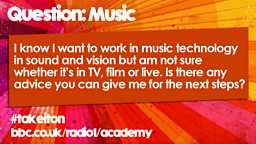
I think if you go to Uni and study a relevant course, that will go a long way to helping you make that decision. Try to do as much as possible in your own time, as there are so many areas of work in the area you’ve suggested here, and so much room for variation. I’m not sure what experience you have, but just try your hand at it all – live sound for local bands; engineering at a recording studio; work experience at a radio/tv studio; post production engineering for motion picture. The chances are your first foray into any of these areas will be unpaid, so you’ll quickly figure out what you have time for and what you don’t. I myself bought a PA system and did some live sound for a couple of local acts around Brighton when I came out of Uni, but quickly realised I wanted to be more on the recording side of things. I’m afraid there isn’t a simple answer to your question as such, it’s really about trying it all out and finding what fits best for yourself. It might take a while, but it’s more than worth it for the end result. Robby
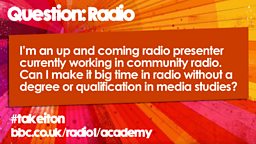
You definitely DO NOT need a degree in media studies to be a radio presenter. Being a presenter is about connecting with people and displaying your personality on-air. You do need to practice though, so working at a community station is a great place to start. Keep at it! Get comfortable with the desk, try new things and experiment with what you do. You could always test them out on YouTube first?
One of the most common mistakes people make is to try and be “the next Greg James” or “the next Charlie Sloth.” Don’t do that. Be yourself. We don’t want another Zane Lowe, we’ve already got one. What people are on the lookout for is new, fresh talent. Once you have got that all figured out, look at getting a show reel/pilot together and an agent. They can start using their contacts and doing the hard work for you. Jennifer
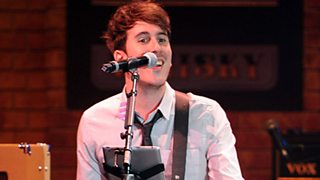
One of the best uses of time for any new band is gigging as much as possible. Practice your set, make it slick, make it run smoothly – no matter what the length of the set in total. Despite all the internet presence these days, people still love the live performance and that is what will gain you a following quicker than anything else in most circumstances. Make sure you have stuff online however, at least on the major platforms – SoundCloud, YouTube, Facebook if you must but that’s not as popular when it comes to promoting bands or similar. Make videos, and try to come up with exciting new ideas which will grab the viewers’ attention. It’s all about relentless promotion. We live in a world where people want everything all the time, and as soon as they come away from your show they want to be able to watch your videos and play your tracks, and send them to friends. At the same time though a certain amount of mystery is important, don’t put all of your songs online at once. Maybe create a mailing list, and when people sign up they could get a free download, say. Try to be as exciting and interactive as possible. Robby
![]()
Robby: Twenty-Something In Music
Read more about how Robby got to where he is today
There are lots of places you can get experience using a studio. You could offer to volunteer at your local community station or see if the hospital near you has one. If you are at university your union might run a station.
Start by making the tea, putting away CDs, getting requests from patients… just being as helpful as you can be. Ask questions, be curious, be that proactive person who wants to do stuff. Once you have that under your belt then you can start applying to do work experience at bigger stations or production companies. Build on that experience. Once you are doing more formal “work experience” the same rules apply - be helpful, be flexible, ask questions. (Although pick your timing when asking questions, during a live broadcast might not be the best time!!)
Also offer ideas and be interested in the project you are working on. You might start off on a bit of a random gardening show for example but it’s all about getting your foot in the door and using that opportunity to display what you can do and how much you love radio! Ask the people you are working with how they got their jobs. It might give you some ideas.
Another really good idea is to start making your own podcasts/shows from home. There are software packages that allow you to record, edit and make shows from your computer at home or school. If you are interested in music radio maybe you could start your own music blog. Post regularly, get out in the local music scene, interview bands. These are all skills that you will need. Play about with radio ideas, music ideas, interactive ideas. Not only will you grow your own skill set but they give you great things to talk about in interviews when it comes to getting that dream job! Plus if you love radio they are just fun.
Good luck! Jennifer
If you genuinely have a passion for what you’re doing, it shows and the people who are in the places you want to be will quickly see that - it’s how they got there themselves. For me, it’s about writing and producing music. I love it, so I spend a lot of my spare time doing it. When I started applying for work the response would almost always make reference to the fact that I obviously had a lot of passion for the work – even the ones when I didn’t get the job. It’s a tough time to guarantee a career in any industry right now, but the best advice I can give is to figure out exactly what it is you have the most time for, make it a part of your life and don’t give up if people don’t latch onto you straight away. If it’s worth doing, it’s worth waiting for. Robby
No formal qualifications necessary!! It’s much more about the experience you can gain and proof of how creative you are.
At 15, if you are really interested I would say volunteer at your local community/hospital/student stations and then see where that takes you. Make sure you are super enthusiastic and show the people around you how much you want to be at their station. This will get you a long way. Once you are in, you can start exploring what parts of radio you like.
If you can, start making your own radio. Record and edit audio using your computer at school or home. Write blogs, start an amazing Tumblr site about whatever it is you love, start experimenting with ideas. Play! Being a radio producer is about being creative so start now.
When you are a bit older you can look at media or broadcasting courses at college or university. These are a great way to gain skills but not essential. I never did any formal “broadcasting” courses or qualifications and I still made it! If radio is something you are serious about go down to the university open days and find out a bit more about the course.
So there are courses and degrees you can do in radio and broadcasting but they are not the be all and end all. You could do another course at university and do radio on the side. Or you could choose university is not right for you at all and go down the work experience route.
Good luck! Jennifer
I felt exactly the same as you – it’s amazing when you realise there is a way you can be paid for doing what you love!
Work experience is a brilliant thing to do. It will give you an idea of what really happens in a newsroom, and will help you decide whether it really is the career for you. When you approach anyone for work experience make sure you’ve actually read/listened/watched their output. Your letter will go straight in the bin if you send something generic. Editors get contacted a fair amount, so why not email a reporter? Lots of places run official schemes, which can be hard to get on to, but by asking for a chat you can find out how best to get one of those coveted places.
Once you’re in – be friendly and make the tea! Speak to everyone, ask questions, offer to help, bring in ideas, volunteer for everything – people will remember (and love!) you. I’m still in contact with people I met whilst on work experience, and they become valuable contacts to have. Read newspapers, watch the news, take an interest in the world around you, offer to write for local news letters.
Don’t worry about jobs, they said exactly the same thing when I was training – if you want it bad enough you’ll find a way in. Kat
![]()
Kat: Twenty-Something In Journalism
Read more about Kat's life as a journalist...
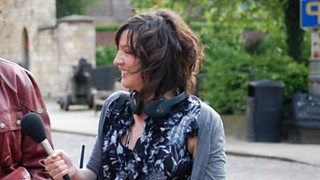

Set designers generally come from an art background and have studied relevant courses at either college or university. I don't think you necessarily need to have a specific course under your belt but I'd say a good place to start is study an art/design based subject and then contact set design companies or freelancers to ask for work experience. A prop house might also be a good way in as set designers will utilise these to dress sets. Georgie
It's excellent that you already attend three different theatre clubs, you have already increased your chances of being noticed.
Although it may be difficult to attend stage school. This can be quite an important factor, so maybe try attending stage summer school programme?
Also, use the Internet. Another great way to get into music is to create an online profile/portfolio. You can mail your profile to stage schools and agents to generate interest.
And finally, expand your chances of being noticed by doing more. Start collaborating with friends to write your own scripts to create your own performances. Pauli
![]()
Pauli - Musician
Pauli tours the world as a drummer and a DJ. Pretty cool! Read all about him

I would always recommend gaining experience. Experience is so valuable in a competitive industry like TV – your hands on experience could be what makes you stand out from the hundreds of other people applying for your job. I would suggest researching the local independent production companies as well as BBC Scotland and asking for work experience. This will show that you are keen and really passionate about getting into TV! At this stage in your career, I would say that all experience is crucial, so whether it is the area of TV that you want to be in or not, grab any opportunity you can and make the most of it! Sachelle
Firstly I would say that you need to get some experience – film anything and everything as soon as you can even if it is on your phone or a handy-cam to get used to filming, lighting and framing etc. Also, if you can, try and get your hands on a professional camera to play with – and even work for free. Be proactive – you can film music gigs, events, weddings, parties and much more! Once you’re confident with your filming, make a showreel of your work and send it out along with your CV – this will put you one step ahead of other applicants! In production, we tend to hire camera crews for filming days – if you can get some experience working in production, you can mingle with the camera crews, get to know them and perhaps get some work with them! Sachelle

There are production companies that have music video subsidiaries for example Pulse, Warp & Stink (Rokkit).
It's all about showing these production companies that you are capable of making a great video with whatever assets you are given (even if it's zero budget).
I would recommend finding a new band/ artist by going to gigs. Speak to them and offer to make a music video. Get a showreel of your work together and start approaching bigger bands/ artists. And if you're work is good enough production companies will want to have you on their books (representing you as a director). Pauli

TV production companies are always looking for fresh and innovate ideas for content whether it be for entertainment or educational purposes. Your project sounds like it covers both! I'd draw up a pitch that includes a brief description of your idea/the programme, bullet points of the key elements, and finally an overview. Make it visually engaging with relevant pictures too. Then send it off to production companies you want to work with and if they like what they see they'll get in touch! Most, if not all, production companies have contact details on their websites. Georgie