Architecture’s Dream Builders
4 December 2014
RAZIA IQBAL presents Dream Builders, a series of programmes on the BBC World Service in which she explores the world of architecture through conversations with its leading practitioners. Here she introduces the series, which is available to listen to in full.
My interest in architecture goes back to the very first time, as a teenager, I walked into a building I'd never been in before.
I noticed how different I felt in the space. It was a theatre and what happened there, under an elaborate dome and the proscenium arch of the stage, changed how I understood the feelings buildings can provoke in the human heart.

I noticed how different I felt in the space
Years later, and after many conversations with architects have added to the sum of my knowledge, that fundamental thought has not altered: buildings can change how you exist in the world; they impact on your life and your happiness.
Dream Builders is a series of programmes made in collaboration with the Royal Institute of British Architects (RIBA).
The idea behind the programme is to take those simple notions directly to some of the world's most successful architectural practitioners.
Interviewing these leaders in the field provides the opportunity to explore their ideas, theories and experiences.
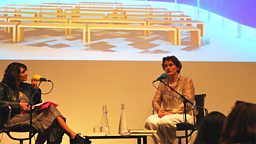
The interviews take place at the headquarters of RIBA in Portland Place, central London, in front of an audience of 500 people.

Many of those in the audience are students of architecture. Some come to hear their heroes or heckle those with whom they have issues.
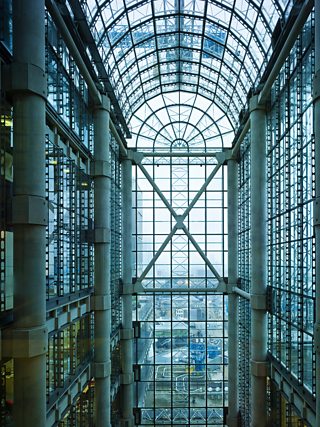
We wanted to talk to the architects who were stars in their world
How we made our choices was simple: we wanted to talk to the architects who were among the most successful, who might or might not have a discernable style, but were stars in their world. There is no apology for this. Architecture on the radio is a hard sell. We first of all wanted to bring the audience into RIBA, and then we wanted to hook the listener for the event's second life as a radio programme.
We chose Renzo Piano, whose Shard in London - utterly altering the skyline - was about to be completed. He talked at length about that, his early career with Richard Rogers, the ingenues who won the competition to build the Pompidou centre in Paris, and his subsequent buildings around the world.
They are still great friends, and Rogers was in the front row for the event. I went on to interview Lord Rogers himself. Renzo Piano was as much a philosopher and dreamer as he was an architect.
Our other choices for the first series were: Santiago Calatrava, Daniel Libeskind and Zaha Hadid.
Calatrava was funny and serious by turns, quoting from German and French writers as much as talking about artists. He signed a large coffee table book for me with a drawing. Daniel Libeskind was moving about his childhood and how memory informs his philosophy and is a fine story-teller.
Listen to Dream Builders
![]()
Daniel Libeskind - Ground Zero
How architect Daniel Libeskind won the fierce competition to rebuild Ground Zero in New York
![]()
Renzo Piano - The Shard
Razia talks to the architect of London's pyramid of glass, The Shard
![]()
Norman Foster - The Gherkin
Foster created London's Gherkin, rebuilt the Reichstag in Berlin and redesigned the much cherished New York Public Library
![]()
Santiago Calatrava - El Alamillo Bridge
Calatrava is an architect, artist and engineer whose international reputation for building was first established through his dazzling bridges
![]()
Zaha Hadid - Iraqi National Bank
Zaha Hadid was the first woman and first Muslim to win the Pritzker Prize, architecture’s highest honour
![]()
David Adjaye - Nobel Peace Centre
Adjaye's internationally renowned buildings are defined by his bold use of innovative materials and a diverse colour palette
![]()
Thomas Heatherwick - Olympic Cauldron
A designer with an international reputation for experimentation, his Olympic Cauldron came together from 204 copper elements
![]()
Francine Houben - Birmingham Library
One of the Netherland's leading architects tells Razia how second cities around the world can find a new shape
![]()
Moshe Safdie - US Institute of Peace
The Habitat 67 designer talks to Razia about his mentor Louis Khan and the creating of memorial buildings


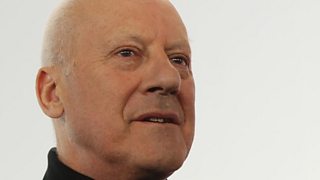
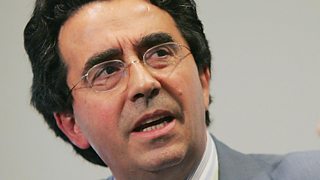

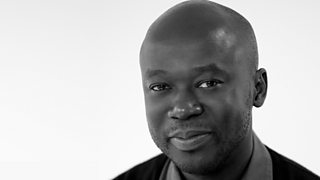


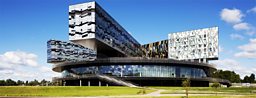
I have followed Zaha Hadid's career from her early days and am always interested in her work, if a little nervous of her! She never pulls her punches. Lord Norman Foster seemed to enjoy reminiscing about the old days, and now in his seventies, still delighted by a new discovery or a different way of looking at the world.
Our second series included someone who was not a trained architect - more a renaissance man who charmed and inspired the audience: the designer Thomas Heatherwick.
Francine Houben talked about being Dutch, building in Birmingham and being a woman in a man's world.
David Adjaye was spellbinding about his connection to Africa and told fascinating stories about making buildings from west Africa to Washington.
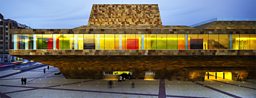
Moshe Safdie looked back fondly on being 25 when he made his first building, and was equally obliging when taking challenging questions about building in Israel.
Challenging the dreams they build has been a privilege for me
The questions from the audiences have always been the surprise element in these programmes.
Examples include 'what advice would you give to a young architect?' Answer: 'Go to bed with a brick under your pillow!'. Other questions and answers have ranged from conventional to controversial.
That has been a big part of the joy of DreamBuilders because what architects think, and how and what they build, makes a big impact on how we live and how we feel.
And, while they often divide opinion, they create environments we collectively share. Challenging the dreams they build has been a privilege for me and if you haven't already heard the programmes I hope it will be a fun listening experience for you.

The Brits Who Built the Modern World