Can you remember the last time you were scared? Are you sure?
Snakes. Spiders. Visiting the in-laws. We’re all afraid of something and the reason why boils down to our "fight or flight" response. But although in and of themselves such confrontations do not necessarily demand a fight or flight reaction – we cannot stress this enough: do not attack your in-laws – the way your brain reacts to them is exactly the same as if you were in a potentially fatal situation.
Why do we fear?
A memory is not a single whole, but comprises two parts: these are a "physical" memory from the hippocampus, which stores the visual and audio stimuli, and an emotional memory which comes from the amygdala. Your brain sends two signals out to the amygdala and the hippocampus. Your memory of the event is then informed by a combination of the situation that put you at risk and your emotional response to it.
However, the pathway to reach the amygdala is much quicker than that to the hippocampus. As the amygdala makes your body ready to deal with threats (quickening heartbeat, slowing or stopping unnecessary systems like digestion), its response needs to be instantaneous. As such, when you access a memory that scares you, you will feel the fear before remembering the stimuli.
How does fear affect memory?
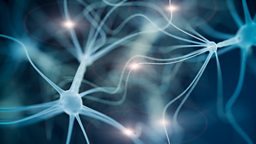
Fear and memory have a complicated relationship. It’s worth noting that any time you access a memory, it has the potential to be changed. The act of accessing a memory leads to it being reconstructed: it’s not a fact you’re recalling, but a story you tell yourself about what happened. Each time you tell it, it has the potential to change. This opens you up to a process known as fear conditioning, where your brain links certain stimuli with physical discomfort leading to you being afraid of something after the event.
Similarly, every time you access a traumatic memory and start making new links after the event, your emotional response can spread to a wider range of stimuli. For example if you were in an accident while a song was playing, hearing that song could trigger you to remember the event. However as the physical memory fades, you might only remember the performer of the song. As such, you might start to remember the accident once any song by that artist starts playing, not just the track that was actually playing.
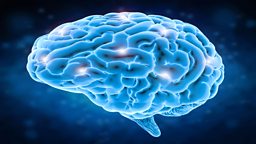
If your physical memory fades completely, your brain still retains the emotional memory in the amygdala. As such, your body reacts as though it is under threat, even if you had no idea why. This is why traumas you experience that you cannot remember (through being a young child or suffering from memory loss) still affect you on an emotional level.
As we’ve evolved, certain threats have been ingrained into us. If it could kill our ancestors and could still kill us now, we’re statistically more likely to be scared of it. Even though modern threats like electricity or car crashes are more likely to kill us on a day-to-day basis, they are not common phobias.
Similarly, it’s harder to be scared of objects that have posed no threat while we’ve been evolving. When researchers investigated if people were fear-conditioned to be scared of flowers, they found an evolutionary bias towards established threats and against the innately harmless.
Some research suggests that actually experiencing fear at a young age through fiction, either on television, radio or written mediums can be beneficial. Your brain links the fear to a positive memory of being entertained, the threat at a safe distance away.
While they’re not suggesting you rush out and show children 18-rated horror films, having entertainment that makes children hide behind the sofa - such as Doctor Who - is no bad thing.
Hear Matthew Sweet and guests discuss memory and fear in Marnie, the novel from Poldark creator Winston Graham which Alfred Hitchcock turned into a film starring Tippie Hedren and Sean Connery and which Nico Muhly has now created as an opera for ENO.
More from Free Thinking on Radio 3
![]()
New Generation Thinkers 2017: hear their ideas
From satire and the circus, to gangs and "speaking truth to power"
![]()
The Getting of Knowledge
Will Hutton, Lucy O’Brien, Richard Sennett on how topics are taught + campus free speech?
![]()
Free Thinking – Landmarks
Key films, books, TV, plays, art: 1001 Nights, 2001 A Space Odyssey, Jane Austen, Jaws...
![]()
New Generation Thinkers 2016. Watch short films
The mariner’s astrolabe; faith in food; Sherlock Holmes; the phone and a cold war relic...