Coping with Imposter Phenomenon
“All right. We’ve seen you. You’ve got away with it for years, but we’ve spotted you now. Time to go, come on. Leave it to the people who know what they’re doing.”
Sound familiar? But only inside your head, right? Those nasty little voices will be what artist and musician Amanda Palmer calls ‘The Fraud Police’, and to a greater or lesser degree, we all believe they could come knocking at any time. You’ve just done a great presentation, thrown a joyous party or achieved a major goal. What’s the first thought that goes through your head? Not “Well done me”, but “Phew. Got away with it.”
This is what psychologists call “The Imposter Phenomenon”. It emanates from a sense of lack of belonging, and a belief that all other people have a consistent level of confidence in their own competence, which, judging by the huge numbers of people who will admit to being sufferers, is not the case.
Maya Angelou, Sonia Sotomayor, Neil Gaiman, Emma Watson and Tommy Cooper all admitted to dealing with the Imposter Phenomenon on a regular basis, and researchers found people from brain surgeons to teachers that had to fight with the feeling that they had ‘conned’ their way to success rather than earned it.
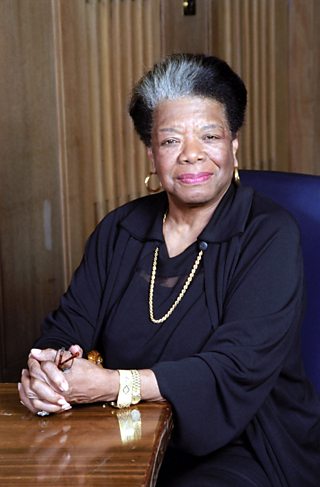
A surprising number of very successful people admit to suffering from Imposter Phenomenon, Maya Angelou for instance."
So assuming we all either regularly or occasionally suffer from it, what can we do?
First, don’t assume it’s all bad. There’s nothing wrong with a bit of humility now and again, so not believing your own publicity isn’t always a bad thing. The danger comes when the Imposter Phenomenon stops you enjoying, believing in, or rewarding yourself for, your own success.
Second, change the goals. If your goal is “I need everyone I meet to come away thinking I am one of the world’s top human beings”, that’s clearly unrealistic. If you’re giving a speech and one member of your audience yawns, don’t immediately think everyone in the room is praying you get spontaneous laryngitis, try and think “there’s a hundred people here, and I want ten of them to come away having learned something. That’ll do.”
Third; don’t judge your inside by everyone else’s outside. You now know, courtesy of Oliver Burkeman’s excellent programme The Impostors' Survival Guide, (and if you don’t, then go and listen to it now) that we nearly all experience the Imposter Phenomenon. So when you look at your audience, feel reassured that at least 70% of them would be feeling the same as you, in your position.
Fourth, talk about it. If you’re overwhelmed by it, say so. Celebrities will often say on Desert Island Discs “and honestly I’m still waiting for someone to tap me on the shoulder...” When it creeps up on you, say to it internally “oh hello, Fraud Police, I thought you might be along...” and say to a friend “I’m having one of those moments where I feel I shouldn’t be here,” and there’s a very high chance they’ll say “that happens to me too!”
Finally, when something goes right, write it down, as soon as you can. Write down what you did to get to that point. You’ll notice that you’re not writing “luckily everyone I dealt with was a total moron I was able to con, charm or control” (unless you are a sociopath, in which case you’ve got more issues than Imposter Phenomenon). You’ll probably find you write “that went well, because I worked really hard, I prepared like mad and I felt interested in what I was doing.”
And above all else, remember this. William Goldman, who won two Academy Awards, wrote Butch Cassidy and the Sundance Kid, won two Edgar Awards and had three plays produced on Broadway, famously said “Nobody knows anything... Not one person in the entire motion picture field knows for a certainty what's going to work. Every time out it's a guess and, if you're lucky, an educated one.”
So try your hardest to accept that it’s enough to be you, that everyone out there isn’t sure it’s enough to be them either, and all of us together, don’t know anything.
More from Seriously...
![]()
Seven Lyrics to Use in Conversation Today
These song lines have become common parlance.
![]()
Five Women Who Wrote Rock
These writers helped define rock journalism in the 1960s.
![]()
Is Mindfulness Meditation Dangerous?
Jolyon Jenkins investigates whether meditation can do you more harm than good.
![]()
Neil Innes on the Bonzo Dog Doo-Dah Band
The band member recalls the anarchistic joy of a truly unique group.
![]()
Fake It 'Til You Make It
Why have fakes and fantasists always fascinated us?
![]()
Mary Beard vs Hair Dye
The writer and academic has a consultation with a legendary hair colourist.
![]()
The Recovering Addicts Who Inspired Trainspotting
The team of recovering addicts who made their mark on cinematic history.
![]()
Mao's Little Red Book Goes West
David Aaronovitch on how an Eastern political tract became a Western icon.
![]()
David Bowie in his Own Words
David Bowie's interviews reveal his humour, passion and determination to succeed.
![]()
Dotun and Dean
Broadcaster Dotun Adebayo revisits his youthful obsession with James Dean.
![]()
Gavin Esler on The Good Goering
Did Nazi leader Hermann Goering have a brother who saved innocent lives from the Holocaust?
![]()
10 Women Who Changed Sci-Fi
A selection of great female authors who have radically altered the genre.
![]()
Meet the Burlesque Legends
Mat Fraser meets the former striptease stars back on the stage in their 70s and 80s.
![]()
Philip Hoare: CSI Whale
The award-winning writer on porpoise dissections, stranded whales and beached dolphins.