‘Everything would need to feel urgent’ - Vicky Featherstone on The National Theatre of Scotland
23 September 2016
In just 10 years, the National Theatre of Scotland has established itself as a producer of landmark theatre. With celebrated productions such as Black Watch and The James Plays trilogy, it has built a reputation for work which is compelling and immediate. Its founding artistic director, VICKY FEATHERSTONE, recounts the daunting task of setting up a national theatre from scratch – and one famously without a performance base – and explains its founding principles. Over the decade, the NTS has commissioned over 200 productions but unusually, these have been performed across the length and breadth of Scotland and in locations as varied as small local theatres, tower blocks, ferries, and forests.
On the 1st November 2004 I walked into an empty office on the aptly named Hope Street, Glasgow armed with nothing but a notebook containing a few scribbled ideas, a mobile phone and a fundamental belief in the power of theatre to transform lives.
I had been given the very great honour, and even greater responsibility, of being the founding Artistic Director of the newly formed National Theatre of Scotland.
The National Theatre of Scotland would be a new model, a commissioning body, with no building, touring work across Scotland
Had I realised then what I know now, I would probably have taken one look at the empty office and turned back round and walked back out into the rainy Glasgow street. But passion and naivety are a courageous combination. I set about my Herculean task. Now, where do you get a chair and a desk in this city?
Prior to devolution there had been 3 failed attempts to create a National Theatre in Scotland and, as a debate, it had been ranging in the theatre bars and dressing rooms for over 100 years.
Interestingly, the most committed attempt had been by the Scottish National Players. Established in 1920 to mimic the Abbey Theatre in Ireland, they were criticized and ultimately fell on their sword for making work with too narrow a perspective that excluded anything not 100% Scottish.
Post devolution in 1998, the theatre community, led by the Federation of Scottish Theatre, set about looking at possible models and reached a consensus. That the National Theatre of Scotland would be a new model, a commissioning body, with no building, touring work across Scotland and working with a wide range of artists.
In 2003 Jack McConnell, the First Minister of Scotland, set out his new direction for cultural policy during his St Andrew's Day lecture at the Royal Scottish Academy of Music and Drama in Glasgow to an audience of around 150 students and leading figures in the arts world.
"Culture cuts across every aspect of government - it can make a difference to our success in tackling poverty, it can make Scotland a healthier place and it has a significant contribution to make towards our economy.
"Each member of the Scottish cabinet will use the power of cultural activity to help them in their work - culture will not be an add on, it will be at the core of everything we do. And the best place to start is with our children, from the earliest age we must give them the chance to express themselves."
So with the announcement of the budget for 2004 came the very great news that the then Labour government was giving £7.5 million over two years to the creation of a new National theatre. It was the only budget decision that made the headlines.
None of the pieces should take place in a theatre and, as well as professionals, they should involve members of the community
I had done some terrible back of a fag packet maths and worked out that for a population of just under 5 million, we had been given roughly £1.50 per person for the first two years. This influenced the way I thought about creating work.
I wanted to create a National Theatre that everyone of those people with their £1.50 could feel ownership over, whether by simply coming to see a show in your local theatre; or your grandchild or neighbour being involved in a community piece; that communities could participate in and that young and old regardless of class or education could feel welcome. And I wanted every show to feel like an event and be pushing the boundaries of what theatre could be.
Our programme would be made up of new work, Scotland has many of the world's leading playwrights, European classics reimagined, site specific work, work for families and children, work touring to tiny village halls in far away places as well as at the Edinburgh International Festival.
We would make a huge commitment to the development of new artists and to the art form and try to find ways of working across different art forms. We would not shy away from either the populist or the experimental. Everything we made would need to feel urgent and that it could change something for people - even if it was just by laughing your socks off!
Home was our first production. It was a statement of intent in everyway. We commissioned 10 of who we thought were our most exciting directors to go to one of 10 areas throughout Scotland from Shetland to Dumfries. The brief was to create a piece of theatre using the word Home as a starting point.
It is, I was told once, the most evocative word in the English language and therefore perfect for a theatre without a home. It was the start of me physically imagining the geography of Scotland and the stories housed within it to inform our work. None of the pieces should take place in a theatre and, as well as professionals, they should involve members of the community.
So on 26 February 2006, in 10 locations all over Scotland NTS began. It was like 10 beacons of theatre lighting up the land. The variety was amazing, from old people's dance hall stories, to abseiling down a tower block in Glasgow.
I found artists desperate to say challenging things in brilliant new ways and an audience hungry to participate
I was in Caithness that night and the morning after I had to do an interview with the BBC. I followed the instructions to the studio in Wick. I went through a gate in a wall, found a key under a flowerpot, unlocked a flaking door and sat in a tiny room with a microphone and a red light and a green light. It was from here that I talked to the world about Home. It summed us up perfectly.
By taking a local story or place and through development exploding that story through theatre, we created what became our signature work. Work which no one else was doing in the same way, which was truly owned in every way by Scotland but which through intense concentration on the personal has became truly universal and an actualization of Scottish story and identity.
Interestingly and obviously of course, but again only understood in hindsight, the work which has toured most extensively and internationally is the work which is most culturally specific and unique.
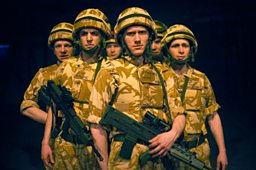
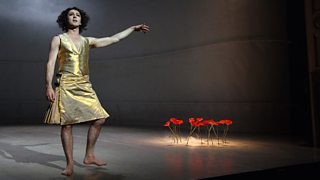
Black Watch, The Strange Undoing of Prudencia Hart, Long Gone Lonesome, Venus as a Boy, 5 Minute Theatre, The James Plays, Glasgow Girls and now Our Ladies of Perpetual Succour – to name a measly few.
Our best shows then, demonstrated a national conversation, growing from a demotic theatre tradition first articulated by John McGrath with the 7:84 theatre group in The Cheviot, The Stag and The Black, Black Oil, the personal made universal, local made international, they are artist led and audience focused. And are shows that only we could have made at that moment in time.
Scotland is made up of mavericks and artists, poets and thinkers, musicians and rebels - warriors, clans and tribes.
The spirit of that St Andrew's day speech back in 2003 has been upheld and multiplied by the SNP government who believe in their DNA that the only chance of having a healthy independent country means they must keep culture at its core.
And as Scotland leads the way in Britain, asking questions of independence, about our role in Europe and the rest of the world, what the NTS must do is continue to create the platform for those artists to keep asking who are we and for making sense of the world around us.
I worked out how to find that chair, I found many extraordinary people to become the team, I found artists desperate to say challenging things in brilliant new ways and an audience hungry to participate, to be challenged and to challenge us, and I fell in love with a country so rich, so complex, so messy, so geographically and demographically diverse, with so many stories to be told in so many ways, that my job was in fact very, very simple.
Vicky Featherstone was Artistic Director of the National Theatre of Scotland from 2004 to 2012.
Celebrating 10 years of NTS
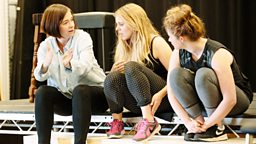
Vicky Featherstone on directing Our Ladies of Perpetual Succour
Director John Tiffany on creating Black Watch for the NTS
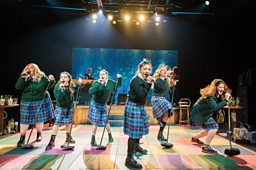
More from Vicky and the National Theatre of Scotland
More from BBC Arts
![]()
Picasso’s ex-factor
Who are the six women who shaped his life and work?
![]()
Quiz: Picasso or pixel?
Can you separate the AI fakes from genuine paintings by Pablo Picasso?
![]()
Frida: Fiery, fierce and passionate
The extraordinary life of Mexican artist Frida Kahlo, in her own words
![]()
Proms 2023: The best bits
From Yuja Wang to Northern Soul, handpicked stand-out moments from this year's Proms