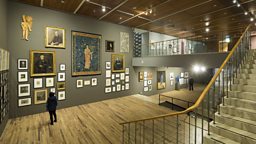
Once in a generation: Transforming The Whitworth gallery
13 February 2015
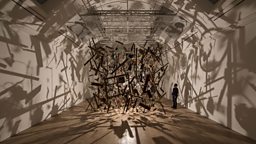
With the final coat of paint now dry, Manchester’s Whitworth opens its doors again this weekend following an ambitious £15million refurbishment. It is being marked by a major exhibition from British artist Cornelia Parker. Gallery director MARIA BALSHAW writes for BBC Arts about this “once-in-a-generation transformation”, and in a film by NATALIE MOSS, Parker gives a personal insight into her new show.
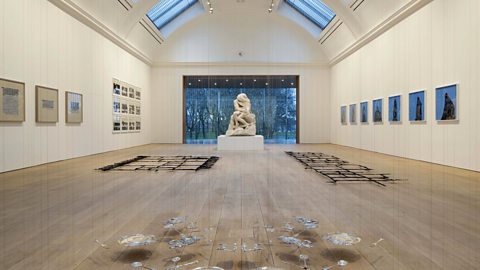
Transforming The Whitworth
Maria Balshaw and artist Cornelia Parker on the reopening of the Manchester gallery
Building the new Whitworth has been a much larger process than the roughly 24 months it has taken to do the bricks and mortar transformation.
Its beginning was a nerve-wracking but carefully choreographed dinner at the gallery in February 2007 for the President of the University of Manchester, Prof Alan Gilbert (now sadly deceased).
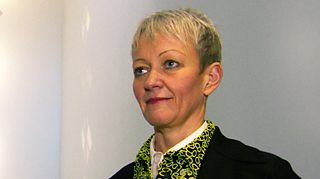
After a gallery tour and smalltalk over starters, I pitched the future for the Whitworth: a capital expansion to reconnect us to the park, engage our local community and student population, and give internationally significant collections the prominence they deserve. A world class gallery for a world class university.
All very good, he agreed; but how much? After a deep breath, I said £1million would mean we could approach the Heritage Lottery Fund with credibility. There were some tough questions, but by the time pudding arrived he had agreed.
This was only the beginning of the long slog of any public sector-funded cultural project – the raising of money. Now, eight years after that important conversation, we are opening our new Whitworth, with glorious views, double the public spaces and vastly improved facilities.
The University’s commitment has grown from £1m to £3m, as it has taken the opportunity to future-proof it for the next 100 years and make it the most environmentally sustainable gallery in the UK (with no air conditioning anywhere). The whole project has grown to a £15m once-in-a-generation transformation.
The notion of building something for 100 years hence was a mantra I clung to. After one challenging day I laid my head on the kitchen table with a groan. “What’s up?” said Jake, my then 13-year-old son. His response was wise beyond his years: “The thing is, Mum, when you’re dead the Whitworth will still be there for people”.
The teenage matter-of-factness about mortality made me laugh out loud, and has given me courage to get through many tough moments. I feel privileged to have been involved in something that will outlast me, my children and their offspring.
The high points of the process have been extraordinary. Breaking ground was in mid-winter and the group of women who posed with spades included Dame Nancy Rothwell, the President of University of Manchester, Diana Hampson, Director of Estates, Sara Hilton from the Heritage Lottery Fund, and myself.
I had a dark weekend contemplating the time delay and expense
Our high visibility protective helmets and tunics clashed rather memorably with pink and blue winter coats. We all noted how unusual it is to have a construction project largely led by women, including Gillian McInnes from MUMA, our wonderful architects.
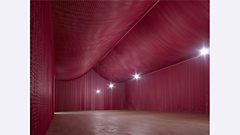
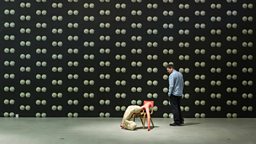
It was a much warmer day six months later – 30 degrees celsius in fact – as artist Nikhil Chopra erected a 24m by 10m calico tent inside the half-constructed landscape gallery. It had been made in Goa, and in the warmth of the Manchester sunshine it evoked the spice smell of Mapusa market. From sunrise on the first Friday of the Manchester International Festival to sunset on the Sunday, Chopra created a mesmeric performance and an astounding charcoal drawing of Manchester and Mumbai textile districts.
11,000 visited across the three days. A captivated construction team were served chai by the artist, as part of the performance. It stopped all their cheeky comments about “what on earth is all this gallery stuff about?”
We found many things we didn’t expect. Archaeological exploration of the art garden area revealed the yard cobbles of the original courtyard of Grove House, which we’re reusing in the new orchard garden. Discovering much more extensive asbestos throughout the old basements was much less welcome.
I had a very dark weekend contemplating the delay and expense to the project of making the whole area usable. We gritted teeth and adjusted timescales and budgets. As University Chancellor Tom Bloxham, chairman of Urban Splash said, these things are the horrible norm for projects in old, complex buildings.
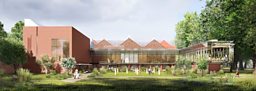
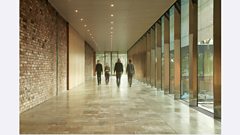
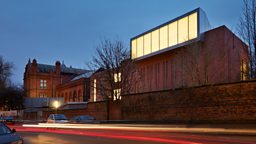
The greatest excitement has been seeing the architect's images materialize in front of our eyes. There is a spectacular view from the main exhibition gallery. It took MUMA’s insight to realize that creating a grand window onto the park would flood the gallery with light and invite people into the park. It also allows park users to see into the gallery, inviting them to come in and explore.
We are part of the University of Manchester and we serve as a social and learning space for the nearly 80,000 students here and at Manchester Metropolitan University. We also stand in Moss Side, one of the most economically challenged wards in the North. We make sure there is something happening for families every day of the school holidays.
Now we have brilliant facilities to allow them to see, make and explore art. Our learning studio is a place children and grown-ups can make a terrific creative mess. Our collections should be enjoyed by everyone, not just scholars and experts.
We will be welcoming people into our new parkside entrance under the colourful glow of a great new work by Scottish artist Nathan Coley. It’s a text piece made up of multicoloured lights, mounted on the roof over the entrance. It spells out “Gathering of Strangers”.
We think this is a fitting aspiration for the gallery: we should be a place where strangers come together and feel welcomed, intrigued, and stimulated. If we can be that for our city, then our future is sealed for the next 100 years.
Dr Maria Balshaw has been Director of the Whitworth since June 2006. She has led a programme of historic, modern and contemporary exhibitions and coordinated the £15m expansion of the gallery.
Exhibition photographs by David Levene, courtesy of The Whitworth.
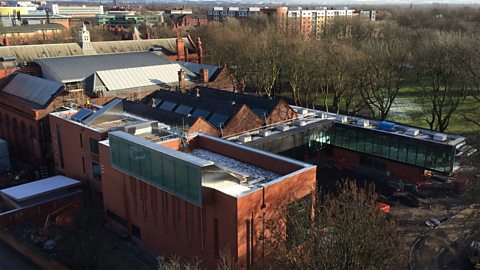
The Whitworth: Before and after
Two photos of the Manchester gallery, before and after its refurbishment