Susie Dent on the local words that bring it all back home
28 September 2017
Ever been away from your home town and used a word that’s prompted blank looks from those around you? To mark National Poetry Day, BBC Local Radio has commissioned twelve poets from across England to write a poem celebrating a local word, that they want the wider world to know. And the Oxford English Dictionary has been paying close attention – because it’s not just poets who are fascinated by local dialect, as celebrity lexicographer Susie Dent explains.

You know face like thunder, eyes rolling like rainclouds, turn the whole room grey when you walk in type thing. That missed your bus, hole in your shoe, favourite pub’s been turned into a coffee shop kind of sorrow, rage, moodiness that sludges out the corners of your mouth.
It’s a definition to leave any lexicographer drooling with envy, and yet it comes not from a dictionary, but a poetic study by Toby Campion of the word mardy.
Campion’s celebration of a term with a distinctly local flavour is one of twelve poems written for National Poetry Day, part of a collaboration with BBC English Regions and the Oxford English Dictionary to collect evidence of our national dialects.
The mission is an important one: our regional vocabulary is born of a distinctly oral tradition whose sounds often drift under the radar of dictionary-makers, reliant as they are upon written sources. The same vocabulary is also by its very nature as tribal as it is local, stepped into with ease when we’re with our clan, but easily discarded when we move off once more.
Many would equate that off-radar status with extinction, believing words like cheeselog (a Berkshire woodlouse), gegging (butting in) from Merseyside, and Hull’s didlum (a community saving scheme) to be forgotten gems from a vanishing lexicon that will never be replaced.
Thankfully, the poems forming the #freetheword project put such fears into context. While it’s true that some of our most beautiful localisms are losing out to insipid rivals, we’re a long way from a single, standard lexicon.
In many ways, the snapshots offered by each of the twelve poets are the aural equivalent of a dictionary entry, illuminating possibilities of meaning, and explaining something perplexing or unfamiliar.
Take Vanessa Kisuule’s exploration of gurt from the West Country:
Gurt like very, gurt like really
Almost always used in contexts
Of joy, appreciation and gut
Grabbing relish
Or take Caleb Femi’s Fam, a long but punchy definition of what it is means to be brothers and sisters, either through blood or friendship:
we mean a smoke signal when you’re lost inside your own ribcage
we mean the biggest inside joke on the ends

The world of dialect deals in the easily accessible and concrete rather than the abstract. The poems here speak of ginnels and twittens rather than alleyways, and of twining for having a gossipy moan (as Katie Hale describes in beautifully-woven verse: we twined till twining became / entwining, till we had twilled ourselves / in the warp and weft of our words).
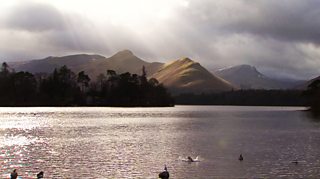
But this is the concrete made lyrical – few poems have affected me more than Chrissy Williams’ simple evocation of the glorious Devonian word for twilit, dimpsy:
we hold our oars close
steady across the estuary
in the last stain of sunlight
past the still cormorants
when the sky gets dimpsy
the dark yawls rocking
as day slips into water
behind blackening hills

Lines like these cry out to be spoken, just like the words they lovingly unpack. In her case, Kisuule even provides some helpful pronunciation guidance to fully embrace the accent required: Got to grab the gurt from the / Pit of your stomach.
At a time when the word ‘dialect’ is fast becoming synonymous with decline, there can surely be no better time to celebrate the power of regional language. Playful or elegiac, punchy or wistful, each of the poems chosen for National Poetry Day speaks to who and where we came from. In them, to borrow the concluding lines from Chrissy Williams:
one by one in the darkness
you may find home again
Words and Films
![]()
Bobowler by Liz Berry
A large moth. From listeners to BBC Radio WM (West Midlands).
![]()
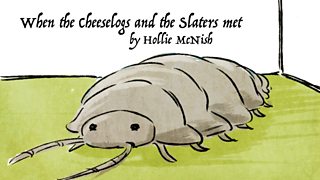
Cheeselog by Hollie McNish
A woodlouse - selected by BBC Radio Berkshire listeners
![]()
Didlum by Dean Wilson
A community savings scheme - selected by BBC Radio Humberside listeners.
![]()
Dimpsy by Chrissy Williams
Dusk; twilight. From listeners to BBC Radio Devon.
![]()
Fam by Caleb Femi
A familiar form of address for a friend. From listeners to BBC Radio London.
![]()
City of Geg ins by Chris McCabe
To interrupt; to butt in. From listeners to BBC Radio Merseyside.
![]()
Ginnel by Vidyan Ravinthiran
An alleyway. Suggested by listeners to BBC Radio Leeds.
![]()
Gurt by Vanessa Kisuule
Very; great - suggested by listeners to BBC Radio Bristol.
![]()
Mardy by Toby Campion
Spoilt; sulky; moody. Suggested by listeners to Radio Leicester.
![]()
On the huh by Rebecca Watts
Lopsided; wonky. As suggested by listeners to BBC Radio Suffolk.
![]()
Ode to Twining by Katie Hale
To moan; to complain. From BBC Radio Cumbria.
![]()
Twitten by James Brookes
A narrow lane; an alleyway. From BBC Sussex.





![]()
Here's the Weather by Stuart A Paterson
The many Scots words related to the weather are given their freedom in Stuart's poem.

The Festival
![]()
Free the Word
Mardy, gurt, cheeselogs, dreich and dimpsy: 13 poets highlight the local words that matter to you.
![]()
About the Festival
Highlights to look forward to at the UK’s biggest poetry festival devoted to new work, taking place in Hull.
![]()
What's On / Sept 28 - Oct 1
Browse four days of gala readings, live radio, film screenings, music gigs, open mic nights and more.
![]()
Films
A series of exclusive films.