Who was Muriel Howard?
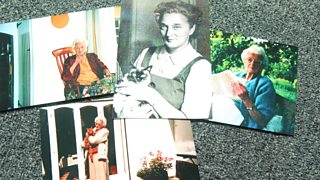
Brenda Muriel Howard-Tripp was the author of the childhood memoir, now dramatised as 'Writing the Century: The Secret'. She wrote her memoir in the early 1960s towards the end of her remarkable career.
Her career
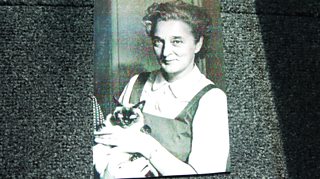
In 1927, after studying sciences at University College London, she graduated with a degree in Chemistry. Her early career was spent as a research chemist. She joined the British Council in the late 1930s and soon became Assistant to the Head of the Science Department. By the mid-1940s she had been appointed their representative in Moscow, attached to the British Embassy as Cultural Attaché with diplomatic status. Her task was to make contact with scientists at the Moscow Academy of Sciences, and to arrange the exchange of non-military scientific articles between them and British scientific institutions.
In the early 1950s she was again posted abroad as Assistant Representative with the British Council in Paris, and was seconded to UNESCO. Subsequently she was Secretary of the East-West Cultural Relations Committee and was appointed Head of the East Europe Department at the British Council in London. In 1962 she was awarded an OBE.
A former colleague wrote that she 'was lucky to serve under her direction. I was overawed by her at first, but it didn't take me long to realise that her rather brusque manner hid a wry sense of humour and warm understanding. She was a guide whom it was easy to follow, and she helped me greatly.'
After retirement
I was overawed by her at first, but it didn't take me long to realise that her rather brusque manner hid a wry sense of humour and warm understanding. She was a guide whom it was easy to follow, and she helped me greatly.
After her retirement in 1966 she divided her time between London and her country cottage in Cambridgeshire. In an article published in 1995 in the village parish magazine she described herself and the visiting groups she gathered round her as followers of the Gurdjieff Teaching. 'It is not a religion, but rather a way of life. Our search is based on self-knowledge and the belief in the possibility of man's evolution. All are free to follow their Catholic, Protestant or other faith, and often find a deepening of their understanding.'
Letting go
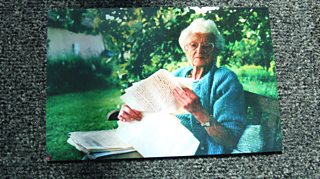
In the late 1980s she began to show her memoir to a few friends. One of them, a writer and contemporary, wrote: 'It is too good to be hidden in a drawer with only one or two people having read it. When one reads it one enters into this circle of universal suffering and creativity. This is what art is.'
It is too good to be hidden in a drawer with only one or two people having read it. When one reads it one enters into this circle of universal suffering and creativity. This is what art is.
Once in the summer of 1998, while painting in her garden and reading some of her poems to a friend, she spoke of the 'importance of expressing what needs to be expressed whether in painting or writing, of giving something out to the world - one's own poems, autobiography - which shouldn't just remain inside.'
She died in 2004 shortly before her 98th birthday. She had recently entrusted her memoir to a close friend, requesting that it be read on 'Woman's Hour'. Dramatised, it has now gone 'out to the world', as she came to believe it should.

